Caitlyn Clark’s “privilege”
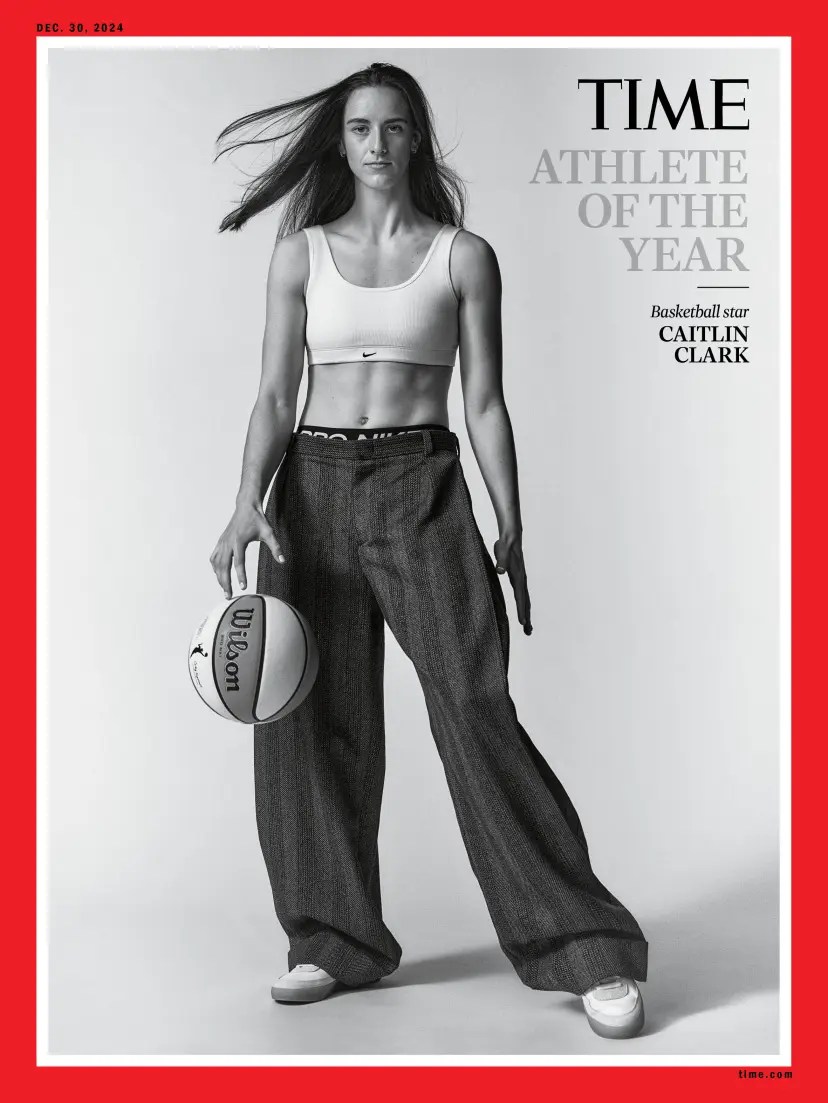
I am not a basketball fan – not college or pro, not men’s or women’s (or is it now womyn’s?). But I saw that Caitlyn Clark won Time’s Athlete of the Year. I didn’t know Time had an Athlete of the Year Award. I knew it had a Man of the year (now Person of the Year) – likely that they will eliminate the “son” from “person” in the never ending quest for gender neutrality. But lo and behold, they have been making the athlete’s award since 2019. The previous winners are 2019 – United States Women’s National Team (soccer), 2020 – LeBron James, 2021 – Simone Biles, 2022 – Aaron Judge and 2023 – Lionel Messi.
Clark felt it necessary to apologize for being white (and straight). She said “I want to say I’ve earned every single thing, but as a white person, there is privilege. A lot of those players in the league that have been really good have been black players. This league has kind of been built on them. The more we can appreciate that, highlight that, talk about that, and then continue to have brands and companies invest in those players that have made this league incredible, I think it’s very important. I have to continue to try to change that, the more we can elevate black women, that’s going to be a beautiful thing.”
What about other great white players like Rebecca Lobo, Sue Bird, Diana Taurausi and Breanna Stewart? I think Clark may be the only great white WNBA player other than Becky Hammon that did not go to UConn and I think that is part of Clark’s fame. If she had gone to UConn and was setting records, it would have been ho-hum. But because she was at Iowa and elevated that team to the NCAA finals was what was historic. I recall that the starting five on her Iowa team was all white. But that seems consistent with the composition of both the Iowa and Iowa State football teams. Yes there are a few black players on those squads but the majority of the players are white. Going from Iowa to the WNBA was likely a culture shock for Clark.
But Clark’s so-called “white privilege” doesn’t stem from Time Magazine’s award. It shows itself in the endorsements she has received in contrast to those of other (black) WNBA players. That Clark is perceived as more marketable than say Angel Reese is a reflection of who buys the tickets and who purchases the merchandise. But Clark is now in a league that is majority black and has to deal – perhaps for the first time in her life – with black players who may be jealous of her fame. But Clark does have game. She is very gifted and created excitement while in college and raised the profile of the women’s game. Recall after losing to South Carolina in the finals, Dawn Staley at the trophy ceremony praised Clark. If Clark were a very good player she would have not received such accolades. She reminds me of Pete Maravich. She also has the benefit of a photoshop make over by Time. Look at the cover and compare it with how Clark actually looks.
Sixty three percent of the WNBA players are black while 19 percent are white. In the NBA 70 percent of the players are black and 17 percent are white. Of course it seems that most of the white players in the NBA are from Eastern European countries with names that sound like two boxcars colliding. However, I don’t recall that Nikola Jokic who has won three out of the four past MVP awards in the NBA has apologized for his “white privilege”. I do remember him saying of the 2023-24 award that it should have gone to Shai Gilgeous-Alexander instead. However, the voters disagreed giving the award to Jokic in a landslide 926 points to 640. Kendrick Perkins claimed it was because 80 percent of the MVP voters were white. Actually it is 63 percent and indeed, Jokic got 60 percent of the vote for MVP. Hmm.
 haroldblackphd.com