I Guess it Must be that Wonderful DC Cuisine!
The Fed’s Open Market Committee Meeting was January 28-29. The Open Market Committee meets at least four times a year and is tasked with deciding the course of monetary policy. All seven Fed governors are on the committee along with the president of the New York reserve bank and four of the remaining 11 reserve bank presidents who serve on a rotating basis. At the meeting all reserve bank presidents have a seat at the table and participate in the discussion whether or not they are a voting member. They are joined at the meeting by members of their economics staff.
One of the members of my dissertation committee left Ohio State to join the Fed as an economist. He rose to the position of chief economist of the Open Market Committee and when I was living in Washington, he would invite me to attend the Committee meetings. I sat in the back of the room watching the sausage being made. The meetings are held in secret. In those days there was no announcement of their deliberations although sometimes there would be a leak to the press. Once a Fed chairman fired a reserve bank director for leaking to the press a change in the discount rate (the rate that the Fed charges banks to borrow money). Fed chair Greenspan was one who did not eschew obfuscation and did his best to keep Fed decisions secret lest the market would offset the Fed’s intended actions.
Now the Fed is more open. At the end of the meeting the chairman, Jay Powell, holds a press conference to announce the decision of the Open Market Committee. The minutes of the meeting are published a few months later but are hardly informative. For example, there could be a subject introduced and a long lively discussion followed by an action decision. However, the minutes will simply read “a discussion ensued.” It used to be that the votes of the Committee were not disclosed. The thinking was that if the votes are split, it would show dissension within the Committee and that the chairman was losing control. In the past the markets have reacted negatively to such news. However, at the meeting prior to this one it was revealed that the vote to lower the Fed funds target rate was not unanimous. The new president of the Cleveland Fed, Beth Hammack voted not to lower the rate. Not a peep from the market. Yet last year when Fed governor Michelle Bowman dissented the Dow fell by 1,100 points, not because of her dissent but because Powell indicated that perhaps there will be two more cuts when the market had expected four more.
This time the Fed announced no change in the rate. The vote was unanimous. There was no decided market reaction in that no rate change was expected. In fact, the market expects that there will be no change when the Fed meets in March. So why spend all the money bringing the 12 reserve bank presidents and their staffs to Washington for a two day meeting to discuss monetary policy changes if there are not going to be any changes? In fact, why come to Washington at all? Hasn’t the Fed heard of Zoom? Of course the Fed’s funding does not come from the taxpayers. It comes from the assessments of the banks that are members of the Federal Reserve System (all nationally chartered banks and the state chartered banks that opt for membership). The Fed’s budget is subject to congressional review but to my knowledge the Congress has not demanded any change to how the Fed spends its funds.
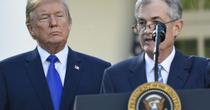
The Fed seems to be one of Trump’s many targets. Although he appointed Powell, it is doubtful that he will reappoint him when his term expires on May 15, 2026. Trump was critical of the Fed’s actions over the past four years for allowing inflation to increase significantly. He is now demanding that the Fed continue to lower its target Fed funds rate as inflation recedes. Powell demurred saying that the Fed would make its decisions based on an impartial analysis of the relevant data rather than from outside pressures. And remember that Trump said that he should have input into the Fed’s decisions. He said prior to the election “I feel the president should have at least a say in there. I think that in my case, I made a lot of money, I was very successful, and I think I have a better instinct than in many cases, people that would be on the Federal Reserve or the chairman.”
Earth to Trump, unless you get the Congress to change the law (probability equal to zero), all you can do is kibitz from the outside. What would be Trump’s monetary policy – cutting off money flows to Panama if they didn’t give back the Canal?
 haroldblackphd.com