US Debt. Is the sky really falling?
I know that many will have a visceral reaction to this post. But as always, prove me wrong and I will adopt your view.
I have a friend who is Mr Doom and Gloom. He is probably disappointed every day that the dollar is still the world’s reserve currency and hasn’t been replaced by the yuan, that the country has not gone bankrupt, that we are being run by a political mafia, that the Fed has to continually “print” money to pay our bills, that unfunded liabilities are off the chart and that one day the markets will quit buying our debt and that “we can no longer dig our deep hole deeper.” I sent him some political jokes that everyone else found amusing. Everyone but him. He says “by any mathematical or legal analysis this country is technically bankrupt.” I would argue that we might be morally bankrupt but as a country we are not either mathematically or legally bankrupt. But I guess it depends on how you define “bankrupt.”
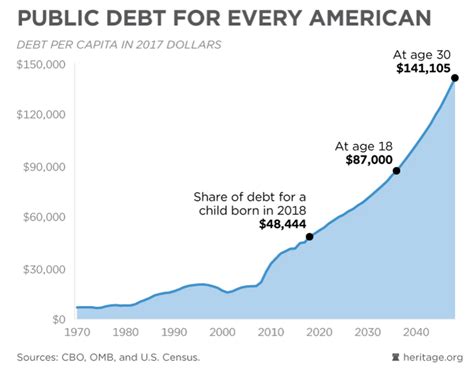
Bankruptcy simply means that you cannot pay your debts when they come due. So bankruptcy means insolvency of which there are two types. First is cash flow insolvency where the debtor does not have the liquidity to pay debt when due. However, the debtor does have assets but they have not been converted to cash. Then there is balance sheet insolvency when the existing assets are not sufficient to pay the debt. Clearly, the country does not have cash flow insolvency. It can always “print” money to pay its creditors. What about balance sheet insolvency? Here there are unfunded liabilities do not appear on the nation’s balance sheet. Consider that the national debt is around $34 trillion. That is debt that has to be services now. Currently the interest on the debt is projected to be $1 trillion. That’s a really big number in that the amount spent on defense is $880 billion. But since the government has the power of the purse there is zero likelihood that the government will not pay its debt in a timely manner. One factor that is overlooked is who owns the debt. Over 35% of the debt is held by the Federal Reserve and by the US government. It is logical to assume that even if there were a repayment crisis that the government could choose to restructure that part of the debt that it owns while paying in full the other debt holders. Crisis averted.
What about the unfunded liabilities? Social Security is $60 trillion and Medicare is $103 trillion. These too are really big numbers and are the promised payments less the projected income streams. Well just like any insurance company, so long as the payments do not come due in amounts that dwarf the income stream, those unfunded liabilities will not provoke a financial crisis. However, if the payments are greater than income, then benefits would have to be cut, or contributions increased or the difference financed through taxes. But in no case would the unfunded liabilities cause a bankruptcy. BTW if Social Security were not linked to wage indexing but to price indexing it would be in surplus rather than deficit. More on that in a later post.
Please don’t misunderstand. I am not pooh poohing the debt. I just don’t know when the debt is binding and will threaten our very existence. In 2005 the ratio of debt to GDP was 36%. Now it is 131 percent. Yes that is large but keep in mind the ratio was in Japan it was 216%. The Japanese debt ratio has been above 100 percent for over 20 years. The Japanese economy is still chugging along albeit at a very slow rate of growth. While many in the US point to the aging population and the increased payments from Social Security and Medicare as creating a debt crisis, that has not occurred in Japan which has an older population and a higher debt ratio than the US. However, Japan has been mired in a recession, slow growth and negative interest rates. Yet its economy keeps limping along with no default or bankruptcy in sight.
For me the biggest problem with the ever increasing debt is its impact on inflation, interest rates and private investment. Economics tells us that government borrowing “crowds out” private investment spending as interest rates are higher with the government in financial markets. The higher interest rates mean that there are fewer projects with positive net present values so there is less investment that would occur otherwise. This means slower growth and a lower GDP. The way to reduce the debt ratio would be to reduce government spending which would lower interest rates and increase economic growth which will in turn increase GDP. And of course, increased GDP along with reduced government spending means a smaller debt ratio.
Also the dollar is the world’s reserve currency and there is no viable candidate to replace it. When the euro was introduced there were some rumblings that it might replace the dollar but it has not as the EU keeps shrinking and is now only 60 percent of the US GDP. Some have worried about the yuan but so long as China is communist and is untrustworthy, that will never happen. China has 1.5 billion people compared to the US’ 350 million but its GDP is only 65% of the US. China may be a threat militarily but it is no threat economically. Also the Chinese are secretive. Its debt burden is likely higher than that of the US with its reckless domestic spending. The dollar makes up over 60% of the world’s reserve currencies. The yuan is not even in the top 4 trailing the euro, yen, pound sterling and Swiss franc.
Yes the BRICs countries have talked about instituting a new currency like the euro to replace the dollar in their trading with each other. Recall that Donald Trump aka the Tariff Dude, has threatened imposing with 100 percent tariffs to protect the dollar from a Brics currency. But then again Trump has threatened every country (except Russia) with higher tariffs. US tariffs do pose a danger to the dollar as countries will look for ways to circumvent the tariffs. The dollar has fallen as a result of Trump’s tariffs as countries will enter into agreements to pay for trade in currencies other than the dollar.
A major danger to the dollar lies in US inflation which weakens the value of dollar holdings. If tariffs cause higher inflation then look to other currencies such as the Swiss franc to increase its position as a reserve currency. But given the size of Switzerland, its franc will never replace the dollar. US inflation has historically been lower than the inflation worldwide making the dollar a safe haven currency. Although Trump is fixated on US deficits, the deficits actually help maintain the reserve currency status as the US imports goods and exports debt which contributes to worldwide liquidity and keeps the dollar king. Maybe if we called trade deficits US exports, Trump will stop his tariff silliness.
 haroldblackphd.com