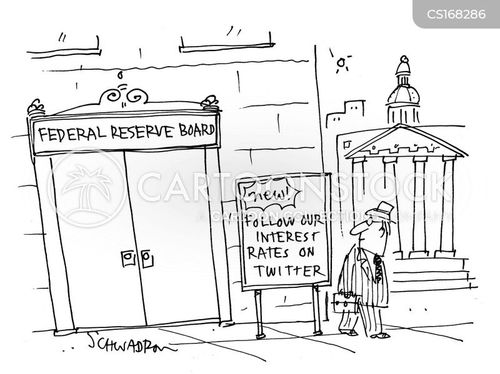
A new Fed mechanism?
What is the tri-party general collateral rate and why is it becoming the focal point of the conduct of monetary policy? Here is what the Fed of New York says “The tri-party general collateral rate (TGCR) is a measure of rates on overnight, specific-counterparty tri-party general collateral repurchase agreement(repo) transactions secured by Treasury securities. General collateral repo transactions are those for which the specific securities provided as collateralare not identified until after other terms of the trade are agreed. The TGCR is reported by the New York Fed. It is calculated as a volume-weighted median of transaction-level tri-party repo data collected from the Bank of New York Mellon only. This rate excludes general collateral finance repo transactions and transactions to which the Federal Reserve is a counterparty.”
Whew! Got that? The Dallas Fed president Lorie Logan proposed changing the Fed’s use of the fed funds rate to the tri-party general collateral rate in a recent speech. Logan notes that the fed funds rate is becoming less and less effective in implementing monetary policy because of its diminishing importance in monetary markets. In a speech entitled “Ample liquidity for a safe and efficient banking system” Logan states that while she did not support the Fed’s recent lowering of the Fed funds rate she did support the Fed’s recent decision to stop the run off of the Fed’s asset holdings, endorsing the current portfolio size. That portfolio was increased significantly to provide liquidity during the pandemic. I have noted before of the dramatic increase in the portfolio even before the pandemic and the rise during the pandemic. The Fed then started reducing the portfolio by a rather small $20 billion a month until December 1. During the pandemic the portfolio increased by $4.25 trillion to almost $9 trillion by June 2022. As of December 1, 2025 the portfolio was down to $6.5 trillion.
Just to review, when the Fed purchases securities from the banks, it increases the banks’ excess reserves. The hope is that the banks will lend out these excess reserves providing liquidity to the economy which will lead to increased consumer spending and increased business investment. But since 2008, the Fed also pays interest on bank reserves. The key here is then the relationship between the interest paid on reserves and what the banks can earn by lending out the funds. But it is also important to note that with the run up in the Fed’s balance sheet there was an overabundance of reserves in the banking system. If this excess is greater than loan demand and investment demand then the banks have no incentive other than to hold those reserves to earn the interest paid to them by the Fed.
The Fed funds rate is the rate charged to borrow in the overnight market. Banks that are short of reserves borrow from those with excess reserves. However, since the system is now awash in reserves from the run up in the Fed’s portfolio, there is less demand in the Fed funds market. Where once trillions were traded overnight, it is now only about $100 billion meaning that manipulating the Fed funds rate has less of an impact on bank lending than in the past. Logan notes that the trillions are now traded in the repo market where borrowers get short-term financing by pledging securities like Treasury bills as collateral. Currently the Treasury repo market is around $1 trillion a day. So Logan wants to move to a Treasury repo rate target and away from a Fed funds rate target. Large segments of the financial marketplace trade in Treasury repos while currently mainly the Home Loan Banks are lending in the market since their reserves do not earn interest.
Currently the Fed already is influencing repo markets through its Standing Repo Facility designed to keep the Treasury repo rate in sync with the Fed funds rate. Logan argues that targeting the Treasury repo rate would more directly achieve the Fed’s goals mainly due to the scope of the repo market compared to the narrowness of the Fed funds market.
I am not going to get into the technical aspects of how the repo market works. But you can go to Logan’s speech to view the details.
https://www.dallasfed.org/news/speeches/logan/2025/lkl251031
The relevant question is whether the tri-party general collateral rate is a more robust transmission mechanism than the Fed funds rate. One paper from the Dallas reserve bank estimates that it is.
“A simple measure of monetary policy transmission,” by Sam Schulhofer-Wohl
https://www.dallasfed.org/research/economics/2025/1216-sws-transmit
All within the Fed are not in agreement with Logan however. Most notably is Kansas City bank president Jeffrey Schmid who is critical of the Fed’s holding of such a large balance sheet saying that it “increases the Fed’s footprint in financial markets, distorts the price of duration and the slope of the yield curve, and potentially blurs the line between monetary and fiscal policy.” Treasury secretary Bessent agrees with Schmid. Schmid wishes for a less complicated way of conducting monetary policy while Logan appears to make it even more complicated. My bet is that the Fed will move in the more complicated direction seeking to further obscure its conduct of monetary policy. However, it likely will never get back to the Greenspan era where the Fed obsecrated as much as possible trying to keep the markets from lessening the impact of changes in monetary policy.
 haroldblackphd.com
If it wasn’t for your essays, I’d have no exposure to The Fed or any of this. I realize there’s a lot to learn..
In reading Logan’s speech , I noted immigration, employment- and the ice cream shop. That’s just me.
But she did provide this comment:..
..”The Global Financial Crisis (GFC) demonstrated the risks to firms on both sides of an unsecured, short-term interbank loan. The lender is at risk because if the borrower defaults, there’s no collateral to fall back on. The borrower is at risk because if lenders become worried, funding can dry up suddenly…”
…does this fit the idea that loan interest is to keep the borrower fm acting reckless ?….& there must be a reward/ incentive for lenders? I think you didn’t agree with that scenario in the past..
As I continue to look up terms, I saw the U.S. Treasury securities were compared to —a pawn shop. Now I can understand that!
LikeLike
I think her point is that repos are collaterlized and fed funds are not. The important part is the size of the market compared to that of fed funds.
LikeLiked by 1 person