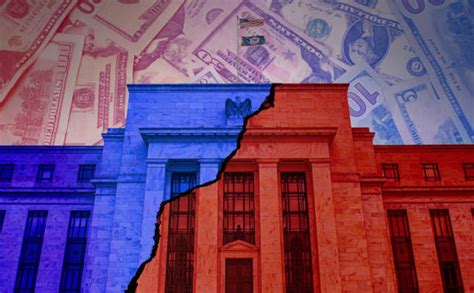
Trump is politicizing the Fed. So What?
The president’s attempt to politicize the Fed seems to be meeting little resistance in the Senate. The nomination of the Council of Economic Advisors chairman Stephen Miran to fill the unexpired term of Adriana Kugler sailed through the Senate Banking Committee 13-11. Miran said that he would take a leave of absence from the Council and return to that job in January. The democrats attacked this arrangement as a conflict of interest – which of course it is. Miran will do the president’s bidding at the Fed and will participate in the Open Market Committee on September 16 and 17. He will vote for a lowering of the Fed Funds rate. The only question is how large a drop in the rate will he argue for. The president wants a 300 basis point drop while the Fed is more likely to decrease the rate by either 25 or 50 basis points.
The Senate republicans – with the exception of McConnell and Paul – are scared of Trump and will do his bidding and confirm Miran. However, when the next democrat becomes president with a senate majority, look for more presidential lackeys to be nominated. The republicans may rue the day that they did not discourage Trump from nominating one of his aides.
So the president will have one of his own on the Fed. There are two other Trump appointees and they too are likely to do the president’s bidding hoping to be named Fed chairman after Powell’s term ends in May 2026. Thus, at least until then the president can count on at least those two to do his bidding as well. The president will have to nominate someone else to take the Fed seat in January. That person also will do his bidding hoping to be named chairman. Therefore, Trump can count on three of the seven governors to toe his line. If Powell resigns his seat on the Fed Board, the president will then have nominated four of the seven governors. But will they do his bidding? Maybe. The snubbed governors might reassert their independence. There will be no grounds on which they could be fired by the president. It will be interesting to see how this plays out.
Short-term the only hope that the president has is that whoever he puts on the Board will share his somewhat novel ideas about the economy and its workings. But even that will be no guarantee of how the governor will votes. Although many whine about politicization of the Fed. I am 100 percent in favor of a president putting kindred spirits on the board. Joe Biden did that with his appointees. He nominated Lisa Cook, Philip Jefferson and Sarah Bloom Raskin to be on the board. Cook is an international economist with an impressive resume concentrating mainly on the Russian economy but recently turned to issues on the intersection of macroeconomics and economic history, particularly African-American history. Jefferson is a macro economist who has published papers such as “Seigniorage payments for use of the dollar” but also is interested in issues involving inequality and poverty. Raskin’s nomination failed to get senate approval although she had previously served on the board. Her advocacy of the Fed taking an active role in climate change doomed her nomination. That she is also married to Rep. Jaime Raskin one of the more highly partisan democrat members of congress also probably played a role in her failure to be confirmed.
Jay Powell has allowed the Fed and its reserve banks to research politicized issues. There were seminars and podcasts at the reserve banks on issues such as race, sex discrimination and the climate. Some have criticized the Fed as these items are far from the Fed’s publicized mandate of price stability and full employment. However, they are actually part of how the Fed interprets its mission. The Fed’s home page states:
The Federal Reserve System is the central bank of the United States. It performs five general functions to promote the effective operation of the U.S. economy and, more generally, the public interest. The Federal Reserve
- conducts the nation’s monetary policy to promote maximum employment, stable prices, and moderate long-term interest rates in the U.S. economy;
- promotes the stability of the financial system and seeks to minimize and contain systemic risks through active monitoring and engagement in the U.S. and abroad;
- promotes the safety and soundness of individual financial institutions and monitors their impact on the financial system as a whole;
- fosters payment and settlement system safety and efficiency through services to the banking industry and the U.S. government that facilitate U.S.-dollar transactions and payments; and
- promotes consumer protection and community development through consumer-focused supervision and examination, research and analysis of emerging consumer issues and trends, community economic development activities, and the administration of consumer laws and regulations.
Therefore, as long as the Fed is a supervisor of banks and has the role of oversight for consumer protection and examining for compliance of consumer laws and regulations, research in the consumer area is consistent with its mission. My contention is that the Board in Washington should concentrate on the dual mandate of price stability and full employment and delegate the other areas to the reserve banks. For example, the Atlanta Fed states as its mission: “The Atlanta Fed’s Community and Economic Development function supports the Central Bank’s mandate of stable prices and maximum employment by helping improve the economic opportunity of low- and moderate-income (LMI) individuals and underserved places for a stronger economy for all Americans. Community development is one of the Federal Reserve’s core functions and this responsibility is rooted in its mandates from Congress.” The New York Fed says “At the New York Fed, our mission is to make the U.S. economy stronger and the financial system more stable for all segments of society. We do this by executing monetary policy, providing financial services, supervising banks and providing thought leadership on issues that impact the nation and communities we serve.” Just recently the New York Fed released its Empire state manufacturing survey.
It is not surprising that the types of seminars and papers that were produced under Biden are no longer being published by the reserve banks. Yet it is clear that the reserve banks feel that their mission goes beyond the conduct of monetary policy to the impact of monetary policy on the economically disadvantaged. These issues are germane to the regions.
Some pundit complain that the Fed was being “woke” and were pursuing “wokeness” because most of its staff economists are democrats. I beg to differ. One need not be on the left to want to see what is the impact of monetary policy on all sectors and members of society. Don’t misunderstand, the impact of monetary policy on all sectors of the economy and its participants is a vital and important area of study. The question is whether the Fed and/or the reserve banks should be conducting this research as well as having seminars and podcasts about these issues.
Although my dissertation and early research were in monetary theory, my later work concentrated on the impact of changes in bank regulation on the banks and the banks’ customers. I pioneered the econometric study of lending discrimination and discriminating in the lending terms of mortgages. The motivation for that work came from the Comptroller of the Currency when I was serving as deputy director for economic research and analysis in the early 1970s who wanted to know if national banks were discriminating against blacks in the lending decision. Our research led to a new field of study and its model and statistical techniques are still used today.
I do believe that the impact of monetary policy on people as well as the economy at large should be studied at the reserve banks rather than by the economists at the Board of Governors. Those impacts affect the reserve bank regions and are as important as the effect of policy on agriculture and on industrial production. That said, the economists at the Board of Governors should concentrate on the Fed’s dual mandate and nothing else.
 haroldblackphd.com
Thank you for inserting info fm the Fed sites. I guarantee: that guy picking up his beer this afternoon has no idea of FEDERAL anything. Like me until I joined this blog..
Assuming that your subscribers read sites & just don’t copy them, I’m still believing they get a “feeling “ fm the White House site and dread going there..
…”The latest PPI report shows there is no inflation — wholesale prices fell and smashed economists’ expectations. President Trump has defeated Joe Biden’s inflation crisis while successfully implementing powerful tariffs, which haven’t hiked prices like the so-called ‘experts’ claimed. This is yet another reason for Jerome ‘Too Late’ Powell to cut the rates immediately to make everyday life more affordable for Americans.” Sept 10 2025..”
— White House Press Secretary Karoline Leavitt—- ….
this statement is followed by quotes fm people I don’t know, at how surprised they are at the brilliance of this President…
The one thing missing is the status and betterment of the American People- who can only flourish under Trump’s strong- arm GOVERNMENT.
LikeLike