Today’s Fed and Friedman’s monetary rule
Monetarists, that branch of monetary policy inhabited by conservative economists, have long stated that monetary policy is oversold. That was the thinking of the sainted Milton Friedman and my PhD advisor the great Karl Brunner. Both emphasized the destabilizing effects of discretionary monetary policy and the benefit of a monetary policy rule. I remember Friedman once saying that we did not know enough to conduct discretionary policy – the manipulation of monetary policy tools – without destabilizing the economy. The economy writ large is just too complicated for monetary policy to work effectively without disrupting its workings.
Freidman argued that the central bank did have a role to play but it should not be one of casting uncertainty in the economy. Rather it should be one of certainty. Friedman argued that if monetary policy were too expansive, it would invariably lead to inflation (inflation is everywhere a monetary phenomenon). If the growth in money were too little, it would lead to deflation and possible recession. Fiddling around with monetary policy tools would be disruptive to the economy with households and businesses being unsettled by the uncertainty of what the Fed is going to do next. Friedman thought that discretionary policy was often the source of economic ails causing the Fed to have to fix problems that it had created itself.
The solution is a monetary rule. Friedman suggested that the Fed should allow the money supply to grow at a rate equal to the real long term rate of growth in the economy and leave it alone. No cutting the Fed funds rate. No raising the Fed funds rate. Just let the market determine the rate and leave it alone. Of course, the economy is dynamic and if there is an economic slowdown, the Fed would increase the money supply to maintain the targeted rate of change in real long term GDP. Conversely, it the economy were starting to grow faster than the target, the Fed might decrease the rate of growth in money to get the economy back on course.
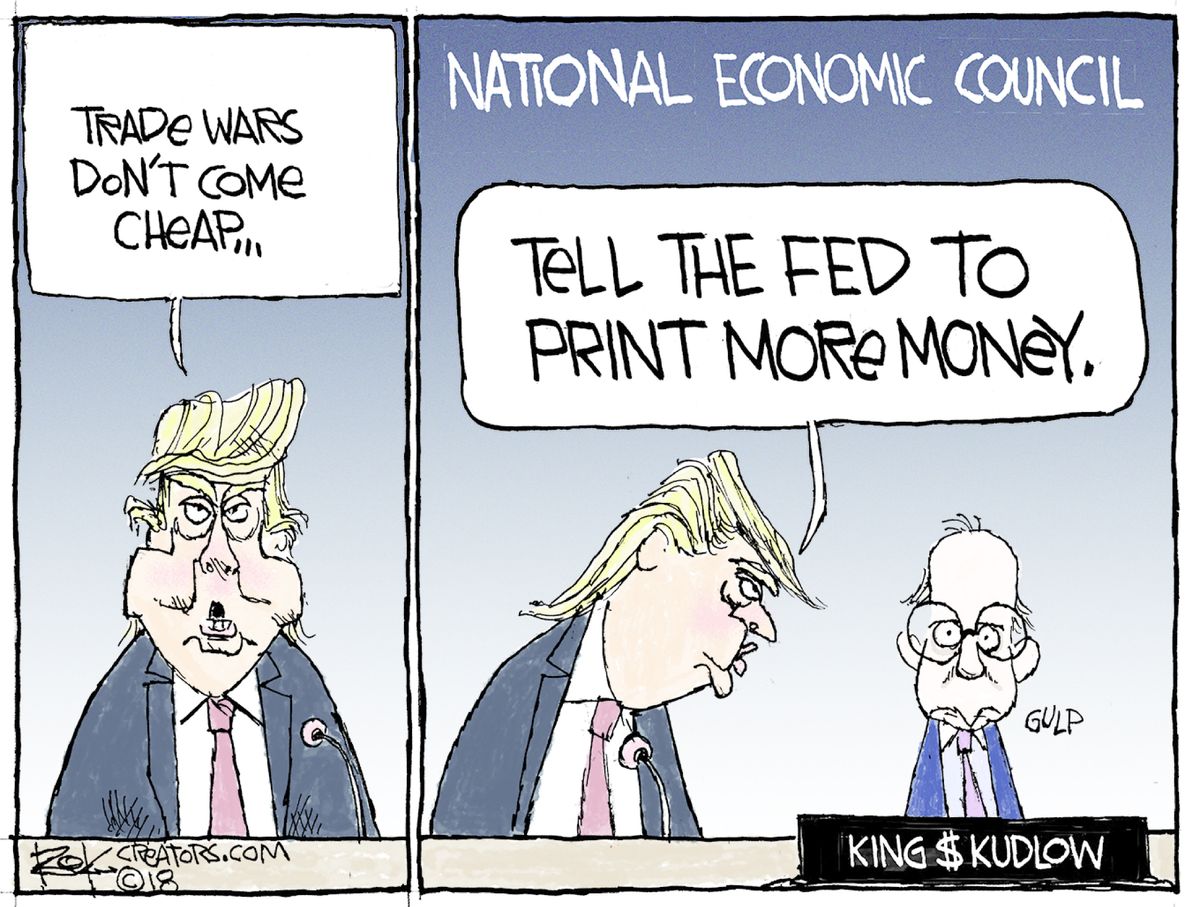
It should come as no surprise that not a single central banker in the world would adhere to Friedman’s monetary rule. They are too self-important to do that. Fiddling with stuff keeps them busy and shows their worth to all to see. Yet that same fiddling is the source of criticisms regardless of what they do. Right now President Trump wants the Fed to lower rates. His representative at the Board, Stephen Miran has called for lowering the Fed funds rate by 50 basis points at each of its next two meetings. Why he just doesn’t opt for 100 basis points now and get it over with is beyond me. The president (and Miran) seem to think that lowering the Fed funds rate will overcome the woeful jobs numbers and lower the government’s borrowing costs (and other pipe dreams). But lowering will do no such things as I have detailed before. It will likely only increase inflation because the mere process of lowering rates entails creating more money. Lower rates will not increase employment and will not lower the cost of borrowing since only a small proportion of the debt is in short term Treasurys and longer term Treasury rates will likely rise due to inflationary expectations.
The other members of the Open Market Committee have varying opinions as to what to do next. One is open to lowering the Fed funds rate by 25 basis points at the next two meetings. At least three others have expressed caution about changing the rates period while two others have been quoted as indicating that they might favor a rise in rates. The Fed chairman, Jerome Powell, who increasingly is looking forward to May 2026 when his term ends, is the standard bearer for caution. Powell reminds us of the Fed’s dual mandate of price stability and full employment is now at odds. Rising inflation means to increase rates while high unemployment means to lower rates. But now with both increasing, what should the Fed do? Well it lowered the rate by 25 basis points, a move intended to give Trump a little satisfaction but do little to change the economic narrative.
This is a classic middle of the road approach and is typical of Powell’s tenure as chairman. With all the diverse opinions about what the Fed’s course of action should be, Powell seeks compromise. In my experience, the chairman talks with each member of the Board of Governors individually prior to the meeting of the Open Market Committee. The intention is to reach a decision in which they all agree – a classic compromise. Then the chairman seeks that the reserve presidents are on board with the compromise resulting in a unanimous vote at the meeting. On those rare occasions where a compromise cannot be reached, dissents are recorded. I can guarantee that Miran will never agree to a compromise unless okayed by the president. Miran wants to go back to his cushy job on the Council of Economic Advisors where his only duty is to produce statistical confirmation of whatever Trump wants – something any graduate student could do.
I have said it before and I will say it again, the Fed should concentrate on inflation and eschew unemployment. Inflation does more long term harm to the economy while employment numbers constantly change in a dynamic economy. Putting the economy on a stable path of economic growth will virtually guarantee low unemployment numbers.
Of course, as per usual, my solutions will never be adopted because there would be no need for all those international conferences, all the press conferences, meetings at ritzy resorts and feelings of self-importance. But a plus would be that we would be rid of those contentious congressional hearings and the constant badgering of the central bank.
Now my not so last word on free trade
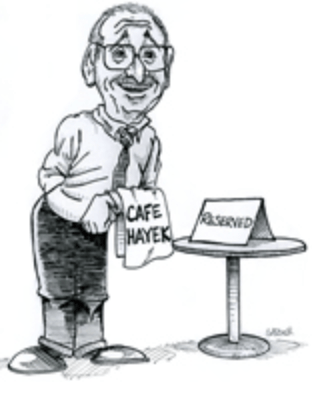
I am certain by now, everyone knows my position on free trade. I am largely against tariffs and only under very specific circumstances favor them on specific items. Some agree and some disagree. That is fine with me. I believe – like a true free trader – that even if one country practices free trade by lowering its trade barriers that it will be better off (see Singapore). I know all the arguments to the contrary and shake my head in disbelief at those who argue that we will be better off if we make ourselves poorer by erecting trade barriers. I have detailed extensively on this blog the arguments for and against and have offered suggestions that will forever go unheeded. On occasions I will revisit these arguments but for now, I recommend Don Boudreaux’s website Café Hayek where almost daily he writes about free trade engaging in spirited dialogue with his readers.
Here is an example of Don’s posting and is a recommended read.
 haroldblackphd.com
One of those Friedman videos : he said he would let his students become DC bureaucrats- but they would have to leave quickly, or they would be ruined..
I don’t know what denuded consumerism is, and research only confuses . But this fm AI :
…”Shifting focus: The call to reject denuded consumerism is a call for a more fundamental shift in the political economy. The goal would be to reorient markets to foster broad-based prosperity, stronger communities, and a more robust industrial sector, rather than just delivering inexpensive goods…”
OK there it is— political..
I see eminent domain, the govt- run affordable- housing lie. Socialist engineering to eradicate the old with the young- who are banging out kids who are nothing but SS numbers and taxpayers . Prices I can’t afford; jobs I can’t do. CAPITALISM always leads to govt control- ask Donald Trump.
LikeLike
Go to Don Boudreaux’s site. He talks about “denuded “ consumers. I disagree on your assessment of capitalism. Maybe only a corrupted version would lead to a loss of freedom. Recall Friedman’s Capitalism and Freedom.
LikeLike
Not arguing at all, and I’m glad to see more readers responding, and more debate…
It’s just that I read this denuding stuff , right after seeing the plan to attract young people to Knoxville, by providing interstate train service – an economic strategy of some sort of consumerism, OF COURSE funded by grants fm government.
LikeLike
Took a look at the summary of Capitalism and Freedom. Just wanted you to know I cooperate..
Wiki summary, of course. Saw this :
“The doctrine of “social responsibility”, that corporations should care about the community and not just profit, is highly subversive to the capitalist system and can only lead towards totalitarianism..”
Maybe you could discuss someday, not avoiding govt— but eradicating govt fm Free Trade, without eliminating govt fm currency.
LikeLike