Baseball’s new automated balls and strikes system
I love baseball. My love for the game started early. My father would plan our summer vacation around the Brooklyn Dodgers baseball schedule. If they were in Brooklyn we would stay with my mother’s brother and go to Ebbits field. If they were in Cincinnati we would go visit my Dad’s brother and go to Crosby Field. Yes, I saw Jackie Robinson play ball. Like many fans I felt like the umpires were an impediment to the game. The obvious (to all the world) missed calls in the field were bad enough but the missed balls and strikes were enough to drive you to drink – and you shouldn’t drive and drink.
Well much to the chagrin of the umpires, MLB took baby steps to address the problems caused by the umpires. First they installed the replay system where umpire calls can be appealed under certain conditions. The current instant replay system was implemented in the 2014 season. Under the current system, each manager is allotted one challenge per game, with additional challenges granted only if the previous one was successful. From the eighth inning on, the umpire crew chief is allowed to initiate his own replay review. The umpire crew chief is also allowed to initiate a review during any inning if the play in question is a boundary home run call.
Now MLB has instituted a challenge system for balls and strikes. Each team gets two challenges and only the pitcher, batter or catcher can challenge a call. This may bring some limited relief to frustrated players and fans who suffered through the nebulous strike zones of umpires like Eric Gregg and current umpires like C B Bucknor, but the system is flawed. One batter can use up his team’s challenges at one at bat – if he is wrong. So can one catcher or one pitcher. So why not give the teams a total number of challenges instead of the players?
Each umpire has his own strike zone which may approximate the real strike zone. Batters know that some umpire’s strike zone is up and down while others are left and right (re: Eric Gregg). Batters adjust and historically have said that all they wanted was the umpire to be consistent. Pitchers would know the umpire’s strike zone too and some pitchers would craft their own strike zone. Atlanta Braves’ Hall of Famers Tom Glavine and Greg Maddux were masters at this. Maddux would consistently hit his catcher’s mitt positioned a wee bit wide of the zone. He wouldn’t change and soon balls would be called strikes forcing the batters to swing at pitches wide of the zone. If the ABS (automated balls and strikes) system were in place, maybe Maddux and Glavine might not be in the Hall of Fame.
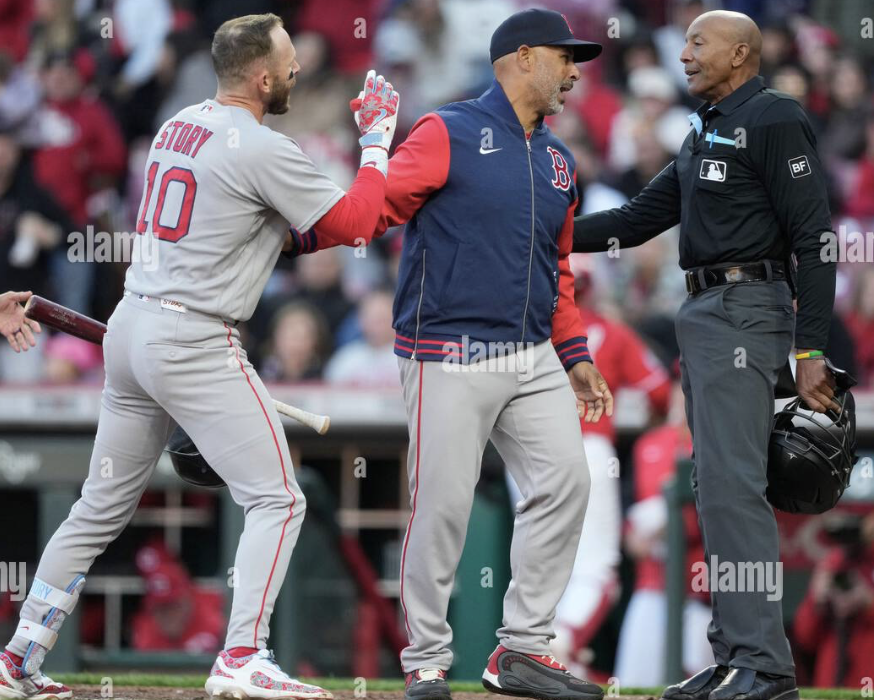
But umpires with inconsistent zones may not be motivated to change with the new ABS system. After the retirement of Angel Hernandez the worst balls and strikes umpire is C.B. Bucknor. The other day in a game between Boston and Cincinnati Bucknor was challenged eight times. He was overturned six times. He was overturned on all five Cincinnati challenges. But he never changed. Boston lost two of their challenges and could not have any more, meaning that Bucknor could still call the game as he saw fit when Boston was batting. There was a critical point in the game where Boston needed a challenge but had none. Its manager protested the call and was ejected. There was a game where MLB’s grading system had Bucknor missing 28 calls during a game. Even good umpires like Dan Iassogna can have bad days like the one where he missed 26 calls. But Bucknor’s poor vision is not confined to calling balls and strikes, he even gets overturned by the replay system, like he did the next day on a call that everyone saw. But to be fair, Ben May has the highest percentage of calls being overturned by replay.
Now clubs will have to figure out when to tell their players to challenge and when not to – even on obvious missed calls. The problem is that in baseball even if it is in the first inning with two outs and no one on base, should a call be challenged if this is obviously not a critical situation? But what if there would have been a rally with successive hits, robbing the team of a high scoring inning? It seems to me that the only solution is for all balls and strikes be called by the ABS system taking the home plate umpire out of the picture completely. I know some purists will complain and certainly the umpires will too. But how else to handle the situation where if it were not for the union, Bucknor and the worse umpires would be out of a job?
What baseball has done is to not let Bucknor umpire a Championship Series or a World Series. The same is true for Scott Barry, judged the second worse umpire in terms of balls and strikes. Mind you Bucknor’s lowest league accuracy rate is 92.3 percent so some might say “WTF, that’s pretty good.” Well in baseball, pretty good is not good enough.


The main question coming fm this essay is: why would anyone want to be an umpire? ..
For me , the excitement of the game was when I contracted at the Boston Sheraton- and the teams stayed there.
I enjoyed seeing the players. ..
My appreciation of umpires is because of the arguments. A good fight and dad stayed awake, to finish a TV game..
I would hate technology replacing or questioning any job- but as sports futurists say: use the technology if it’s there..
Just learned that Charley Pride was a pitcher in the Negro Leagues- because of the coverage of an event in Nashville, exploring the connection between music and sports.
Went to a few Red Sox games…
So did players for the Bruins. Imagine watching the game and dealing people who go to a baseball game , to get autographs of hockey players.
LikeLike
Pride was an all star caliber pitcher and probably would have made the major leagues were it not for injuries. I wonder if Nashville will ever get a major league team.
LikeLike
Nashville has become the home for professional skaters and gymnasts- who Nashville welcomes because the name recognition helps..charities they embrace.
The more sports people the better- in Nashville terms.
Baseball better get a stadium- before all the land is taken for condos and global companies.
LikeLike