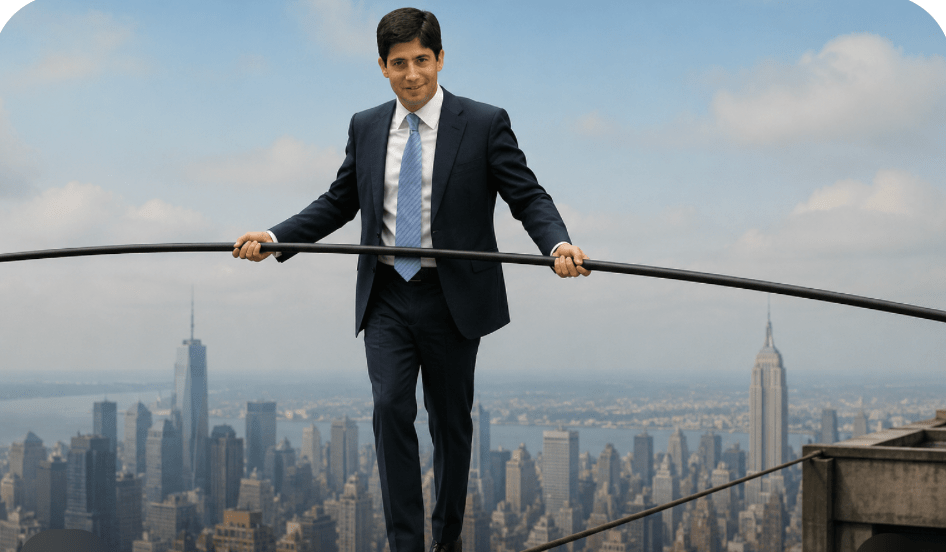
Kevin Warsh, Fed Chairman
The next Federal Open Market Committee meets June 17-19. It may well be the most closely watched meeting in recent history. It will be the first presided over by new Fed chair Kevin Warsh. Although the president will likely still be agitating for a cut in the Fed funds target rate, the minutes of the last FOMC meeting indicate that there will be considerable resistance to doing so. The market is actually saying that the probability is greater for an increase rather than a decrease in the rate. At the last meeting three reserve bank presidents famously dissented not in the decision to hold rates steady but in the wording that retained the so-called easing bias in the Fed’s statement.
The Fed only targets short term rates. But the long term Treasurys are already showing that investors expect inflation to persist or even rise. The yields on the 10-year Treasury note have risen from a low of about 4% in early March to around 4.6%, a move that has rippled into mortgage and corporate borrowing costs. “A lot of what’s driving long-term rates is a repricing of the Fed path—away from cuts and toward hikes,” said one analyst. Remember when Janet Yellen and Powell said that the inflation under Biden would be “temporary?” Well Treasury secretary Bessent and Trump have said the same thing, that the runup in prices caused by energy spikes will be “temporary.” Haven’t we been down this path before?
What about Warsh’s desire to sell off much of the Fed’s balance sheet acquired during Quantitative Easing (QE)? This then would be Quantitative Tightening (QT) which would result in a rise in rates and a reduction in bank liquidity as well. With Trump in the White House, you would think that would be a no-no even under the best of conditions. But Warsh could say that the FOMC has decided to hold rates steady on the Fed funds rate when in fact it could raise short term market rates by selling off some of its portfolio. So as to not incur the wrath of Trump, he could do a QT instead, causing rates to rise without raising them!
So Warsh has a perilous tightrope to walk. He has Trump insisting on lowering rates while members of the Open Market Committee may push for higher rates. He wants to sell off much of the Fed’s balance sheet but some reserve bank presidents, joined by the financial markets caution about the impact on bank reserves and systemwide liquidity. One analysis said “In a market that relies upon liquidity and leverage, that would inject an unnecessary risk into an economy that is over-reliant upon the financial sector.” However, Warsh can offset this decrease in liquidity by lowering or stop paying the 3.65% interest that the Fed pays on banks excess reserves. By lowing the rate or eliminating it the banks will be motivated to expand lending or purchasing Treasurys to make up for the loss in interest earnings. Warsh quoted Paul Volcker often at his confirmation hearing. Warsh also thinks that an increase in productivity spurred by AI will help grow the economy and mitigate the burgeoning deficit. Increased lending of their reserves by the banks coupled with increased productivity is a Reagan throwback to counter congress’s deficit spending. Can Warsh pull the rest of the Fed to help him out? We will see.
Warsh was previously at the Fed during Bernanke’s runup of the Fed’s balance sheet with all the QEs. As only one vote on the Open Market Committee he could do little to deter the Fed from moving from monetary policy to be actively engaged in support of fiscal policy initiatives. As chairman, he will still have only one vote. It will be interesting to see if he can coalesce support for his positions. Warsh testified that he wants to “reform” the Fed. A starting point will be the conduct of monetary policy.
Warsh has claimed to be a devotee of the sainted Milton Friedman (one of my several living heroes who are now dead). Freidman’s research and recommendations were for use of a monetary rule with steady growth in monetary aggregates while basically ignoring interest rate changes. Friedman was an opponent of discretionary monetary policy where the central bank constantly fiddles with its policy tools. Friedman said that this caused uncertainty in the financial marketplace and hindered rational decision making. Freidman famously said that inflation was everywhere and always a monetary phenomenon caused by excessive monetary expansion. But Fed economists since Bernanke have effectively ignored monetary aggregates in efforts to have interest rate control. Indeed Powell told a Senate hearing in 2021″When you and I studied economics a million years ago…monetary aggregates seemed to have a relationship to economic growth. Right now, I would say the growth of M2, which is quite substantial, doesn’t really have important implications for the economic outlook. Monetarism is something we have to unlearn.”
Warsh at his hearing essentially said that Powell was wrong. As I learned in graduate school under Karl Brunner, if you try to control interest rates, you lose control of monetary aggregates. This has been the case, especially in 1991 moving forward. If the Fed had not exploded the money supply, the Biden inflation and now the Trump inflation could well have been avoided. Warsh seems to believe this too. He has aligned himself with positions similar to Milton Friedman’s monetarist theories, where price stability and rules-based credibility are pre-requisites for growth. He is skeptical of the idea that central banks can fine-tune outcomes without distorting the economy. He has repeatedly warned that prolonged monetary activism does not support the economy but reshapes it rewarding speculation and leverage over productivity and technological improvement. For me this is incredibly uplifting.
This is decidedly out-of-the-box thinking for a central banker whose counterparts – regardless of country revel in fiddling around with things just to show their importance at being god-like. I recall a cartoon depicting Paul Volcker and Jimmy Carter sitting on a stage. The moderator said “Now ladies and gentlemen, I give you the most powerful person in the world!” And they both stood up.
Warsh at his senate hearing quoted Volcker in saying that monetary aggregates were a useful indicator of the effects of monetary policy on inflation and chided today’s Fed for ignoring control of the money supply. Warsh in his desire to “reform” the Fed is not going to be able to change that entrenched establishment overnight. What really will be interesting is whether the establishment will eventually change him.


Let’s just all agree right now that your knowledge of all things “Federal Reserve” is encyclopedic!
LikeLiked by 1 person
Thanks.
LikeLike
One prediction: Warsh will quickly raise rates..
Fascinated in looking up M 0-3. Also, the concept of ‘near money.’
Definitions of Monetary aggregate implies only financial institutions are used..
If M 0 is the amount of real money In circulation, does the Fed simply imply there is confidence of GOLD to back a dollar?
In psychology, an aggregate would be separate groupings of people identified by characteristics/ in one place, having nothing in common. Sounds complicated.
Just sayin’..
I wonder how The Fed deals with crypto. After all- according to the Presidential sons- this is the currency of the future, and Trump is considered friend to ethereal currency..
Milburn Drysdale- he was a funny TV bank president because he would do anything to gain money.
… “The Commerce Bank Vault: His primary motivation was keeping the Clampett family’s massive fortune safely locked inside his bank…” Not a good idea. right? Eventually throws off predictions?
I prefer stodgy bankers. They meet the criteria of circulation.
LikeLike
In Warsh’s disclosure he lists 34 crypto investments but they only make up a small part of his overall portfolio. Trump has called himself the “crypto president” which makes me wonder what role, if any, the Fed will play. Warsh has said that crypto was not money but a valuable indicator for monetary policy to consider.
LikeLiked by 1 person
When I asked Hal Hill on air about what’s the disconnect between gold and dollar, his answer was people don’t have those ideals anymore. No one thinks about any backing of a dollar..
So I guess Warsh will stand with the full economic backing of GOVERNMENT.
LikeLike