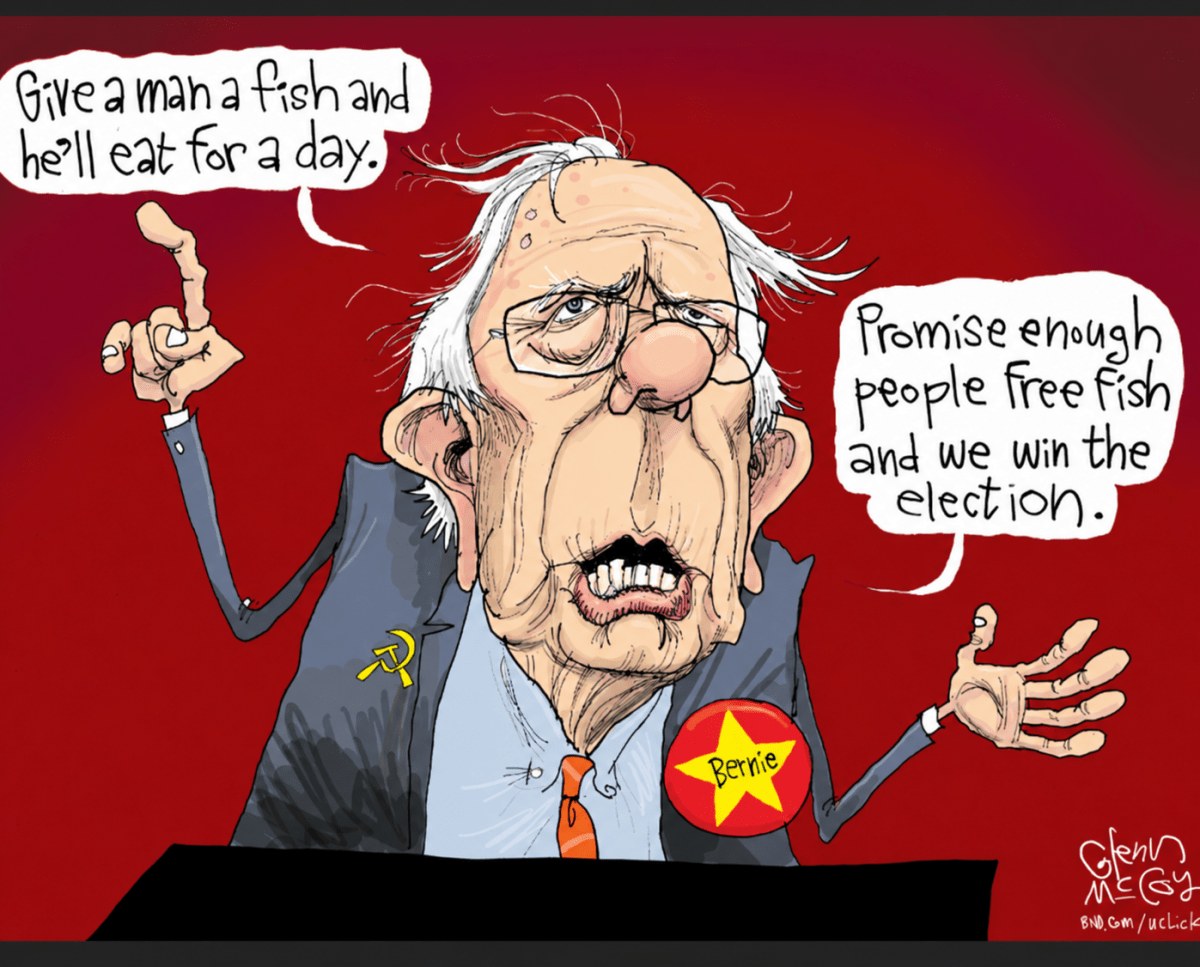
The Democrats’ Recruitment Class: When the Fringe Becomes the Face
There is a rule in politics that used to be bipartisan common sense: the candidates you recruit say everything about what your party stands for. By that standard, the modern democratic party has a serious problem — and it is one entirely of its own making. Across the country, democratic primaries are producing candidates whose views would have been disqualifying in any serious political organization a decade ago. The party that once prided itself on pragmatic governance and broad-tent coalition-building has instead become a proving ground for ideological maximalism — rewarding candidates who compete to see how far left they can sprint before falling off the edge.
The Progressive Surge
The progressive wing of the democratic party has convinced itself that the path to power runs through ideological purity. The result is a candidate pipeline that prioritizes litmus tests over electability and grievance over governance. Calls to abolish prisons, seize private industries, and dismantle America’s international alliances are no longer fringe positions whispered at activist meetings — they are campaign platforms, endorsed and celebrated.
What’s striking is not just the radicalism of some of these positions — it’s the institutional cowardice with which the democratic establishment has responded to them. Party leaders who once would have drawn clear lines have instead hedged, equivocated, or quietly looked the other way. The result is a party that cannot define what it stands for, because it is too afraid of the activists who fund and organize it to say no to anyone.
Character No Longer Counts
Beyond ideology, there is the matter of basic character standards — once considered a floor, not a ceiling, for public office. Democrats spent years insisting that personal conduct mattered, that who a candidate was as a person reflected on the party and ultimately on governance itself. That standard has now been selectively abandoned whenever inconvenient. Serious questions about a candidate’s character are brushed aside as distractions the moment ideological allies decide an election is too important to lose.
This is not a matter of partisan scoring. It is a coherent observation: a party that refuses to enforce its own stated values is a party that has no values — only interests. Voters notice.
The Antisemitism Problem
Perhaps most glaring example has been the democratic Party’s halting, inconsistent response to antisemitism within its own ranks. Jewish voters — a constituency that has been reliably democratic for generations — are watching candidates who traffic in anti-Jewish rhetoric receive enthusiastic support from prominent party figures. The double standard is glaring – rhetoric that would end a republican’s career overnight is tolerated, rationalized, or ignored entirely when it comes from the left.
Republicans have a genuine opportunity here — not to exploit fear, but to offer something the democratic party currently cannot: a clear, unambiguous commitment that antisemitism has no home in American politics, period, regardless of which side of the aisle it comes from. Jewish Americans deserve a political home where their safety and dignity are not conditional on their ideological alignment.
What This Means for 2026 and Beyond
Democratic recruitment is not merely an internal party management problem. It is a window into the soul of an institution in ideological free fall. A party that cannot say no to its most extreme voices, that cannot enforce basic standards of conduct, and that cannot protect its own most loyal constituencies from harassment and hate is not a party fit to govern.
Republicans should resist the temptation to simply mock and move on. The better choice is to contrast — clearly, repeatedly, and specifically — what principled governance looks like against what the democrats are currently offering. Voters in competitive districts are not ideologues. They want competence, stability, and leaders who can pass a basic integrity test.
The democrats are making the argument for republicans. The task is simply not to get in their way.
MAGA too!
And yes, I am not giving the republicans a pass. Just go back and read previous postings. Recall, I got fired from the local “conservative” weekly for not being 100 percent MAGA and having the audacity to be critical of our (RINO) president. The republicans have their MAGA fringe led by the occupant in the White House. There are Andrew Clyde, Randy Fine, Andy Ogles, Tim Burchett and some of the 40 member Freedom Caucus. But the MAGA fringe is a personality driven cult. It does not have legs and will end when Trump leaves office. But no single personality drives the fringe on the left. It is a collection of souls that seems to grow daily. From the vacuousness of AOC to the toxicity of Graham Platner, the progressive left appears to have more staying power than the MAGA right. Consider that the far left progressive caucus in the House sports 97 members while its “center-left” New Democrat Coalition has 110 members (30 of whom also belong to the progressive caucus. So 177 of the 212 democrat members of the House are either center-left or fringe left. That, my friends, is not a personality driven cult like the MAGA-folk and why it is here to stay for a while.


The MAGA movement needs to die a quick and painful death when Trump leaves office. It has hijacked true conservatism in more dramatic ways than the first mover – the “Tea Party.” It’s almost as if we need a complete reframing of what it means to be a conservative, since boomers and millennials have forsaken it, while the alphabet generations have ignored it (or are just plain ignorant).
In reading your essay, a fear erupted; Ken Paxton is the moral equivalent of Graham Platner. Any hope of moral or ethical superiority is fleeting in the face of his candidacy – and isn’t that perfectly Trump? Support the cretin, simply because he licks his boots.
Pathetic and wretched.
LikeLike
The MAGA movement needs to die a quick and painful death when Trump leaves office. It has hijacked true conservatism in more dramatic ways than the first mover – the “Tea Party.” It’s almost as if we need a complete reframing of what it means to be a conservative, since boomers and millennials have forsaken it, while the alphabet generations have ignored it (or are just plain ignorant).
In reading your essay, a fear erupted; Ken Paxton is the moral equivalent of Graham Platner. Any hope of moral or ethical superiority is fleeting in the face of his candidacy – and isn’t that perfectly Trump? Support the cretin, simply because he licks his boots.
Pathetic and wretched.
LikeLike
Paxton is the moral equivalent of Platner and for Trump to endorse him of Cornyn was not a surprise. But Trump has done the democrats a favor by tarnishing the republican brand so that the great unwashed now associate RINO with being anti-Trump.
LikeLike
The two parties are opposing sides of the same coin. Populism.
LikeLike
Indeed. A closer look coming soon.
LikeLike