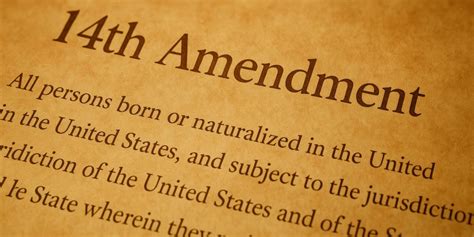
The Supreme Court’s Birthright Citizenship Decision
The Supreme Court ruled against President Trump in the birthright citizenship case. The president had issued an executive order directing federal agencies not to recognize citizenship for children born in the United States unless at least one parent was an American citizen. He was sued immediately and lost at every level, including the Supreme Court.
I had predicted the president would lose and likely lose unanimously. Instead the decision was 6-3. Chief Justice Roberts wrote for the majority, joined by Justices Barrett, Kavanaugh, Sotomayor, Kagan, and Jackson. Justices Thomas, Alito, and Gorsuch dissented.
The Majority Opinion
Roberts wrote the majority opinion saying ““The Fourteenth Amendment achieved its aim. The Citizenship Clause mirrored the common law’s criteria for citizenship,” Roberts wrote. “The Clause starts, like the common law, with territory—a child must be ‘born in the United States,’ not elsewhere (even to
American parents). And the Clause ends, again like the common law, with sovereign power—a child must be ‘subject to the jurisdiction’ of the United States, unlike (say) the families of foreign ministers. A child born on American soil and subject to American law was made an American citizen. “The Framers of the Fourteenth Amendment extended that promise to ‘every free-bornperson in this land.’ We keep that promise today.”
The Dissents
I had speculated that Justice Thomas might side with the majority in that an earlier ruling in 2022 indicated that he supported the 14th Amendment. I was wrong. Thomas wrote for the minority saying Thomas wrote that the majority “has repurposed the Fourteenth Amendment. The Court today takes the extraordinary step of holding facially unconstitutional the president’s Order excluding from citizenship the children of foreign temporary visitors and illegal aliens. In doing so, the court adds to the sad history of the Fourteenth Amendment, which was designed and understood to secure equal rights for the freed blacks but has instead been repurposed for political projects that the Reconstruction Congress did not support.” “Today, the Court does so again by recognizing a constitutional right to citizenship for the children of all foreign birth tourists and illegal aliens. I am not sure that today’s opinion will stand the test of time.”
Clarence Thomas is one of the few of my living heroes still living. But he’s wrong here, on two counts. First, the decision has already withstood the test of time in the sense that matters most: it follows directly both from the text and the history of the ratification of the amendment. Second, this Court did not repurpose the Fourteenth Amendment at all. As I wrote in an earlier post, if Congress had wanted to exclude the children of noncitizens, it would have said so when it drafted the amendment. The ratification debates make that clear.
What the Ratification Debates Actually Show
Here is what I posted back on April 1, 2026: Senator Edgar Cowan of Pennsylvania asked whether Californians were expected to sit quietly while overrun by immigration from the “Mongol race,” and whether they would be driven from their homes by Chinese immigrants. It’s not a stretch to say that sounds like something Stephen Miller might say today.
The Senate’s answer came from Senator John Conness of California, who told Cowan not to trouble himself over the Chinese in California or on the Pacific coast and said the Senate was entirely willing to accept that children born there to Chinese parents would be citizens, entitled to equal protection under the law just like anyone else.
So Justice Thomas is wrong.
Gorsuch: The Real Surprise
The real surprise is Justice Gorsuch, who sided with Thomas and Alito, a striking reversal from his own questioning at oral argument. Reason magazine reported that the government’s lawyer, Solicitor General John Sauer, had argued that birthright citizenship should turn on whether a newborn’s parents were “domiciled” in the United States, meaning lawful presence with intent to remain permanently. Gorsuch pushed back hard on that framing, noting that the term never appears anywhere in the congressional debates over the amendment. He stressed that the clause focuses on the child, not the parents, and called the absence of any mention of domicile “striking”, according to Reason’s account.
Gorsuch also pointed out a second problem with the government’s position: immigration law is far more restrictive today than it was in 1868, when someone could establish domicile with no immigration law standing in the way at all. If the Court is going to apply an 1868 understanding of domicile, as the Solicitor General himself insisted it should, then a person’s immigration status shouldn’t matter under that same test. In other words, the historical meaning of domicile the administration was leaning on actually refuted its own argument.
And yet, after laying out that devastating critique of the government’s case, Gorsuch voted with the dissent, siding with Thomas and Alito. Justice Barrett, interestingly, walked through the same reasoning, reached the same conclusion that the president’s argument was fatally flawed, and voted the other way, joining the majority to uphold birthright citizenship.
Go figure.
(A personal note: I am having cataract surgery tomorrow and likely will not post. Forthcoming are posts on the Court’s decisions on whether the president can fire officials appointed to fixed terms who are confirmed by the Senate.)
 haroldblackphd.com
We disagree. The 14th amendment was specific to the Civil War and the society which was deprived of its citizen rights. Its ludicrous to think that people can come to this country, have a child and leave obtains American citizenship for the child without demonstrating loyalty to the country. Illegally present parents cannot produce legally present children.
LikeLike
I do not disagree. I am simply reporting that if congressional intent is important then the ratification debates say otherwise. The implication is that the amdendment needs amending.
LikeLike
It is fine as written. If American Indians were here from way before the slaves were imported they would also be entitled to voting rights. But I daresay American Indians were not voting in American elections for many years? That did not happen until after 1924. Why? Because even though they were born in the land they were not committed to this nation. If one squints one can distort the view. SCOTUS is squinting on this to avoid upsetting the apple cart. But that does not deter from the facts or the truth.
LikeLike
Keep me updated
LikeLike
Accepting these cases only appears to degrade the Supreme Court. When Judge Alito said , down the road , the Supremes would regret this decision- maybe a lot of decisions by any court is questionable. Or shameful..
Birthright is something I never questioned..
Now this one decision and it’s aftermath, leaves SCOTUS questionable..
DRUMMER! Thanks for referencing Indians. I understand the idea that Indians did not show loyalty to the United States. There’s the warfare against them; the betrayal; artistic prints of white people ‘discovering’. Hudson Bay, the Indians standing by, saying we knew it was there all along. Why would Indians praise like Congressional lemmings?.
While one of Dr. B’s subscribers
disdained teaching children ‘ indigent classes’, I recall dad being sent to Peterson Field , Colorado, me going to a civilian school that taught cultural classes about Native & Hispanic. Because the ‘ indigent’ parents of the kids were active- duty military..
No problem with cataract surgery. The recovery steps are aggravating. But for readers, the procedure was liberating.
LikeLike