Terrorism, Irrationality and the Failure of Violence
A personal observation
I don’t get it. Extremism in all its forms is a manifestation of irrational thinking. While it has become fashionable to single out Islamic extremism and condemn an entire religion, this framing ignores a more fundamental truth: radicalism that leads to political violence is, at its core, an act of delusion. Consider the case of Ayman Mohammad Ghazali, a 41-year-old naturalized citizen who drove his car into a synagogue in Michigan. Ghazali had lost four family members in an Israeli airstrike in Lebanon. No one inside the synagogue was harmed; he exchanged gunfire with a security guard and ultimately took his own life. What did he hope to accomplish? Would his attack bring back his relatives? Would it shift American foreign policy? The logic simply does not hold. This is not the behavior of a strategic actor — it is the behavior of a man consumed by grief and rage, unable to channel either constructively.
Antisemitism has undeniably intensified in the Western world since the conflict in Gaza, rising simultaneously on the far left and the far right. That much is true. But the violent expression of that hatred accomplishes nothing beyond bringing grief to victims and their families — while hardening opposition against the very causes the perpetrators claim to champion.
The pattern repeats across ideological lines. Timothy McVeigh’s bombing of the Alfred P. Murrah Federal Building in Oklahoma City in 1995 killed 168 people and injured over 600. McVeigh claimed he sought to avenge federal overreach at Ruby Ridge and Waco. Did the bombing prompt the reforms he envisioned? It did not. What it produced was a wave of national mourning, tightened federal law enforcement powers, and McVeigh’s own execution. The 2015 racially motivated killings at a black church in Charleston, the 2019 Walmart shooting targeting Hispanics in El Paso, the supermarket attack in Buffalo — none of these atrocities moved the country toward the ideological goals of their perpetrators. If anything, they moved it in the opposite direction.
The same futility applies to religiously motivated terrorism. Boko Haram’s sustained campaign of suicide bombings against Nigerian Christians has not produced mass conversions to Islam. Attacks on synagogues have not weakened Jewish identity or community cohesion — if anything, they have strengthened it. Ironically, some 50,000 Jews emigrated to Israel from Western countries after 2023 precisely because of rising antisemitism in their home nations, viewing Israel as a safer place than the societies supposedly more tolerant of them. One cannot escape the irony. But some might say that this was the purpose of the antisemitism – to get Jews to leave.
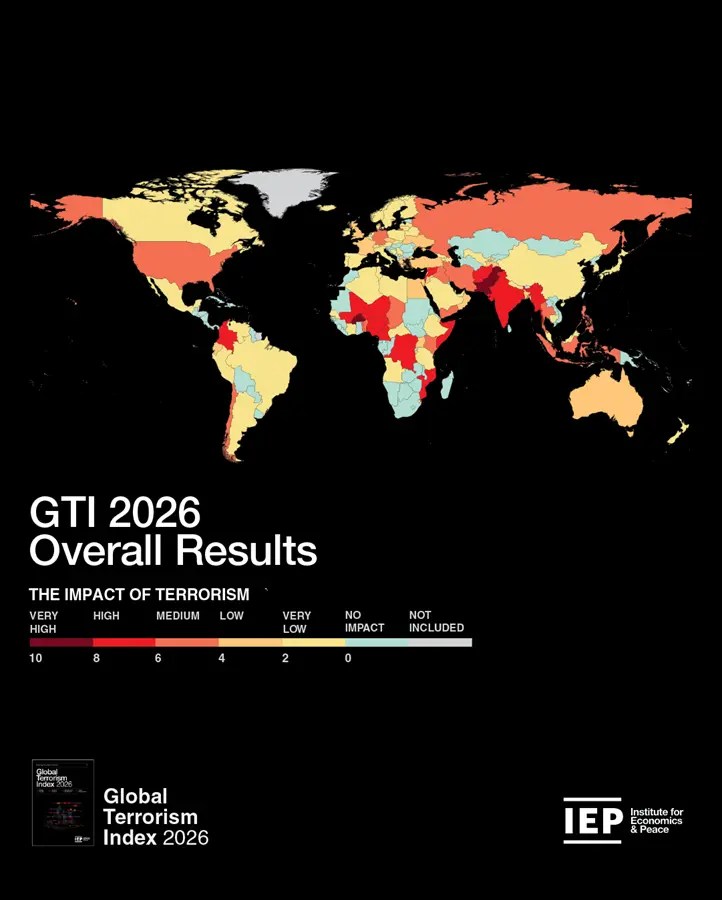
Political violence is not limited to the religious right. Left-wing terrorism has its own long, unimpressive record. Environmental extremists who spiked trees to injure loggers did not halt deforestation. Green terrorism has not meaningfully reduced fossil fuel consumption. The assassination of a UnitedHealthcare executive in New York and the shooting of Congressman Steve Scalise at a congressional baseball practice represent a left-wing political violence that is no less irrational for being less frequently discussed. A recent report by the Center for Strategic and International Studies noted that, starting with the second Trump administration in 2025, far-left terrorist plots and attacks began to outnumber those from the far right — a reversal of a long-standing trend.
Recently, Secretary of State Rubio hosted a summit on radical leftist terrorism with 65 national delegations. Rubio said “Today we face a new wave of this old evil here in the United States: the share of left-wing terrorist attacks and plots has risen to levels not seen in decades.” Rubio said the administration is rebuilding the U.S. counterterrorism strategy around what it views as an increasingly transnational threat. He argued the United States and its allies must respond by expanding intelligence sharing, law enforcement cooperation and efforts to disrupt terrorist financing.
It is worth acknowledging that “terrorism” is not a monolithic category. Vandalism against Tesla vehicles in protest of Elon Musk’s politics is not morally equivalent to firebombing a church. The academic definitions of terrorism share a common thread: the calculated use of violence or intimidation to generate fear and influence political outcomes. By that standard, almost none of these acts succeed on their own terms. Terror rarely produces the political change it demands.
The historical record is remarkably consistent. White supremacists did not transform Georgia or Mississippi into racially homogeneous enclaves during what I call the reign of deep south terror. Radical Islamists will not convert non-believers through attacks on places of worship. Extremism consistently fails to convert the mainstream to its cause. It alienates potential sympathizers, provides opponents with propaganda, and typically results in the imprisonment or death of the perpetrators themselves.
There is something almost tragic in this. Some grievances are legitimate. Whatever grievances motivate a terrorist, the choice of political violence virtually guarantees those grievances will go unaddressed. The cause becomes inseparable from the atrocity. Radicalism that expresses itself through terror wastes lives, wastes energy, and reliably produces the opposite of its intended effect.
A necessary distinction: this analysis concerns attacks on civilians and non-combatants. Covert military sabotage during wartime occupies a different moral and legal category. Less clear-cut are historical cases like the Allied firebombing of Dresden and Tokyo during World War II — acts that, by the standard definitions, qualify as terrorism against civilian populations, even if conducted by states rather than non-state actors.
Lastly, a word on Islamic terrorism. Even if the proportion of Muslims susceptible to radicalization is as low as one to two percent, two percent of two billion people is forty million. The number is sobering. Yet it raises a useful counter-question: Israel has nearly two million Muslim citizens. By the same rough math, forty thousand might be expected to be radicalized. Yet the rate of domestic terrorism from that population is strikingly low. Whatever combination of economic integration, legal equality, and social investment explains that outcome, it suggests that the conditions producing terrorism matter at least as much as the ideology that inspires it. But I am no expert on Islam.
Terrorism to the terrorist is not irrational and is a moral judgment and a strategic assessment. It must be frustrating. Across ideologies, religions, and continents, terrorism directed at civilians has a near-perfect record of failure. Yet it continues and is verification of the old definition of insanity – continuing to do the same thing while expecting a different outcome. Those who believe otherwise are deluding themselves while sating their own hatreds.


Regardless of their political stripes, it seems that terrorists are more focused on extinction than conversion. They are consumed and fueled by an inner hatred created by a powerful belief that motivates their actions. I don’t think Timothy McVeigh was trying to convince people of anything; he just wanted to kill a bundle of people to avenge a perceived wrong.
Of course, religious terrorism can fit into conversion theory. South Americans are primarily Catholic because they were threatened at the tip of the sword to “be Catholic or be dead.” They chose to be Catholic – but you have to wonder how the love of Jesus touched their hearts to inspire true conversion? Much of their fealty is to the church rather than to the Lord.
Deep within, the heart has always known that there is freedom; it fuels the spirit of the unjustly convicted prisoner and inspires when all else says to give up. And that desire can change nations – you’re absolutely right in that – if anything – the terrorist actually creates the opposite of what they seek. An inspired remnant will rise with renewed fury to be free.
LikeLike
You are right about McVeigh. But why did those tip-of-the-sword conversions to Catholicism remain Catholic after the Spanish left? I have long wondered why slaves embraced the religion of their owners here in America? You have me wondering if this is universal. I need to go back and read about the Crusades and the Spanish Inquisition. But your last paragraph says it best.
LikeLike
Maybe it became a “faith of our fathers” effect, or maybe – despite the method of conversion, a true faith proved sticky….
LikeLike
As I recall, Dylann Roof said he had a moment of hesitation before he entered the SC church. He must have been compelled to think something good would happen if he went thru with the shooting..
James Hodgkinson gave his life without taking out one life – and only wounded others. incl. Scalise . Seems like Hodgkinson is the real victim..
Going thru papers, I found a picture of Sirhan Sirhan’s mother, who was forbidden to leave the U.S. because her presence would inspire radicalization in Middle East.
That picture points why there’s not MORE attacks. Ordinary people have kids to raise, pets to feed, bosses depending on them- and mommas to look out for. If someone’s act is big enough, their family pays..
The conversation thread is a conversation I think about ..
I’m putting out flyers for a church fundraiser in East Knoxville- a church I don’t go to. I’ve had discussions with the minister about why blacks embrace the religion of the people who lynched them. He says he really believes this Christianity stuff…
…which goes along with Christian
apologists : despite the genocidal racism brought to the Western World, there were a handful of whites who’s good Christian witness left a cultural residue. And it stuck.
LikeLike
In my reply to Pat I wondered why the slaves embraced Christianity. Maybe your last sentence is why.
LikeLiked by 1 person