Is the world too much with us?
For some reason, without any conscious effort, out of the blue I remembered that at my high school graduation way back in 1962 from Booker T. Washington High School in Atlanta, the poem The World Is Too Much with Us by William Wordsworth was on the program. At first glance, the poem, written in 1807, might seem more apt for today’s world than for the world of 1962 or even 1807. I still remember the words:
The world is too much with us; late and soon,
Getting and spending, we lay waste our powers;
Little we see in Nature that is ours;
We have given our hearts away, a sordid boon!
This Sea that bares her bosom to the moon;
The winds that will be howling at all hours,
And are up-gathered now like sleeping flowers,
For this, for everything, we are out of tune;
It moves us not.—Great God! I’d rather be
A pagan suckled in a creed outworn;
So might I, standing on this pleasant lea,
Have glimpses that would make me less forlorn;
Have sight of Proteus rising from the sea;
Or hear old Triton blow his wreathèd horn.
Wordsworth was one of the most influential poets in Western literature. His most famous work, The Prelude, is considered to be the crowning achievement of English romanticism.
But what of this poem? It was written during the Industrial Revolution, a period of technological innovation that disrupted entire society and thoroughly transformed British life — and that of the Western world. The poem laments the withering connection between humankind and nature, blaming industrial society for replacing that connection with material pursuits. For Wordsworth we have lost the ability to connect with and find tranquility in nature. In exchange for material gain, we have lost the rhythms of the natural world. As a result, those rhythms no longer have an emotional impact on us.
In a more modern context, some would argue that this is the result of capitalism. But it is not. It is the result of technological change and would occur regardless of the political or economic system. The poem laments the loss of a more agrarian life for that of an urban one. It is a familiar refrain for some of us who have seen back-to-nature movements come and go.
What of the 1950s? Why the importance at a 1962 high school commencement? What were our teachers trying to tell us? Looking back, the 1950s were really disruptive. I remember our first color TV — a tiny screen in a 1,000-pound cabinet that required four men to wrestle it up the steps from the driveway to the living room. There was UNIVAC, the first commercially produced computer, there was Sputnik in 1957, the development of the hydrogen bomb, and the tensions of the Cold War. There were also innovations in the music industry, such as LPs and 45s, that revolutionized how music was enjoyed and distributed. I remember my first transistor radio, which made it possible to take my music with me instead of being stuck in the house listening to the R&B station at the end of the AM dial. (BTW, did you see where Congress is mandating that automakers keep AM radio in their vehicles?) Underlying all of it was an explosion in patent filings, reflecting an unprecedented pace of innovation that transformed entire industries and profoundly reshaped daily life. The transition from vacuum tubes to transistors made computers smaller, faster, and more reliable, and the introduction of integrated circuits in the 1960s advanced computing further still, leading to more compact and efficient machines.
So it is not hard to imagine all the disruption caused by the surge in technological change in the 1950s, and how that disruption would still be echoing at a high school commencement in 1962.
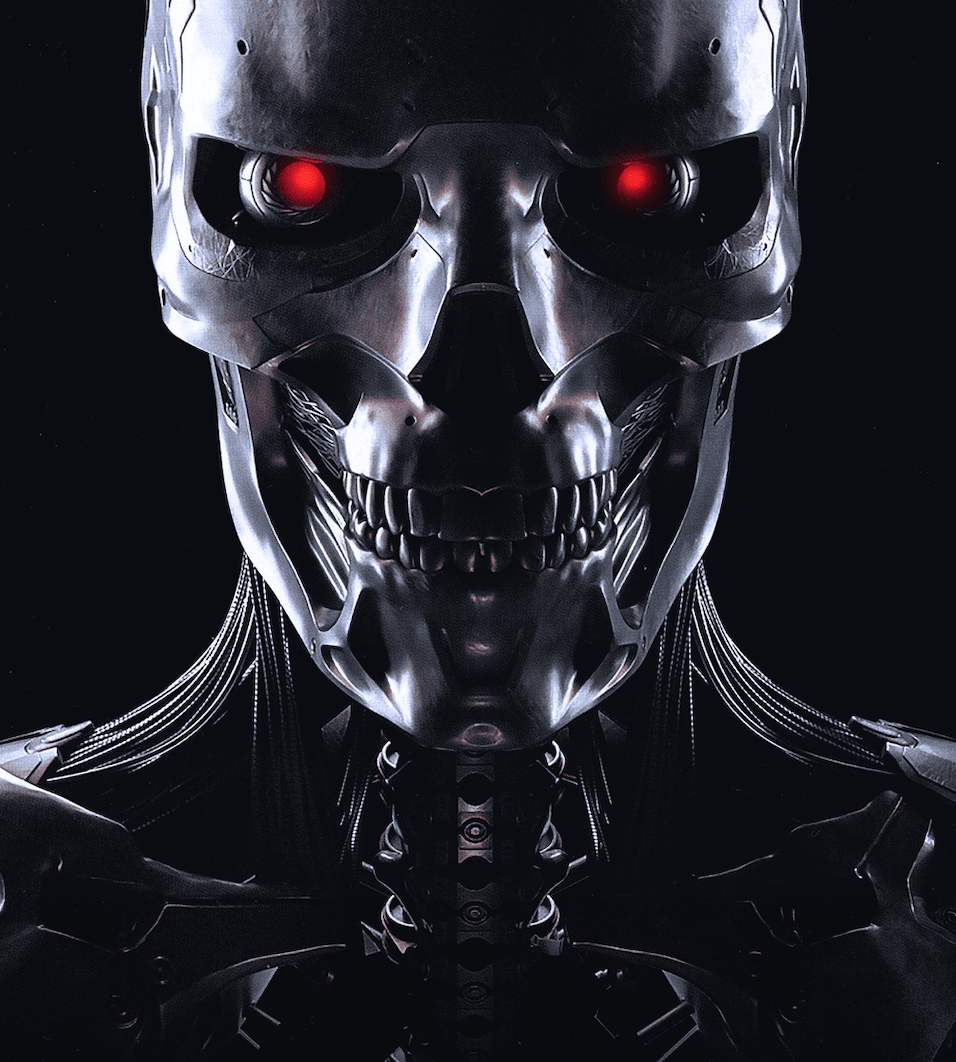
Now the world is all a-twitter over AI. Some have predicted a doomsday scenario much like the Terminator or Arthur C. Clarke’s HAL. Did you know that if you shift each letter of HAL forward one, you get IBM, the AI of the 1950s. How times have changed — yet somehow they haven’t. But regardless of any threat to mankind, AI is transformative and will be more so as it matures. Will a future generation look back lovingly on a world without AI and recall Wordsworth’s words? Maybe. But I am more optimistic. Technology has always freed mankind from the mundane. When peasants were pushed off the land and into the cities by the agricultural revolution, many said we would starve because agricultural production would fall as people left the land to the machines. They were wrong. Yes, life in the cities was simply awful during that transition period. But out of the Industrial Revolution came the wealth and prosperity that has practically eliminated the grinding poverty and hand-to-mouth existence of our ancestors.
I am not a Luddite. I bet AI will do the same – is there a prediction market for that too? Instead of fearing for the lives of my grandchildren, I am envious of what their future will look like. But somewhere in the back of my head is the story from The Twilight Zone about seemingly benevolent alien beings landing on earth, curing disease, ending wars, ending hunger and poverty. The humans find a book belonging to the aliens entitled “To Serve Man.” It was a cookbook.


Luddites! As I throw out all the articles I’ve collected, drawing of Luddites attacking looms
was among them….actually, I do know people today who weave for decorating purses, said purses that no one can casually buy. Disruptive industrial innovations become archaic- but are in demand..
If cars are forced to have AM, can they be made to have tape players? Because I have tapes & a tape is where the music is..
A survey of going back in time shows people ….would.
Because they remember youth, love, newborns..
Making work easier hadn’t come up, because the dread of work is still there. Tech disruption to their days..
A book recommended by the blog , talks about civil rights leaders; THE CHILDREN mentions riding on a cotton sack, while the parents picked cotton…
I know when sacks went hi- tech :
cotton sacks got those little half- beads, for better glide..
I’ve picked cotton with a sack- but only for comic book money, creating a need for artists, printers, shipping; I never thought about industry. Not a disruption to my day!….
When I think about good old days , I think of Mammow and Parkinson’s, and her so desperate that she submitted her frail body to surgery and died. Now there’s drugs to at least help with the symptoms.
So in that sense, medical advancement will help others Mammows- BUT it’s not about the research; we’ll forget the science ; the outcome is family.
LikeLike
Fear is often borne from being blind to what lies ahead. To be skeptical of the new, with an aversion to anything that represents change.
As a child of the sixties, I do often look back on things that held special meaning. They were usually filled with wonder – like the Sears Christmas Wishbook. Fingering through its seemingly endless pages was always a thrill – like a door opening to the broader world that you were allowed to look through once per year.
Of course, the old wishbook looks like an ancient scroll compared to the broad cross channel, pan-retail access granted by the internet. And that’s a great thing…but not a nostalgic thing.
Maybe what we long for is the idea of a simpler time. Times seem simpler in the last because we are comfortable and familiar with them. Seeing over the horizon feels less secure, heavy….threatening.
But when a taste of what the future can offer is enjoyed, we often see hope, promise, and potential. That is, of course, if we are a free people able to participate in that future. I think if I lived in a repressed society (imagine North Korea), I’d feel desperate, captured and anxious – yet the only thing I could cling to would be the past. No bright future. No exciting potential.
How tragic.
LikeLiked by 1 person
Great piece!
Technology has made life easier. I’m not always sure easier is better.
Capitalism has certainly created a lot of financial prosperity and objective ease.
But the absence of gratitude negate the progress.
When people don’t realize how blessed they are they are not blessed.
So rather than being grateful for the advances, they become entitled and entitled people and societies always become miserable caught up in a constant searching for more of what they already don’t appreciate.
That is the missing connection.
You love your farm not because of the tractors but because of the peace.
The poetry really spoke to me. Have a great day.
As for Trump, I have lost interest in him. I find nothing in him.
LikeLike