Major League Baseball’s looming work stoppage
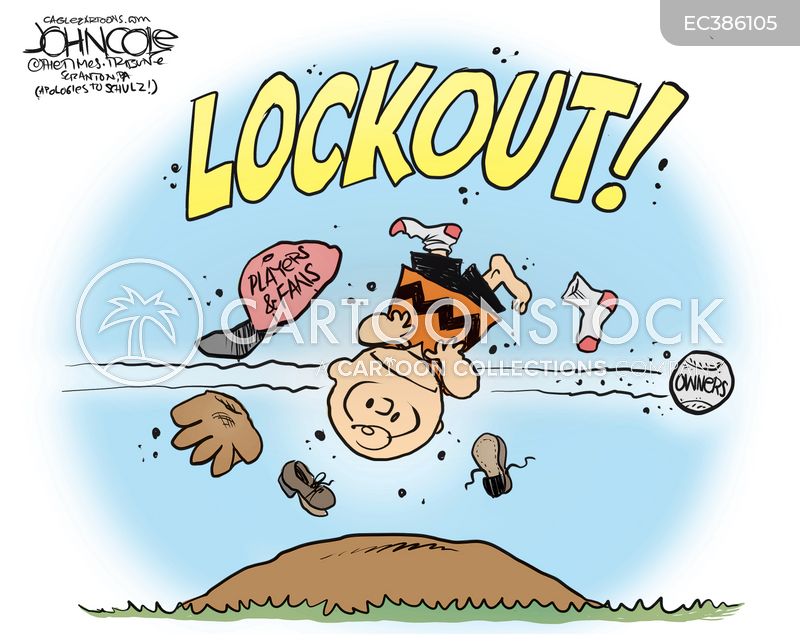
Major League Baseball is going to have a “work stoppage,” known everywhere else as a strike, over a salary cap. I only hope my granddaughter who works at MLB keeps getting a paycheck. The Dodgers — the evil team of the West — have a 2024 payroll of $430 million and pay a luxury tax of $180 million, which is higher than the payrolls of teams like the Tampa Bay Rays, the Cleveland Indians (er, Guardians), the Chicago White Sox, the Milwaukee Brewers, and eight other teams. When the current labor deal was reached, penalties for the top spenders were put in place to try to tamp down runaway spending. It didn’t work. The owners will argue that the salary cap is necessary for competitive balance — this season notwithstanding — while the players will argue that the cap is just a way to save the owners money. In reality, the baseball owners are just embracing socialism while the players relish the benefits of capitalism – competition.
This season saw the Dodgers throw a $240 million, four-year contract at an OK player, Kyle Tucker (who had a miserable year but is crying all the way to the bank), and at the best pitcher in the American League, Tarik Skubal. Yet they got swept by the Brewers, who, incidentally, had the best record in baseball. Milwaukee apparently won with bratwurst, beer and a reasonable budget. Still, the numbers don’t lie. Since 1995, most World Series champions have ranked in the top half of MLB payroll, with 26 of 29 winners in the top half and 20 in the top 10. The 2002 Angels, 2003 Marlins, 2015 Royals, and 2017 Astros ranked outside the top half, and only the 2003 Marlins and 2002 Angels ranked in the bottom 10. So the reality is that high-payroll teams have the best chance of winning the World Series. Commissioner Rob Manfred and league officials say that a hard cap system will solve the competitive-balance problem — this year being an aberration.
But the reality is that the deep pocketed Yankees last won the World Series in 2009 (they beat the Phillies) and the Phillies last one in 2008 (they ironically beat the Rays).
The owners are proposing a $245.3 million cap and a $171.2 million floor for the 2027 season. No way the players will agree to that. By the way, in a survey taken by The Athletic, 68% of the fans responding support a hard salary cap and a salary floor to improve competitive balance. The other 32% presumably live in Los Angeles. This is in part a reaction to the Dodgers throwing money around and winning back-to-back World Series. The owners (except for the Dodgers) and the fans argue — this year notwithstanding — that small-market teams, lacking deep pockets, can’t compete with the Dodgers (or the Yankees or the Phillies) without a salary cap. The only option is capping the Dodgers at the top while making small-market owners spend at least something, instead of pocketing their revenue-sharing checks and buying another yacht. Note that lost in the arguments are the woeful Mets, who are actually first in payroll. Proof that money can’t buy happiness, or a decent bullpen.
The owners have President Trump in their corner, saying:
“If you don’t have a salary cap, you don’t have a sport, because they can’t help themselves. Football has a salary cap. They should have done it a long time ago. It’s shocking, frankly, that they didn’t put a cap on many years ago,” added Trump, referring to the 1994-95 strike. “They had a chance to do a cap but they blew it.” (Trump endorses socialism!)
Still, one dirty little secret is that the owners favor a salary cap in order to enhance the value of their franchises. MLB has seen franchise values in other leagues, especially the NBA, increase at a faster rate than its own. The reason franchise values increase under a cap system is the certainty of player payrolls within the cap.
Neither side is budging, and some say the 2027 season will be lost. I guess they forgot the impact of the 1994–95 work stoppage, which resulted in the cancellation of the 1994 World Series. Players went on strike on August 12, 1994, over owner demands for a salary cap. Commissioner Bud Selig canceled the rest of the season on September 14 — including the World Series. The strike dragged on for 232 days, finally ending on April 2, 1995, after federal judge Sonia Sotomayor (now Justice Sotomayor) issued an injunction against the owners which makes her, as far as I’m concerned, the MVP of 1995. The 1995 season started late. The damage was done: $580 million in lost owner revenue, $230 million in lost player salaries, and attendance that took years to recover. Many fans swore they would never come back.
I was one of them. But like many, I came back for the 1998 home run record chase between St. Louis Cardinals first baseman Mark McGwire and Chicago Cubs right fielder Sammy Sosa to surpass Roger Maris’s single-season record of 61 home runs, set in 1961. McGwire hit 70 home runs while Sosa finished with 66, both exceeding Maris’s total and drawing unprecedented national attention to the sport in the wake of the 1994–95 players’ strike. Remember “Chicks dig the long ball”? I actually didn’t care about the specter of performance-enhancing drugs, because mediocre players stayed mediocre — except for Brady Anderson who went from 16 homers to 50 in one season and then right back again. But seriously, Barry Bonds and Roger Clemens should be in the Hall of Fame regardless. A Hall of Fame without them is like an air and space museum that pretends that man never landed on the moon.
What will happen if there is a prolonged stoppage? What will bring the fans back? Most fans prefer scoring to great pitching, and hitting has taken a hit over the past few years. MLB changed the rules governing infield shifts to increase hitting statistics. It sort of worked, but averages are still pitifully low. This season only four players hit over .300 in the majors — with only one in the National League. Last year there were seven. This is probably because there is no longer a stigma attached to striking out, and players who hit home runs are paid more than those who hit singles. Nobody ever signed a $300 million contract for a nice opposite-field single. Luis Arraez the majors best hitter makes “only” $12 million while Kyle Schwarber hit 45 home runs struck 220 times and makes $30 million. Arraez batted .310 while Schwarber batted .232.
I guess next MLB will try to restrict the shifting of outfielders — or bring back the “juiced” baseball. MLB is my favorite professional sport, but a work stoppage may change that, leaving me without a favorite professional sport — except for Georgia and Ohio State football.

