December’s FOMC Meeting
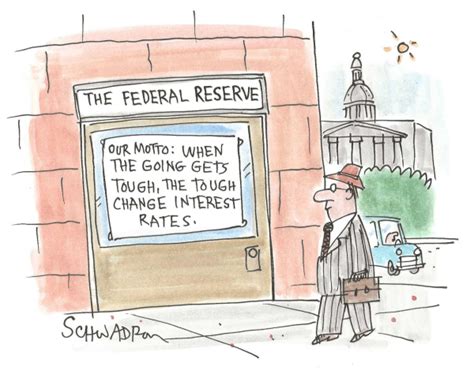
The Federal Open Market Committee (FOMC) next meets December 8–9. Anything other than a 25-basis-point increase in the federal funds rate would rattle the markets. Consumer prices rose 0.4% in October after jumping 0.6% in September, when annual inflation reached 3.7%. (Because of last year’s government shutdown, the Bureau of Labor Statistics could not publish a year-over-year figure for October; estimates that fill the gap put it at roughly 4%.) Core prices, which exclude volatile food and energy, rose 0.3% for the third straight month, a pace that, if sustained, would translate to annual core inflation of about 3.7%. According to the CME FedWatch tool, which analyzes the 30-day federal funds futures market, the odds of a December rate hike are 100%. The odds of additional hikes in early 2027 are also rising, suggesting the Street doesn’t expect inflation to cool anytime soon.
What is driving inflation? Above all, the price of oil. Trump’s war on Iran, Russia’s war on Ukraine, and the Houthi–Saudi conflict in Yemen have all reduced the supply of oil and pushed up its price. That has raised the price of refined products such as gasoline, diesel, and jet fuel and, in turn, the price of everything that travels by truck, ship, or plane, from groceries to retail goods. Fed officials also point to tariffs and AI-related demand as sources of price pressure.
Unlike the eras of Paul Volcker and especially Alan Greenspan, when Fed officials were loath to be quoted about their views on the economy, there has been a steady drumbeat of comments, especially from the inflation hawks. Governor Michael Barr said that additional rate increases would likely be needed to bring inflation back down to 2 percent. So did Governor Christopher Waller, who said that “inflation is too high, well above the FOMC’s 2 percent goal.” He said he was leaning toward a 25-basis-point increase, but that if core inflation came in around 0.3 percent again in October, as it did, a 50-basis-point hike should be considered. Vice Chair for Supervision Michelle Bowman said, “Our progress on lowering inflation has disappointed,” but she has also argued that the benefits of additional tightening must be weighed carefully against its costs. Her concern is that higher rates could further weaken housing, small-business investment, and other interest-sensitive sectors.
The Reserve Bank presidents have said much the same. Alberto Musalem, president of the St. Louis Fed, said, “I judge that additional firming of monetary policy will be necessary, and soon.” He believes inflation is too high and risks remaining above the Fed’s 2% target, and he argues that smaller rate increases now would be less disruptive than larger increases later. The Philadelphia Fed’s Anna Paulson said that “further gradual tightening seems appropriate” and that policy needs to be “somewhat restrictive,” adding that she would want to act more quickly if inflation expectations, wage pressures, or underlying inflation move higher. The Cleveland Fed’s Beth Hammack said, “I expect that monetary policy will need to move to a restrictive stance to bring inflation back to 2% in a timely manner.” Richmond Fed President Thomas Barkin, speaking in Charlotte, said inflation is “too high.” Dallas Fed President Lorie Logan said the Fed needs to deliver at least two more quarter-point increases and may need to move promptly to keep broadening price pressures from becoming entrenched. The hits just keep on coming. Recall that at the last Fed meeting, only Hammack and Governor Lisa Cook voted for an increase. This time the vote may be unanimous.
What will the markets do? The Fed’s previous rate-hiking cycle, which began in 2022, helped trigger a bear-market decline of more than 20% in the S&P 500. However, I don’t expect much movement in the markets unless the Fed moves in a direction or by a magnitude that investors haven’t anticipated. Because investors already expect a December increase, the announcement itself may not produce a major selloff. What could really move markets is whether the Fed signals that additional increases are forthcoming.
I would watch five things:
- Stocks: Higher interest rates generally put pressure on stock valuations, particularly technology and growth stocks.
- Bonds: Treasury prices could fall further, pushing yields higher.
- Banks: Higher rates can improve lending margins but can also increase funding costs and loan defaults.
- Gold: Higher interest rates and a stronger dollar generally make gold less attractive.
- 10-year Treasury yield: If it moves substantially above 5%, that could put additional pressure on stocks, mortgages, and business borrowing.
It will be interesting to watch the president’s reaction. Last month, Treasury Secretary Scott Bessent signaled that the administration may tolerate further tightening if the data require it, saying that additional rate hikes would “not necessarily” be a policy mistake. He did not oppose a December increase. Rather, he said that whether one is warranted depends on what the data show between now and then, and that the judgment belongs to the Fed. He added that both he and the president have confidence in Fed Chair Kevin Warsh. He said that he and the president have confidence in Warsh and are not pressing the central bank in its decision.
Really? That is a stark change from the constant pressure on, and harassment of, Jerome Powell to cut rates to as low as 1 percent. Knowing the president’s volatility, we will see how long this latest moderation lasts.


Can you imagine the smirk on Jerome Powell’s face these days….?
Powell had two major challenges:
1. He wasn’t Trump’s boy.
2. He waited too long to curb the obvious inflation spike that came from Biden’s 2021 bill.
One major problem – what good is more oil without more refining capacity? Congress should immediate reduce the barriers to permitting for new refineries and press the currently uber wealthy oil companies to start building refineries immediately. One big hurricane and we’re under the gun, regardless of global oil markets.
Trump is now claiming that the war is over and no more broad engagement is needed with Iran. If that’s true, then call a major press conference and declare it.
Napoleon met his Waterloo….Johnson – his Saigon….Biden – his Afghanistan….and Trump, his Iran.
Those who ignore history are doomed to repeat its failures.
Warsh appears to be the right person for the times. I hope the governors take a sober view of what needs to be done, completely absent of political bias, and administer the right medicine for what ails us. We need long term health.
LikeLiked by 1 person
Spot on. Will raising rates cure the lack of refining capacity that is causing the inflation? It will surely destroy more demand for diesel and ease it’s price. But how much demand will need to be destroyed and what are those long term ramifications to reach the desired 2% inflation mark? Should we be absolutely focused on reaching the 2% mark, no matter the cost?
LikeLike
The rule of 70 says that at 2% prices double every 35 years. Some how that has become the standard – whether right or wrong.
LikeLike
Agreed. But I know nothing about refining: light vs heavy crude, capacity and availability. We are shutting down refineries not building them.
LikeLike
I suspect Trump dislikes Powell due to his modest approach of raising Fed rates when inflation spiked under Biden. Instead of aggressively raising rates 1% per quarter he would raise them 1/2% or 1/4% per quarter which was less disruptive to markets short term but more damaging to the economy long term.
Trump was the Republican’s worst enemy by claiming he could create deflation for prices that had risen 20% under Biden. Better to under promise but over deliver. A promise to reduce inflation rate would have been more within his wheelhouse. But Trump is Trump.
Warsh may suffer Trump’s criticism if we cannot further subdue inflation….
LikeLike
The Fed has always taken baby steps rather than bold ones. You would think that they would learn from their mistakes. But no.
LikeLike
Haven’t heard about an uptick in the war in Iran, as promised after the midterms by Present Admin.
Would inflation get worse ?
Could inflation be offset by the release before Congress, of an end-game strategy?
What does the end of the war look like?..
I’m old enough to remember WWI veterans, and know that sacrifice happens during war. There’s plenty of folks who want an Iranian defeat..
Watching last night, as Nvidia’s stock moves up and down on TV— fascinating.
The pundits say that Nvidia drop – would cool inflation..
Because we “ don’t feel as rich as we used to.”..
Pundits say a Nvidia stock selloff could also cause the Fed to lower interest rates. Well,OK..
Reasoning is a disruption in Nvidia [ Taiwan is mentioned here] chip supply will make consumer goods move expensive. Something will have to be done to encourage more investment/ borrowing for chips.
LikeLike