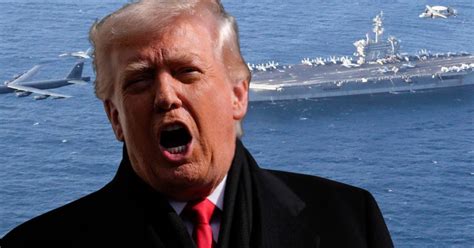
Trump said what?
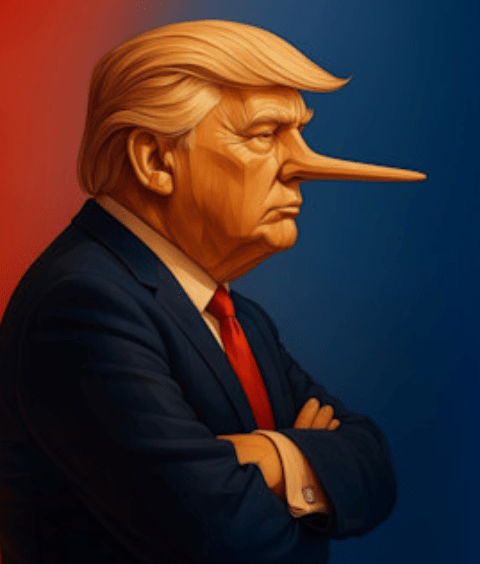
The president who is fond of hearing his own voice is at it again, demanding Iran’s total surrender to a war he says we have already won, or else he will bomb their civilian infrastructure back to the stone age. Here is what he tweeted
“The United States of America is in serious discussions with A NEW, AND MORE REASONABLE, REGIME to end our Military Operations in Iran,” “But, if for any reason a deal is not shortly reached, which it probably will be, and if the Hormuz Strait is not immediately ‘Open for Business,’ we will conclude our lovely ‘stay’ in Iran by blowing up and completely obliterating all of their Electric Generating Plants, Oil Wells and Kharg Island (and possibly all desalinization plants!), which we have purposefully not yet ‘touched.’ Trump said that attacking Iran’s infrastructure would be “in retribution for our many soldiers, and others, that Iran has butchered and killed over the old Regime’s 47 year ‘Reign of Terror.'”
This is a no-no. Attacking civilian infrastructure is nothing less than a war crime. I wonder if this is the type of order that Mark Kelley and the other democrats urged the military not to obey. I would think that there would be some resistance amongst the senior officers to conduct such an operation. Recall that the admiral over the southern command resigned when ordered to attack the speedboats in the Eastern Caribbean – an action of questioned legality. One observer said of Trump’s threat: “Threatening to obliterate a nation’s power grid, oil infrastructure and water supply to coerce its government is not a negotiating tactic; it is text-book collective punishment and a war crime.”
One thing is for certain, if Trump makes the military attack Iran’s civil infrastructure, all hell will break loose in the Gulf. Iran will start to target the civilian infrastructure of our Gulf allies and in Israel. Desalination plants are crucial in the Middle East with almost every country being dependent upon them for fresh water. However, Iran is less dependent on desalination plants for drinking water than its Gulf neighbors. Iran gets most of its water from rivers, reservoirs and underground aquifers. But hundreds of desalination plants sit along the Persian Gulf coast, putting individual systems that supply water to millions within range of Iranian missile or drone strikes. Without them, major cities — such as Dubai and Abu Dhabi in the United Arab Emirates or Doha, Qatar’s capital — could not sustain their current populations. So a word to the president: don’t.
The president also said that he wants to pick Iran’s next leader much as he did in Venezuela. Trump said “Khamenei’s son is unacceptable to me.” Not surprisingly, the Iranian Leadership Council told him to go pound sand saying “The great Iranian nation will never allow anyone to interfere in its internal affairs and its right to determine its own destiny.” Anyway, who would Trump pick? Well the president said sensitive “Most of the people we had in mind are dead.”
The president has also said that he wants Iran’s oil. “To be honest with you, my favorite thing is to take the oil in Iran, but some stupid people back in the U.S. say: ‘Why are you doing that?’” Sen. Lindsey (Bomb them All) Graham (R-S.C.) is pushing Trump to take Kharg Island, through which Iran exports 80 to 90 percent of its oil, to cripple Tehran’s regime. Trump said “Maybe we take Kharg Island, maybe we don’t. We have a lot of options.” Well then, why all the marines and airborne troops? Huh?
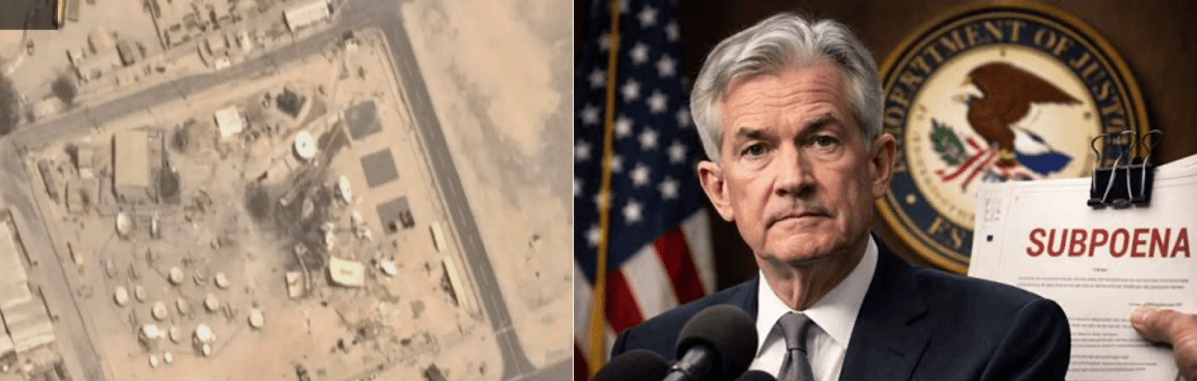
Earlier I asked why do we have all those installations and troops in the Middle East. Maybe its to keep the Chinese and the Russians out. But more than likely it is to protect the billions of dollars of US corporate investment in the region. Apparently most, if not all, of the Gulf states are incapable of warding off Iran. There is no longer a Saddam Hussein in Iraq to balance off the Iranians. Recall that they fought an eight year war that killed over 500,000 people as Hussein tried to prevent Ruhollah Khomeini from exporting Iran’s revolution over to Iraq. In addition to protecting US corporate interests, we are also there to protect Israel. To that end, given the destruction of US military installations and assets in the region, why not relocate our military to Israel? Wouldn’t that serve the same purposes? Just warn Iran that any invasion of the Gulf allies will be met with severe force that will once again pound the country’s military and kill their leaders.



 haroldblackphd.com