Blog

Trump-o-nomics. Jewish Flight?

Trump-o-nomics. Jewish Flight?

Trump-o-nomics 101


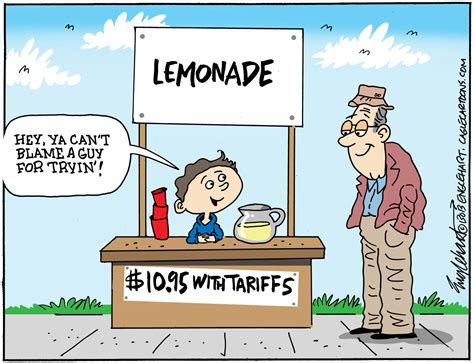
Our neo-socialist president is at it again. Last year, while defending his tariffs and his effort to force the rest of the world to bend to his will, he said: “We’re a department store, a giant department store, the biggest department store in history. And on behalf of the American people, I own the store, and I set prices, and I’ll say, if you want to shop here, this is what you have to pay.” If he “owns the store and sets the prices,” why did he turn around and blame retailers for raising prices in response to those very tariffs? In a May 2025 posting, Trump wrote: “Walmart should STOP trying to blame Tariffs as the reason for raising prices throughout the chain. Walmart made BILLIONS OF DOLLARS last year, far more than expected. Between Walmart and China they should, as is said, ‘EAT THE TARIFFS,’ and not charge valued customers ANYTHING. I’ll be watching, and so will your customers!!!” Does that sound like someone who “sets prices”?

This summer, Walmart and Sam’s Club announced seasonal sales and Trump promptly claimed credit. The retailers announced “From backyard barbecues and family vacations to pool days and neighborhood gatherings, the savings are designed to help customers and members make the most of the season while spending less on the products they need, want and love most.” The president then tweeted: “Great news! I have just been informed that one of the biggest, best, and smartest Retailers in America, Walmart, will be lowering prices, by a lot, at my Administration’s request to celebrate our great Country’s 250th birthday. Walmart is stepping up in a big and bold way, and other Retailers should follow the lead of these absolute Patriots.”

It brings to mind the old line that the only law politicians really want to repeal is the law of supply and demand. Trump claims he controls prices, then blames companies when those same prices go up and then takes credit when they come back down. If he really believes that, why not just sit down with Lutnick and Bessent and set the price of everything? He’s already tried it with pharmaceuticals, credit card interest rates, and gasoline. Surely AI could handle the rest. Trump graduated from Penn with a bachelor’s degree in economics — which makes this either a failure to grasp the fundamentals he was taught, or a deliberate rejection of them. Either way, Penn should rescind his degree or fire its economics faculty.

Bring Me Your Huddled Masses…


In the Daily Signal— a publication of the Heritage Foundation — Michael Freund argues that “The rise of democratic socialism is an opportunity for Republicans.”https://www.dailysignal.com/2026/07/07/democratic-socialism-opportunity/

His argument echoes Ronald Reagan’s famous line that he didn’t leave the Democratic Party — the party left him. For Freund, the ascendance of the progressive wing now occupying the Democrats’ far left is reason enough for traditional democrats to bolt the party.

Freund points to the situation facing American Jews, who have encountered growing hostility from the left — hostility that surged after October 7 and Israel’s invasion of Gaza. Progressives led demonstrations against Israel, often turning violent, rarely acknowledging the country’s right to defend itself or respond to the terrorists who attacked it. Antisemitic incidents rose sharply. Jewish college students reported harassment and candidates openly hostile to Israel’s existence have since been elected to office. Some progressives insist that anti-Israel sentiment is not the same as antisemitism, but few are convinced, and democratic leadership has done little to press that distinction.

Can Jews — historically among the most reliable democratic voters — stay in the party? And what does that mean for Jewish elected officials like Chuck Schumer? There are currently 25 Jewish members of the House and 10 in the Senate. Notably, only Jerry Nadler, who is retiring, currently sits in the Progressive Caucus — though newly elected Brad Lander will likely join.

All of this underscores a deeper problem: America’s lack of real political diversity. In a parliamentary system, the far left would form its own party, leaving Jewish voters free to stay comfortably with an establishment democratic Party. Instead, some Jews may drift toward independent status until the progressive wave recedes, but I expect most will remain democrats. A few more might have considered the Republican Party were Trump not its standard-bearer. His support for Israel hasn’t been enough to offset domestic actions that many Jewish voters find off-putting.

James Carville has said the progressives should break off and form their own party, leaving his behind. Carville, no one’s idea of a moderate, is nonetheless rejecting the radicals who have seeped into his party. But moderate Democrats still exist — the kind once known as Scoop Jackson democrats, who love this country, believe in public safety and secure borders, respect its founders and traditions, and still believe in the American dream.

Freund writes that “the GOP should become the natural home for Americans who believe in ordered liberty, economic opportunity, strong families, religious freedom, public safety, and patriotism without apology.” It should — but so should the democratic party. Those ought to be American values, not partisan ones. Rather than extending an olive branch to Jewish voters alone, republicans should pair that appeal with the principles that actually define their party: limited government, economic freedom, less intrusive regulation, a strong defense, free markets, lower taxes, family values, and individual responsibility. Republicans should tout politics aimed not at dependency but at opportunity, enabling self-sufficiency rather than permanent assistance. Unfortunately, under Trump, those themes have eroded and in some cases been abandoned altogether. That makes it hard to court disaffected democrats when so many republicans are disaffected themselves.

Graham Platner. Clinical Diversity Trials

Graham Platner. Clinical Diversity Trials

The Last of Graham Platner

Graham Platner ended his Senate campaign after a self-described progressive democrat came forward with an allegation of rape. An earlier allegation — made by a republican — had been waved off by the same democrats who had spent months defending Platner despite a mounting pile of red flags. Once a fellow progressive leveled the charge, though, the same people who had shrugged off his Nazi tattoo, his odd tweets, and every other red flag suddenly bolted.

State law allows Platner to be replaced on the ballot if he withdraws by July 13. His replacement must be named by July 27. Platner himself isn’t going quietly — he’s accused the media and political establishment of acting as “judge, jury, and executioner,” denied any wrongdoing, and claimed he’s being targeted by democratic insiders threatened by his brand of populism. That’s garbage. Both the progressive and the democratic establishment have run from him as fast as their little legs can take them. Also the establishment showed that they would happily back Satan himself for a shot at flipping a Senate seat. But Platner’s comments do point to the rift between the Bernie Bros and the democrat establishment that is usually glossed over by the media.

The parallel to Biden and Harris is hard to miss — a candidate wins the primary, then exits, and party leaders anoint a successor. Maine democratic leaders will now pick Platner’s replacement from a bench that includes candidates already rejected by Maine voters in past elections. Do they recycle a previous loser or go looking for a fresh face? For now, Susan Collins looks safe either way.

Curiously, early polling had Platner leading among women and Collins leading among men — the opposite of what you might expect, given that the allegations against Platner would seem more likely to alarm women, while his rugged, tattooed, tough-guy image would seem to appeal to the men of Maine.

Even so, Platner was the perfect candidate for today’s democratic left: the son of well-off parents who adopted a working-class aesthetic while preaching the politics of the college-educated progressive class — the group I call the “downwardly mobile.” Their politics, though, aren’t the politics of the working class or of most minority voters, as election results keep showing.

What this episode really reveals is how little character matters in today’s politics, so long as a candidate makes the appropriate clucking sounds and holds some appeal. Swap the “D” next to Platner’s name for an “R,” and he would have been pushed out long before this last allegation surfaced. I found the whole episode a sad indictment of American politics and an embarrassment for democrats —if they can be embarrassed. Many of the same democrats went after Brett Kavanaugh over an allegation from his high school years while giving Platner a pass for vile conduct as an adult.

In the end, what stands out most is that Platner won his primary — defeating a sitting governor — despite everything already public about his past. Primary voters were clearly drawn to him. Prominent progressives campaigned at his side while establishment democrats stayed quiet or offered only tepid, hedging statements. It’s a far cry from the moment Republicans across the board condemned David Duke when he won a Louisiana gubernatorial primary — some going so far as to say they’d vote for his opponent, the famously corrupt Edwin Edwards, instead. Today, both parties are willing to trade honor for a winnable seat.

Bring Back Clinical Trial Diversity

I’ve argued before that the administration’s push to purge diversity efforts from government is shortsighted and clinical trials are the clearest example of why. Cutting funding for clinical trial diversity rests on the assumption that we’re all biologically alike. We’re not. Different ethnic groups carry different incidence rates for the same diseases and treating a homogeneous study population as universally representative produces medicines that don’t work equally well for everyone.

Kidney disease is the starkest example. The formulas long used to assess kidney function — and to determine eligibility for treatment and dialysis — were built on data that underrepresented black patients. The result was systematic bias, delayed diagnoses, denied treatment, and higher rates of preventable death. As one researcher has put it, “A lack of diversity in clinical trials compromises data quality, obscures critical safety signals, and produces treatments that may not work for everyone.” That isn’t an ideological claim — it’s simply a description of what happens when a sample doesn’t match the population it’s meant to serve.

BiDil makes the same point from the opposite direction. In trials on a general population, the congestive heart failure drug showed no meaningful efficacy and looked like a dead end. But when researchers analyzed subgroups separately, they found the drug worked dramatically well in black patients — a finding that led the FDA to approve BiDil as the first drug approved for a single ethnic group. Without that subgroup analysis, an effective treatment would have been discarded entirely.

Both cases point to the same conclusion: clinical trial diversity isn’t political — it’s a data-quality requirement. Folding it into the broader anti-DEI push is simply dumb or stupid producing consequences that are measurable and harmful, not abstract. Let’s hope the administration corrects this obvious misstep.

Random Thoughts #82

Random Thoughts #82

The Defiant Iranian Mob

The images from Ali Khamenei’s funeral were hard to reconcile with Trump’s narrative.. Did that look like a beaten, desperate population begging for peace? It didn’t. If anything, our bombing and blockade campaign seems to have hardened Iranian opinion against us rather than broken it. Tens of thousands of people filled the streets in a scene of open defiance, not surrender. If there were any opposition, they were bludgeoned into silence by the raw outpouring of emotion of the Iranian mob.

We may well have crippled Iran’s air force and navy and killed a number of its senior leaders. But the Iranians are behaving like the victors of this exchange, and there’s a reason for that: they’ve out-maneuvered our negotiators and the president at every turn, claiming a political win while we keep converting battlefield advantage into diplomatic drift. I can’t tell whether that’s because we’ve put amateurs in the room, or whether even seasoned diplomats would struggle to pin down a durable peace with a regime this practiced at stalling. Either way, the pattern is familiar: we win the fight and stall out prior to victory.

The test of success shouldn’t be vague. It should be measured against three concrete outcomes: a Strait of Hormuz that stays open, a verifiable end to Iran’s nuclear ambitions, and a real halt to its funding of terrorist proxies. Short of all three, declaring victory is just theater. On the current trajectory, we’re on track to fall short. In fact, the pro-regime demonstrations may have led those now in power to break the truce and seek to reassert control over the Strait. Any reaction on our part seems to be flaccid by comparison. Trump seems to say that there is no TACO this time and that he is fed up with dealing with the Iranians. Here is what he said “They’re a bunch of SCUM.” “These are evil, sick people, and we have to rid their cancer. They’re CANCER! And you know what you do? You got to cut out cancer EARLY, man.” “I told them, every time you hit, we hit. And of course, they’re dirty players.” “They’ve kiIIed thousands and thousands of our soldiers. They’ve kiIIed hundreds of thousands of innocent people.”

We will see but instantly our gas prices just jumped 40 cents a gallon.

What Is “Meat”?

A controversy is brewing over the word “meat.” What do you picture when you hear it? With lab-grown meat now reaching the market, some want the word reserved for animal-based products or banned from lab-grown packaging entirely. Florida legislator Dean Black (R-Nassau) – no kin – a cattle rancher, has introduced a bill to do exactly that. His reasoning is blunt: lab-grown meat, in his words, is “not meat…it is made by man, real meat is made by God Himself.”

I don’t have a dog in this hunt. I haven’t eaten red meat I don’t kill myself since 1971. But the reaction I got from my son is more revealing than any legislative debate. He found the idea of lab-grown meat distinctly unappealing. Yet he admitted that photos of lab-grown steaks and fried chicken filets could easily have fooled him. His actual objection wasn’t the product; it was disclosure. As long as it’s labeled clearly, he has no problem with it reaching store shelves. But eating it? That’s a different matter.

That distinction matters more than the legislation lets on. Consumers already navigate plenty of imprecise food language without confusion. They know Beyond Meat contains no meat, that oat milk isn’t from cows and that buffalo wings are buffalo-free. The solution to lab-grown meat isn’t to legislate the vocabulary, it is to require accurate labeling and let people decide for themselves what they’re willing to eat.

Trump’s Newly Disclosed Jump in Wealth

Are we really supposed to be surprised that the president’s disclosed net worth jumped by nearly $2 billion last year? Only if we’ve been willfully naive. His family has profited from his time in the White House since day one, in a pattern that echoes the Hunter Biden story with one key difference: the Bidens were rank amateurs by comparison. The president has never been shy about his wealth or his lifestyle. Throughout this administration he has rewarded those who’ve come bearing gifts. He has bought stock in companies shortly before they benefited from favorable government action. He criticized Nancy Pelosi’s stock trades. His own record has since made her’s look almost restrained.

Democrats appear to be betting that this disclosure will move some votes in the midterms. I think that bet is wrong. It’s hard to imagine the president’s finances converting anyone who hasn’t already been converted. The standard democratic argument, that Trump is enriching his family while ordinary Americans fall further behind, is a familiar message aimed at a limited pool of persuadable voters. For it to actually damage down-ballot republicans, voters would need to believe that individual GOP candidates personally benefited from the president’s dealings. That’s a much harder case to make than pointing at the president’s own balance sheet.

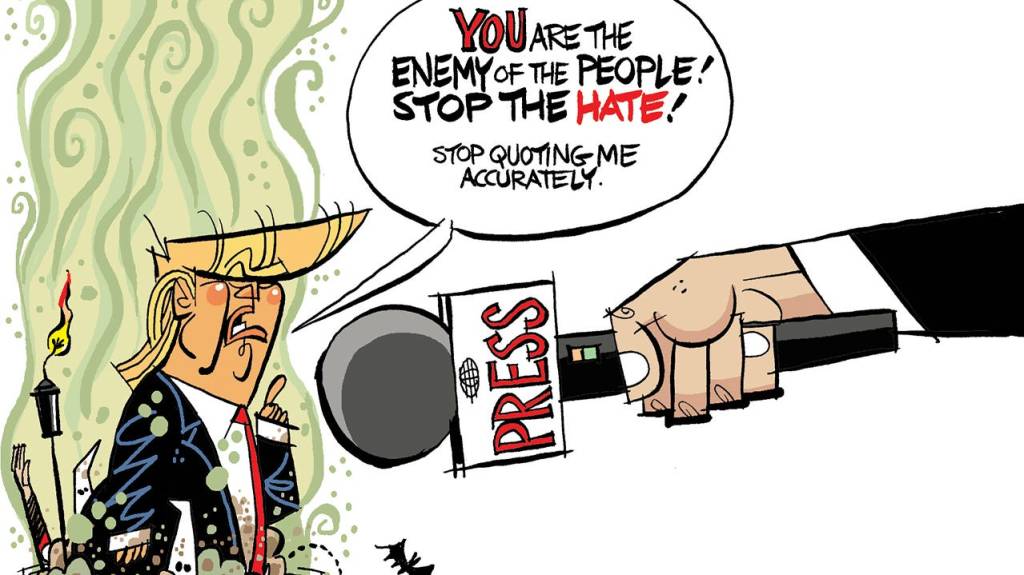
Donald Trump: Economic Socialist

Donald Trump: Economic Socialist

The latest socialist turn from our non-socialist socialist president is his badgering of gas retailers to lower prices to $2.50 a gallon. Surely even the most naïve among us can see that gas retailers were not responsible for the spike in prices. It was the result of the president launching his undeclared war on Iran. It doesn’t take a genius to connect the dots between the pre-war prices and the war prices. Does the president think we’re fools?

Yet he wants to shift the blame and find a convenient scapegoat. Aha — the gas companies! Trump told gasoline retailers they “must get their Prices down, IMMEDIATELY!” to around $2.50 per gallon. He also threatened the “big Oil Companies” and ordered his “Justice” Department to investigate them for price gouging. Good grief. Did we actually elect Bernie Sanders? Trump should be ashamed of himself — but shame was never his strong suit.

Aiming his ire at retailers is misplaced. Retailers are price takers, not price setters. They don’t “price gouge.” Many are mom-and-pop operations that make most of their money on beverages and snacks rather than at the pump. But by blaming “Big Oil,” Trump is merely following in the footsteps of Bill Clinton and Barack Obama, who did the same thing. Only this time, the president himself is the culprit. Trump must be a fan of Rep. Jan Schakowsky (D-Ill.), who introduced the Price Gouging Prevention Act of 2025, a bill that grants the federal government authority to regulate and criminalize price gouging — however defined.

This isn’t the first time the president has flirted with price-fixing socialism. Remember his crusade against Big Pharma to set drug prices? Trump, like all good economic socialists, loves to cast corporations as greedy capitalists profiting off the public. Yet here, it is Trump himself who bears responsibility for disrupting the global supply chain. Mamdani freezes rent in New York. Trump took a page from that same playbook when he went after credit card companies, proposing an interest rate cap by posting on Truth Social: “Effective January 20, 2026, I, as President of the United States, am calling for a one year cap on Credit Card Interest Rates of 10%. Please be informed that we will no longer let the American Public be ‘ripped off’ by Credit Card Companies.” Mamdani must be proud.

Then there’s the matter of the government taking stakes in private corporations — socialists want to control of the means of production. The federal government now holds a 9.9% stake in Intel, 5% in Lithium Americas, 5% in the Thacker Pass joint venture, up to 8% in Westinghouse, 7.5% in MP Materials, 10% in Trilogy Metals, stock options in ReElement Technologies, and $50 million in equity and stock options in Vulcan Elements. Again, did we elect Bernie Sanders?

Trump’s kinship with the socialists only runs through their economics making him an economic socialist not a social socialist. Trump does not want to make DC and Puerto Rico states, eliminate the Electoral College, open the borders, defund the police, ban fossil fuels, have “free” universal healthcare, cut military fund and all the rest of the socialist’s domestic wish list. But Trump is no Ronald Reagan who warned: “The nine most terrifying words in the English language are: I’m from the government and I’m here to help you.” What Trump is doing is taking baby steps toward more socialism in American corporate life – Reagan be damned! But Reagan was right. Instead Donald Trump is an economic socialist. He is a neo-socialist.

Has baseball lost its soul?

Has baseball lost its soul?


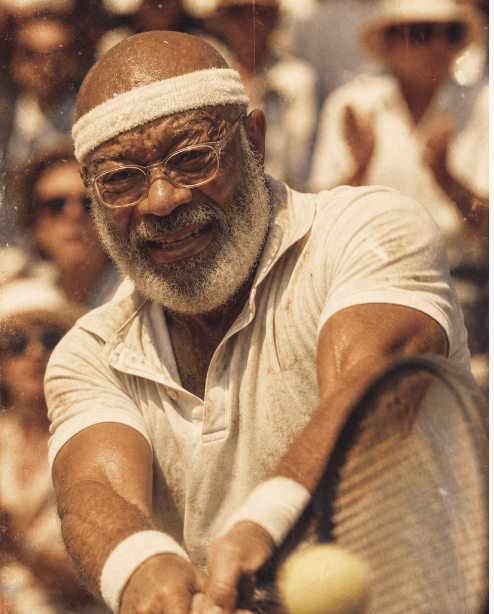
Why do baseball players spit in their hands? My mother thought that was even more disgusting than the players’ habit of grabbing their groin. I’ve been a baseball fan since I watched Jackie Robinson play live at Ebbets Field as a kid. Recently I had breakfast with an old friend who told me his childhood heroes were all baseball players: Lou Brock, Willie Mays, Jackie Robinson, Don Newcombe, Bob Gibson, Roy Campanella. I asked him to name one current American black superstar. He said “Aaron Judge” — and struggled to get further. Mookie Betts, Michael Harris II, and Byron Buxton aren’t quite on that level. When I asked him to name a black starting pitcher, he came up empty; David Price has retired and he didn’t think of Hunter Greene.

The numbers back up the impression. Most major league clubs including the Cubs, Padres, Orioles, Phillies, Blue Jays, Mets, Rangers, Red Sox, don’t have a single American black starter. League-wide, American blacks make up only about 6 percent of major league rosters.

An old pattern, repeating?

That decline made me think of boxing, where the same climb-and-fade pattern has played out for a century. John L. Sullivan and the Irish dominated first. Then, in the early twentieth century, ambitious young Jews fighting their way out of poverty producing champions like Joe Choynski, Abe Attell, and Benny Leonard — boxing as a ladder out of the ghetto.

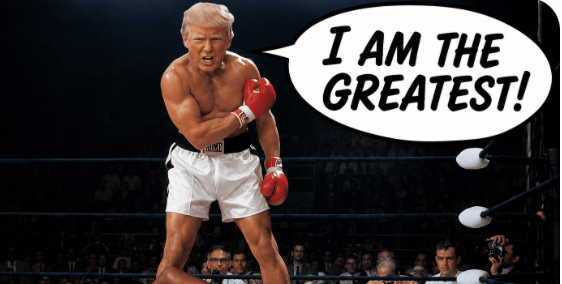
Then the ladder passed to black fighters. George Dixon, a black Canadian, won the bantamweight title in 1890 and became the first black athlete to win a world championship in any sport. Jack Johnson followed, and with him the rise of boxing greats like Archie Moore, Joe Frazier, Sugar Ray Leonard, Muhammad Ali, George Foreman, Evander Holyfield, Floyd Mayweather Jr., Mike Tyson, Joe Louis, Marvin Hagler, Thomas and Johnson himself. Boxing gave black athletes a way out of oppression and a source of pride. 

After them came a wave of Hispanic fighters from Mexico, Argentina, Puerto Rico, Cuba, and Nicaragua, mostly in the lighter weight classes. Now Asian boxers are rising in the flyweight, bantamweight, featherweight, and lightweight divisions. Manny Pacquiao, champion in eight different weight classes, may the best of them.

Boxing has always been “the sport of kings” for the downtrodden: whichever group is hungriest and most determined tends to dominate it. So does the fade of black players from baseball mean American blacks are no longer “determined and downtrodden” in the way that pattern requires? Or has the ladder simply moved — to football and basketball?

Latin soul

I don’t think baseball has lost its soul. It’s just changed hands. The first generation of black stars — like the first generation of Latin players such as Roberto Clemente, the first Latino in the Hall of Fame, along with Mariano Rivera, Juan Marichal, Rod Carew, and Orlando Cepeda — played it straight, embracing the game’s staid, all-white traditions rather than disrupting them.

Today’s Latin players are a different story. With their bat flips and showmanship, they’ve brought the flair that earlier generations weren’t allowed to show. Baseball is now a world sport with more and more Asian players but I can’t discern much “soul” in the Asian game. It’s the Latin players — with the dreads, tats, and earrings that Barry Bonds may have started — who bring the flamboyance. Once, a bat flip would get you a fastball at your ear. Now Sports Center tracks bat-flip highlights right alongside home run distance. Latinos have kept the sport fun. Call it Latin soul.

And now soccer. Soccer?

What is really intriguing is that on the US team in the World Baseball Classic there were only two blacks, Aaron Judge and Byron Buxton. But on the US men’s soccer team in the World Cup there are twelve blacks on the roster. I always assumed soccer was a suburban sport for kids whose parents wanted the boys somewhere safer than a football field. So where did all these black players come from?

Has soccer quietly become the new ladder for black youth, the way boxing was and baseball were before it? I doubt it. Pardon me, but soccer is not an inner city sport. Soccer is not offering the same path to advancement that boxing and baseball once did. So if it’s not soccer, and it’s increasingly not baseball, where exactly are we seeing that next generation of black athletic ambition go? That’s the real question the numbers are asking.

So what in the wide world of sports is going on?


Trying to Kill the American Dream

Trying to Kill the American Dream

Some progressives argue that the American Dream is no longer attainable. Many Ivy League-educated black intellectuals have told people in urban communities that the odds are permanently stacked against them—that America is fundamentally racist and success is out of reach. At the same time, white progressives deliver a similar message to white Americans, portraying the economic system as irreparably unfair.

Representative Alexandria Ocasio-Cortez has argued that “you can’t earn a billion dollars,” suggesting that such wealth can only be accumulated by exploiting others. In effect, her argument implies that achieving extraordinary financial success requires unethical behavior. Bernie Sanders has likewise argued that the American Dream has “turned into a nightmare” because billionaires have rigged the system to avoid accountability. Critics have noted the irony that Sanders himself has become a millionaire.

Ocasio-Cortez argues that the “right wing’s entire political agenda …[involves] a politics that involves lying to and screwing over working and middle-class Americans so that they can steal from our healthcare, Social Security and veterans’ benefits to pay for tax cuts for the wealthiest and bailouts for their crypto billionaire friends.” Her crypto billionaires excluded of course.

Whether one agrees with her assessment or not, these messages contribute to a broader narrative that the economic system is fundamentally stacked against ordinary Americans.

Public opinion reflects this growing skepticism. Recent polling has found that fewer than half of Americans believe everyone has an opportunity to achieve the American Dream. It is not surprising that many younger Americans have become more receptive to socialism, even if they have only a limited understanding of what it entails.

The danger is that repeatedly telling people success is unattainable discourages initiative and entrepreneurship. Those willing to take risks and build businesses become fewer in number. Rather than encouraging perseverance, these messages can provide an excuse for inaction.

When challenged, Ocasio-Cortez has defended her rhetoric, arguing that critics attack her personally rather than addressing the substance of her arguments. She contends that working people deserve an honest discussion about concentrations of economic power. She says:

Some people get enraged that I draw attention to this. That’s on them. Let them call me shrill, dumb, inexperienced, girly, uneducated – these folks will say anything to distract from or undercut the truth that working people are getting screwed, and giving people a fair shake means we must have a grown conversation about reigning in abuse of power.

Most Americans never expect to become billionaires. But if someone does aspire to extraordinary success, what actually stands in the way? Success is not built on theft or exploitation. More often it comes from innovation, creativity, perseverance, and calculated risk-taking.

Companies such as Amazon, FedEx, Tesla, and Pilot have created products and services that millions of people voluntarily use and those products improve their lives. Their founders became wealthy by creating value that customers willingly embraced.

At its core, the American Dream is the belief that every individual has the freedom and opportunity to improve his or her circumstances through hard work, talent, and determination. That ideal has inspired generations of Americans and millions of immigrants seeking a better future.

If belief in the American Dream were truly disappearing, one might expect innovation to decline as well. Yet the number of U.S. patents has continued to grow over time, suggesting that entrepreneurial activity remains strong despite the pessimism from the left.

America certainly faces serious challenges, including shortcomings in education and increasing international competition for scientific talent. Yet despite these obstacles, countless individuals continue to achieve remarkable success. They have not accepted the argument that opportunity no longer exists.

I once said that there were three types of people: the 3 percent who make things happen; the 7 percent that knows what’s happening and the. 90 percent who haven’t a clue what’s happening. Political messages that emphasize helplessness appeal most strongly to those seeking explanations for personal disappointments and failures rather than opportunities to improve their circumstances.

My criticism of Ocasio-Cortez is a living contradiction of her own words. She, herself is evidence of the opportunities available in America while simultaneously arguing that those opportunities are largely unavailable to others – especially people of color, like her. Whether one agrees with her politics or not, her own career demonstrates that remarkable advancement remains possible. AOC is the embodiment of the American dream but she tries convince others that unlike her, they cannot succeed. Her mother was a house cleaner and a school bus driver. After college AOC was a bartender and a waitress. Now she is a member of congress being paid $174,000 a year. 

On a personal note, I find these arguments insulting because of my family’s history. All my great grandparents were slaves. My great-grandmother told me that she was “picking cotton on Bonner’s Hill when Sherman rode up.” Leaving the plantation with little more than the clothes on her back, she pursued a better life. Her children did the same, as did subsequent generations of our family.

For me, that powerful history embodies the American Dream. I have often remarked that only in America could descendants of enslaved people become the professors teaching the descendants of former slaveholders that the American Dream is dead. My family’s history and millions like it reinforce my belief that opportunity, while never guaranteed, remains one of America’s defining characteristics.

So pardon me AOC, but you are full of it.

Birthright Citizens, Donald Trump’s “Honest Graft”

Birthright Citizens, Donald Trump’s “Honest Graft”

Birthright Citizens

The star of the U.S. World Cup team who was unfairly red-carded is a birthright baby. Folarin Balogun was born in Brooklyn by sheer happenstance — his Nigerian-born parents were visiting the United States when his mother was seven months pregnant. When they tried to return to Britain, she wasn’t able to fly because of her pregnancy. Once Folarin was born, the family left for England, where he was raised.

He’s in good company. Other notable birthright citizens include Kamala Harris, Colin Powell, Marco Rubio, Mehmet Oz, Bruce Lee, Nicole Kidman, Mel Gibson, Michelle Kwan, Tammy Duckworth, Nikki Haley, Vivek Ramaswamy, Joan Rivers, Renée Zellweger, Lori Chavez-DeRemer, Ajit Pai, Seema Verma, Elaine Chao, Kash Patel, Usha Vance, and Alex Padilla. All are noteworthy, but as of this writing, many people — including my son — would argue that the most important one is Folarin Balogun.

Trump Netted a Fortune Off Crypto While Others Lost Theirs — Ho Hum

Last year I joked about the president’s memecoins. His digital tokens, sold by his family’s World Liberty Financial, netted the president $800 million. But two-thirds of the buyers of the coin are currently underwater. Trump called bitcoin a “scam” back in 2021. He was right. But that didn’t stop his family’s crypto business from flourishing despite the obvious conflicts of interest. P.T. Barnum was right. $TRUMP surged to a peak market capitalization of nearly $15 billion before plunging 97% to about $400 million today.

Trump and the White House pooh-poohed any suggestion of a conflict of interest. “You know why I’m profiting? Because the stock market is going up. We’re all profiting. I’m profiting because I have a lot of money and a lot of cash,” the president said. One observer put it more bluntly regarding the windfall from the crypto sale: “It looks like it was a great monetization vehicle for him and his family, and he’s taking care of his own.”

Also the president’s disclosure documents show that entities from the Gulf paid around $300 million to the president’s businesses last year. More than $2 billion in revenue across his businesses, including $263 million from selling half his stake in World Liberty Financial to a company backed by Sheikh Tahnoon bin Zayed Al Nahyan — whose brother is president of the United Arab Emirates.

Hey, no conflict there! Of course, a spokeswoman for the Trump Organization said “the breadth and depth of this filing further underscores our commitment to transparency,” and a White House spokeswoman insisted, “There are no conflicts of interest.”

Sure.

In a series of trades on April 3 and April 4 — days after Trump announced global tariffs — his investment accounts bought and sold hundreds of individual stocks. Those trades were among more than 21,000 moves by Trump’s investment accounts around “Liberation Day.” Insider information, anyone? The president’s accounts made hundreds of individual trades a day that April, moving an average of $4.2 million daily.

The president’s response: “Who, me? My kids run it. Almost anything they do… they have inside information. I tell my kids to stay away from as much as you can stay away from, but they also have a life.” Donald Trump Jr.’s venture capital firm, 1789 Capital, invested in Vulcan Elements three months before the company received a $620 million government loan. The Trump administration offered a $1.6 billion in financing for a project to develop a tungsten mine in Kazakhstan — and a firm partly owned by Trump’s sons Eric and Donald Jr. invested in a company backing that same project shortly before the administration announced its minerals deal with Kazakhstan. White House spokeswoman Anna Kelly said, “Neither the President nor his family has ever engaged — or will ever engage — in conflicts of interest.”

Sure.

His accounts bought $250,000 worth of Intel stock. Days later, Trump announced the government was taking a 10% equity stake in Intel whose stock rose more than 370%. He also purchased $155,000 in MP Materials, a rare-earth miner, shortly before his administration acquired a 15% equity stake in the company. It’s share price skyrocketed. Then Trump’s investment accounts sold some of their MP shares. Hia financial disclosure shows capital gains of $1 million in capital gains last year from that rare-earths stake.

In July 2025, the White House unveiled an “AI Action Plan,” billed as a blueprint for winning the artificial-intelligence race. That same day, one Trump investment account bought between $6 million and $30 million worth of stock — at least $1 million apiece in Broadcom, Amazon, Apple, Microsoft, and Nvidia, plus a separate purchase of at least $1 million in Alphabet shares, according to the disclosures.

The Wall Street Journal has a name for all this: “honest graft.” As the paper put it, the main difference between Hunter Biden’s foreign dealings and the Trump family’s projects is that the Trumps are brazenly open about theirs. Hey, the man’s got to make back all that money he spent on lawyers defending himself against all the lawsuits and investigations cooked up by Biden and his cronies. 

Right?

Yes I know that Clinton, Obama and Biden enriched themselves too. But I also know that when Omar disclosed that she and her husband’s wealth had miraculously increased from around $40,000 to $30 million, the republicans demanded investigations into the source of her income and her husband’s business ventures. Omar’s gains are chump change compared to Trump and his family – let’s not forget Jared and Ivanka’s island in Albania. Where are the republican demands for investigations of the president?

Happy Independence Day, America! 2026

Happy Independence Day, America! 2026

Note: This is my annual salute to our wonderful country.

Two hundred and fifty years. That is two and a half centuries of standing as the world’s greatest and most successful demonstration of the power of individualism, freedom, limited government, private property, and initiative. Thank you, England, for showing the Founding Fathers exactly what  governments should not do. And thanks to the Founding Fathers themselves, whose brilliance gave us the Declaration of Independence and, even more remarkably, the Constitution of the United States. Faced with the deep divide between the abolitionists of the north and the slaveholders of the south, they wrote a document that could unite a fledgling country while still laying the groundwork for the day when all would truly be equal in the eyes of the law. It is hard to imagine today’s politicians producing anything close to it; few possess the writing skill, the rhetorical skill, the intellect, or the moral seriousness our founders brought to the task.

Ever wonder why we celebrate July 4, 1776 as the country’s birthday? Why not January 14, 1784, the date the Continental Congress ratified the Treaty of Paris and the United States began its formal existence as a sovereign nation? July 4, 1776 was the day the Continental Congress adopted the Declaration of Independence, a statement that the colonies no longer existed and a new, independent nation had been born. That is why I call July 4th Independence Day and January 14th the country’s birthday. Disagree? I’m used to being in the minority.

I love this country. But every time I visit my parents’ and my brother’s graves in Atlanta, I’m struck by how few American flags fly in the neighborhoods I pass through. I notice the same thing visiting my daughter in northern Virginia, even though many of her neighbors depend on government paychecks for their livelihood. In my own neighborhood in Knoxville, flags are everywhere. I fly one at the entrance to my driveway and another at my boat dock. Why the difference? Is it because those other neighborhoods lean democratic, and somewhere along the way “democrat” got equated with “less patriotic”? Pardon me if I think that’s nonsense. Patriotism and love of country shouldn’t belong to one side. Where else in the world do you find this richness of expression paired with this abundance of wealth for ordinary citizens? It reminds me of the migrant making the long, hard journey to the southern border who, when asked why, said he wanted to live in a country where even the poor people were fat.

I’ve certainly disagreed at times with the people entrusted to lead this country. There have been moments when I believed the federal government, or a state government, individually or collectively, got it wrong. I’ve done my small part to voice that displeasure and push for change. But I have never stopped loving this country. The same can’t be said for those on the extremes, especially on the left, who denigrate the country and want to fundamentally remake it. They want the Constitution rewritten or abolished. They want to abolish the Electoral College. They call their opponents names, boycott their products, hold demonstrations that are billed as peaceful but often turn violent, shout down speakers they disagree with, teach division in our public schools and universities, and push for changes that would ironically curtail their own freedom of speech and expression. Are they too shortsighted to see that? Apparently so. Yet figures like Bernie Sanders and AOC wouldn’t have the prominent voices they do if not for the very freedoms this country protects. I welcome that diversity of opinion and don’t want it silenced, even though some of its loudest voices would happily silence people like me.

The most notable shift over the past year has been the growing electoral strength of the radical left. Socialism has always had a role, however small, in American politics. Eugene Debs helped found what became the democratic socialist movement and ran for president five times, along with a run for Congress. He founded the American Railway Union and led a wildcat strike of 250,000 workers that landed him in jail, though he was never elected to office. The first socialist elected to Congress may have been Wisconsin’s Victor Berger, who won a House seat in 1910. Reelected in 1919, he was denied his seat after being convicted under the Espionage Act of 1917 for his anti-war views. The Supreme Court later overturned the conviction, and Berger went on to serve three more terms.

Today, the political descendants of Debs and Berger are far more numerous and appear to be on the rise. Sanders, AOC, and Elizabeth Warren look almost moderate next to a newer wave of candidates who won primaries in safely democratic districts and are headed to the House next term. Add to that mayors like Mamdani in New York and Wilson in Seattle. Some worry this trend threatens the country’s foundations, and it might. So far, though, these candidates have only unseated fellow democrats in solidly democratic areas. The real test comes if and when socialists start winning in republican districts. History’s lesson, that socialism erodes freedom, tends toward the rule of despots, and produces economic misery, seems lost on a generation that either doesn’t know that history or refuses to believe it. The evidence is plain to anyone willing to look: compare East Germany to West Germany, North Korea to South Korea, or Russian and Chinese per capita income to America’s. None of it seems to shake socialism’s most devoted believers. Still, most Americans aren’t fooled and it remains to be seen whether this infatuation fades into just another minor faction in American politics.

In a way, the World Cup coming to America may open some eyes among our jaded youth. Isn’t it better to live in a country the rest of the world gawks with envy? Wouldn’t you rather be the gawkee than be the gawker?

This is a unique place, a wonderful place, and I’m glad to be here. I’m glad for my heritage, and I count myself fortunate to share in the wonders of this beautiful country. 

I love you, America. Happy Independence Day.

Justices Give the President Power Over Independent Agencies

Justices Give the President Power Over Independent Agencies

The Supreme Court has ruled on the limits of executive power over independent federal agencies. In Trump v. Slaughter, the Court considered the president’s firing of Rebecca Slaughter, a member of the Federal Trade Commission. Because FTC commissioners are nominated for fixed terms and confirmed by the Senate, Slaughter argued that the president lacked the authority to remove her before her term expired.

Several issues are at stake here. First, the FTC, like many of the eighty or so “independent” agencies, is required by law to be “bipartisan.” The FTC has five members, three of whom must belong to the president’s party. Under Biden three members were democrats and two were republicans, with the chairman a democrat. Trump’s election victory would normally have prompted that chairman to resign—regardless of how much time remained in the term—allowing the president to appoint a republican chairman. In effect, at the FTC, Trump preempted that tradition by firing a democrat to secure a republican majority sooner.

The second issue is more fundamental. These agencies sit technically within the executive branch, yet they make legislative-style policy decisions with independence from the president. The central question is whether the president should have authority over them. The Supreme Court answered yes, in a 6–3 vote, holding that the president may remove any member of these agencies without cause. Chief Justice Roberts wrote that the case was not a difficult one for him: “Nearly 250 years ago, the Framers decided to vest ‘[t]he executive Power’ in one person – a President of the United States of America. The choice was not made lightly.” Roberts added that executive officers “were to serve as envoys of the president, not his equals. … Because these officers were subject to the president’s superintendence, they had to be removable by him at will.”

Justice Sotomayor wrote the dissent, noting that “Congress and the president together have decided that some government functions should operate at a distance from partisan politics.” She echoed Woodrow Wilson’s vision of “progressive governance,” arguing that some functions of government should be overseen by experts in those fields, writing that “the wisdom of the centuries has taught that some decisions should depend not only on who is in office—much less on who is disfavored or owed a favor by those in office—but also on judgment, expertise, and the public good.” Yet this assumes that such “experts” operate independent of political agendas, rather than carrying their own.

Justice Sotomayor surely knows better, as do Justices Kagan and Jackson, who joined her dissent. As I’ve argued before, the officials who write regulations—in essence, make law—at these agencies do so without presidential approval, subject only to congressional oversight. So the more relevant question may be why these bodies aren’t simply made part of the legislative branch rather than the executive branch. Sotomayor is correct that this ruling substantially expands presidential power. As she put it, “the Court gives the President a power unknown even to the English Crown against which the Founders revolted.”

On that point, she is correct—and notably, Justice Gorsuch, who joined the majority, agreed with her. Gorsuch wrote that it was doubtful Congress would have given executive-branch agencies such expansive authority—especially quasi-legislative and quasi-judicial authority—if the president could control them without the other constitutional checks Congress had tried to impose. “From here,” he wrote, “the only sure path is to finish the journey we start today and restore legislative and judicial powers to where they belong: in Congress and the courts.”

Because this ruling applies to all independent agencies except the Federal Reserve, it presumably extends to the banking agencies as well, including the FDIC and the National Credit Union Administration. At the NCUA, Trump removed both democratic board members—including one he had nominated during his first term—leaving only the republican member in place. The NCUA had until 1978 been led by a single administrator who, like the Comptroller of the Currency, served at the pleasure of the president. When the law was changed, the NCUA board was created and I was appointed by President Carter to serve on that first board. Going forward, the president will still be bound by the statute’s bipartisan requirement, but will have to appoint one democrat and one republican to the NCUA board—either of whom can now be removed without cause. It will be interesting to see whether this ruling affects the caliber of future appointees, and whether the president now takes a more active role in these agencies’ rulemaking.

Lastly, I thought that like Chief Justice Roberts, that this was not a difficult case, that the precedent, Humphrey Executor was a decision likely to be overturned. I also believed that if Trump were not president that the vote would have been 9-0. Sotomayor, Kagan and Jackson were voting against giving Trump more power rather than ruling on the basis of the Constitution. I am certain that they would have voted otherwise if a democrat were president.

Next, I will post on Trump v. Cook, the special case of the Federal Reserve.

Can the President fire a Fed Governor?

Can the President Fire a Fed Governor?


Whew — that was close. 

In Trump v. Cook, the Supreme Court ruled 5–4 that President Trump cannot fire Fed Governor Lisa Cook. If one justice had ruled otherwise and the Court instead held that the president may remove a Fed governor for any reason at any time, financial markets would likely have reacted with real turmoil. There is little doubt Trump would have immediately fired Jay Powell, Lisa Cook, Michael Barr, and Philip Jefferson. Interest rates would have jumped, stocks would have sold off, and the dollar would have fallen sharply on world markets.

I recall an earlier episode when the Open Market Committee once voted against the chairman, markets tanked in response. That reaction would look mild next to what a single flipped vote in this case could have unleashed. A ruling for Trump would have ended the Fed’s independence. Any new Trump appointees might not even have secured Senate confirmation — and if they had, they would have been widely seen as presidential cronies. Then, when another president took office, that president would likely have fired all of Trump’s appointees and installed a new set of loyalists. And when the terms of the regional reserve bank presidents all expired in February 2031, a reconstituted board could have fired them as well. Then the president would have complete and total control of the nation’s central bank.

Trump has consistently pushed for a 1 percent interest rate even in the face of elevated inflation. A Trump-dominated Fed would have delivered that, and likely more. What would that have meant for rates and inflation? Every president wants lower rates and easier money, especially heading into an election year.

So that one vote likely spared us a period of economic chaos and inflation approaching levels we associate with some of our South American neighbors.

Again, whew!

The Case for “Cause”

Trump maintained that Cook was being fired “for cause,” citing an allegation of mortgage fraud. The Court initially held that Cook could not be removed without a chance to respond to that allegation and allowed her to remain at the Fed while the matter is litigated. Presumably, if the allegation were proven, she could then be removed. As I noted earlier, Trump wanted to fire Cook “be-cause” — not “for cause” — but because he wanted control of the Fed.

As in the companion Slaughter case, the Court split along similar lines, with the president prevailing there by a wider margin. In Slaughter, the three liberal justices voted against expanding presidential removal power, joined by Chief Justice Roberts and Justice Kavanaugh. Under the Slaughter ruling, the president can now fire any presidential appointee of any independent agency for any reason — except at the Fed, where cause must exist and, presumably, be proven. Trump has said he will continue seeking Cook’s removal.

Why the Fed Is Different

The Chief Justice warned that without such constraints, “any perceived or alleged misstep — past or present — could provide a ready pretext for a Governor’s removal,” a risk that would weigh on a governor as he or she decided what to say and how to vote. But the same logic could just as easily have applied in Slaughter. So what makes the Fed different?

The Chief Justice pointed to the Fed’s unique role in conducting monetary policy, invoking the tradition of the First and Second Banks of the United States, which Congress chartered partly to regulate the currency. Justice Thomas countered that those early banks “possessed no sovereign power,” whereas today’s Fed wields substantial executive authority over the regulation of financial institutions. On this point, Roberts and Kavanaugh seem inconsistent with their own reasoning in Slaughter. My own read is that much like the three liberal justices in Slaughter, Roberts and Kavanaugh were voting against handing this much power to Trump specifically — and not ruling strictly on constitutional grounds.

Justice Gorsuch had the more principled position. He voted consistent with the law as written and if Congress were unhappy with the result, it is Congress’s job to change the law. Gorsuch noted that Congress might never have delegated so much authority to agencies like these “had it known that the President would come to control them.” The 1935 Humphrey’s Executor precedent, he argued, made independent agencies more attractive vehicles for delegated power precisely because presidents could not easily reach them — a dynamic that produced a steady accumulation of power in an alphabet soup of administrative agencies that write and enforce law. Gorsuch called on Congress to reclaim its legislative authority and on the Court to revive its long-dormant non-delegation doctrine, which holds that Congress cannot hand off its core legislative powers to another branch, or to a private entity, without an “intelligible principle” guiding that delegation.

A Cleaner Fix

Gorsuch is right and the underlying dilemma has a fairly clean solution — one I’ve been proposing for fifty years: split the Fed into two distinct bodies. The first would handle monetary policy, staffed by governors with genuine expertise in monetary economics. At the moment, Christopher Waller is the only sitting Fed governor who fits that description. The second body would handle the Fed’s regulatory functions and could be staffed by the remaining current governors. Monetary governors would be removed only for cause, as today. Regulatory governors could be removed for any reason, consistent with the standard now applied to other “independent” agencies under Slaughter. That would preserve Fed independence in monetary affairs and allow markets to rest easily.