The Fed and More TACO — Any Relationship?
As I had anticipated, July’s Federal Reserve meeting ended in a hold, with three dissents — all from reserve bank presidents. If the Fed were headquartered outside of Washington, the vote likely would have had more votes to raising the fed funds rate. But inside the Beltway, the pressure was to hold steady even though every common measure of inflation has climbed above 4 percent. My guess is that the committee treated this inflation uptick as temporary, a byproduct of the president’s latest flip-flop on Iran.
Trump said the Strait of Hormuz was open, and gas prices fell. Then Iran said, “No it isn’t,” and prices rose again. Three U.S. servicemembers were killed in an Iranian drone attack on a base in Jordan. The president, furious, threatened to bomb Iran “back to the Stone Age,” warned that the U.S. was ready to unleash “levels of Military Terror, Strength, and Power not seen since World War II.” Prices climbed further. Then, in what felt like Groundhog Day, the president called off the bombing campaign before it started, announcing that a deal was imminent. Where have we heard this before? TACO.
Trump posted that Iran and other Middle Eastern countries had asked him to hold off on any attack because the “perimeters of a deal” had been agreed to. “Based on this request, I have agreed, for the further benefit of the WORLD and, likewise, the survival of a successful and prosperous Iran, to cancel the attack, subject to being able to rapidly make a DEAL.” The proposed agreement would include the “Immediate, Complete, and Total Opening of the Hormuz Strait” and “an end to Iran’s nuclear threat.” As usual, Iran offered no confirmation. Recall that in response to Trump’s original threat, Iranian foreign minister Abbas Araghchi warned that any U.S. attack would be met with an “appropriate response.”
Will Trump ever learn? Every time he issues one of his bellicose threats, the Iranians offer to reopen talks, Trump backs down, and Iran effectively says, “just kidding.” Trump, in turn, complains: “They always want to talk, but they break their word so often. All they do is make me angry.” But the frustration runs both ways. Iranian diplomats have voiced their own displeasure over the repeated breakdowns in negotiations, arguing that U.S. negotiators are incompetent, that trust between the two sides is lacking, and that the prospects for diplomacy dim a little more each time Trump threatens military force.
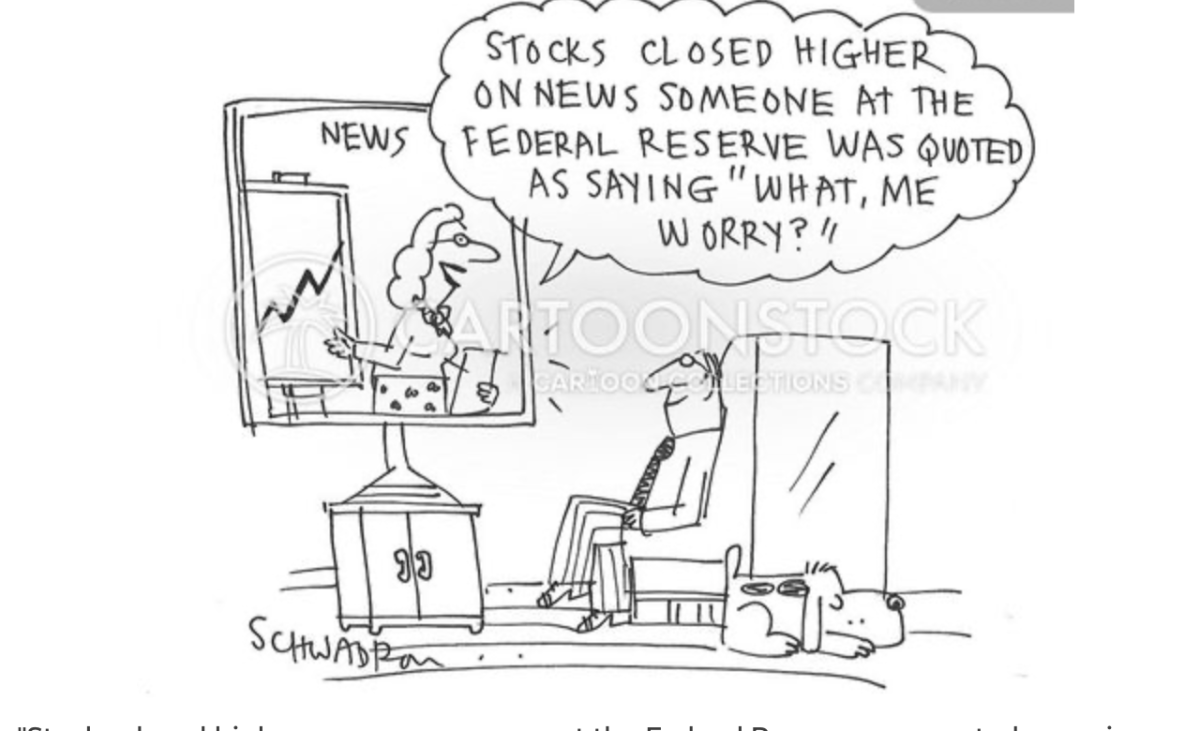
Well could it be that Trump’s TACO this time might also be tied to the what the Fed might do Fed if he had started the serious bombing campaign? A serious escalation would have pushed energy prices even higher, feeding inflation and pushing up Treasury yields — already at 4.68 percent and likely headed higher — which would in turn raise the cost of financing the federal debt. That combination would have made it hard for the Open Market Committee to avoid raising rates at the September meeting, something Trump would hate to see. A rate hike ahead of the November midterms could tip a few close races.
So what should the Fed do? Warsh has already unsettled markets by scrapping forward guidance. Traders will now have to earn their keep by figuring things out themselves rather than leaning on the Fed to signal what’s next. He’s also floated the idea of cutting back the number of meetings — currently eight a year, though Fed bylaws only require a minimum of four. The open question is whether dropping to four meetings would make markets more volatile than they already are.
My sense is that Warsh wants to return to the inscrutable Alan Greenspan era, when the Fed kept its intentions as close to the vest as possible. First, though, he’ll need to rein in the reserve bank presidents and other Board members who seem to enjoy seeing their names in print. Case in point: right after this month’s 9–3 vote, the president of the Richmond Fed — who isn’t even on the committee this year — called it “a close call” whether current interest rates are high enough to bring down inflation, adding that he wasn’t sure he would have joined the three colleagues who voted for higher rates. He never would have said that with Greenspan in the chair. So if Warsh wants to mimic Greenspan by not tipping the Fed’s hand, he also should move to shut up Fed officials.

