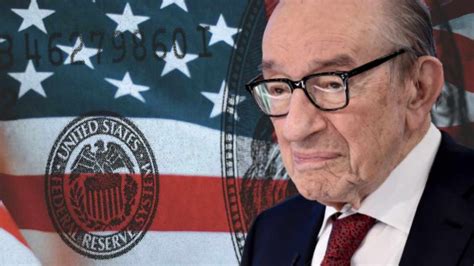
Alan Greenspan
March 6, 1926 – June 22, 2026
Alan Greenspan, one of the most consequential figures in modern American economic history, has died. Nominated by President Reagan in 1987, he served as Chairman of the Federal Reserve for nearly two decades — a tenure surpassed only by William McChesney Martin. Renominated four times across administrations of both parties, Greenspan shaped monetary policy through a period of remarkable economic expansion. Before the Fed, he had already distinguished himself as chairman of the Council of Economic Advisers under President Gerald Ford and as founder of a highly regarded economic forecasting firm. I remember him, too, for something more personal: he was a fellow clarinetist having attended Juilliard before deciding on a career in economics.
The Greenspan Era
Greenspan is remembered with something approaching mystical reverence. During his eighteen years at the Fed, the economy encountered only one serious shock — the sharp drop in equity prices in October 1987. His response was swift and decisive. He assured financial markets that the Fed would provide whatever liquidity was necessary to prevent a broader crisis and it worked. Two mild recessions followed in subsequent years, but neither was major. In hindsight, timing favored him. His predecessor, Paul Volcker, had inherited runaway double-digit inflation, high unemployment, and punishing interest rates, and had tamed them only through a painful contraction of monetary policy that reshaped institutions like the savings and loan industry. His successor, Ben Bernanke, would face the financial crisis of 2008. Greenspan’s years in between were, by comparison, relatively calm.
Controversy and the Financial Crisis
When the 2008 financial collapse occurred on his successor’s watch, critics wasted little time in assigning Greenspan a share of the blame. The Financial Crisis Inquiry Commission was particularly pointed, arguing that decades of deregulation — which Greenspan had championed — had stripped away the safeguards that might have prevented catastrophe. Even Greenspan himself acknowledged being shaken by the collapse, conceding that he may have been mistaken to trust that banks could effectively regulate themselves in advance of the housing market’s collapse.
Yet Greenspan never abandoned his fundamental faith in free markets. He never called for heavy re-regulation. Instead, he turned to the concept of “irrational exuberance” — a phrase he had coined years earlier — to explain what had gone wrong. He argued that traditional economic forecasting was ill-equipped to account for the irrational risk-taking that feeds asset bubbles. “Bubbles go up very slowly as euphoria builds,” he observed. “Then fear hits, and it comes down very sharply.” He posed the question he had long grappled with publicly: how do you know when irrational exuberance has unduly inflated asset values, and how do you factor that into monetary policy? It was a question he never fully answered but one that may be arising in the form of AI.
Governor Don Kohn, who served alongside him, perhaps captured Greenspan’s worldview most clearly: “Greenspan was a fervent believer that free market capitalism, including free trade, was the best available system for promoting economic progress. His confidence that people acting on private incentives fostered public good extended into the financial markets. He embraced financial innovations like derivatives to manage risk and pushed for the Basel 2 bank capital rules, which allowed big banks to use their own risk models in the determination of minimum capital requirements.”
The Man Behind the Mystique
Greenspan was notoriously inscrutable — and proud of it. I had kept a sign on my desk at the National Credit Union Administration that read “Eschew Obfuscation.” Greenspan was the living embodiment of the opposite philosophy. On a visit to his office when I served as chairman of the Atlanta Fed’s Nashville Branch, he had framed two newspaper clippings from the same congressional hearing in which reporters had interpreted his testimony in completely contradictory ways. He displayed them with undisguised satisfaction. “That,” he told me, beaming, “was the perfect testimony.” He had perfected the art of answering questions from reporters and members of Congress in such long, circuitous, qualification-laden prose that by the end, the original question had been thoroughly forgotten.
He also ran a tight ship. Greenspan made clear that no one connected with the Fed — board members, reserve bank presidents, governors — should ever make a public statement capable of moving markets. When a regional bank board member made an offhand comment about the discount rate in a local newspaper, Greenspan had him fired. It was a rule without exceptions. He would be aghast at all the statements flowing almost daily from governors and reserve bank presidents.
And yet he was not a tyrant. I often sat in the back of the room at Open Market Meetings watching the sausages being made. He listened carefully to governors, staff and reserve bank presidents alike. He read staff papers and reports thoroughly. I can attest personally to the density of his workspace —his office was lined with computer screens and covered in charts. He had an encyclopedic command of data, and it showed.
A Colleague Worth Remembering: Wayne Angell
Greenspan’s thinking was sharpened significantly by one of his governors, Wayne Angell, who served from 1986 to 1994. Angell may have been my favorite governor of all time. He was unconventional in the best sense. He was a farmer and held a PhD from the University of Kansas in agriculture economics. He harbored a near-obsessive interest in commodity markets as inflation indicators. No one wore the mantle of inflation hawk more earnestly. Angell believed the Fed’s inflation target should be zero, not two percent and that the institution should pursue sound monetary goals rather than political ones. He was the perfect foil to Greenspan and has been called the most influential governor never to have served as chairman.
Toward Transparency
Despite his penchant for opacity, Greenspan did move the Fed incrementally toward greater transparency, in part due to persistent pressure from Congress — particularly from Representative Henry Gonzalez of Texas. Under Greenspan, the Fed began releasing a summary of Open Market Committee decisions shortly after each meeting, followed by condensed minutes a few months later. It was a modest but meaningful step for an institution that had long treated its deliberations as sacred.
A Personal Memory
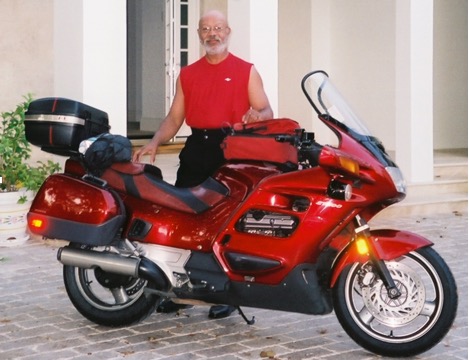
My fondest memory of Greenspan is not from a hearing room or a policy meeting, but from a morning before a meeting with the Chairman at the Federal Reserve Bank of Atlanta. I had ridden my beloved Honda ST1100 down from Knoxville — the same bike I’d taken to the four corners of the country, from Key West to San Isidro, California, to Blaine, Washington, to Madawaska, Maine, and back to Knoxville. I pulled up to the downtown Ritz-Carlton in full leathers just as Greenspan and Atlanta Fed President John Forrestal were waiting outside for their car. I greeted them with “Hello Bob. Hello, Mr. Chairman.” Forrestal — a man of impeccable propriety — looked as though he might faint. Greenspan, however, broke into a grin. “I like it!” he said. “The only other board member who arrived on a motorcycle was Malcolm Forbes on his Harley. But he had Elizabeth Taylor on the back!”
That was Alan Greenspan — formidable, knowing, and occasionally capable of catching you completely off guard with a flash of warmth and wit.
Rest in peace, Mr. Chairman.


The first notice was fm the Mises Institute, and it was more of a commentary than obituary..
The article did mention what you mentioned: Greenspan’s ability to address the economy in ways that were confusing :
…”for all his lack of clarity, seemed to understand things that the rest of humanity didn’t understand, and there was indeed faith in the idea that he must possess almost supernatural powers in fine-tuning the economy to ensure economic prosperity indefinitely…” Mises
Greenspan seems to be known for his social circle. Guess he knew Ayn Rand. And was married to Andrea Mitchell.
You mention the name Malcolm Forbes. I wonder if Steve Forbes, who is the only presidential candidate in a debate to know the price of bread, was influenced by Greenspan..
My wife- whose handle is economist- was upset that ABC eventually mentioned his death into the broadcast , but did not name Greenspan as a top news story..
So there’s the Greenspan Put which might make a good essay, and keep Greenspan’s memory alive- as well as that motorcycle trip to Atlanta..
Wayne Angell- don’t ever doubt the economic ideals of a farmer. Which is why I read about & podcast-listen to farmer wisdom.
LikeLike
“I guess I should warn you, if I turn out to be particularly clear, you’ve probably misunderstood what I said.”
~ Alan Greenspan
LikeLike
What a great comment! Thank you.
LikeLike
First off…what a bike….and RED (go figure, Mr. UGA….)
And what exactly is an “inflation hawk?” Is that an extinct species that no longer flies inside the Fed?
Great tribute to Greenspan – to us amateurs, he was trusted but rarely forthcoming. I guess you might say, “forthcoming enough to be legal.”
I like the confidentiality rules he instituted. We could use more of that – particularly in relation to the Supreme Court (never did find or fire anyone for the Roe ruling leak), and of course, Mr. Transparency beyond a reasonable norm – DJT.
I have high hopes for Warsh…but it feels like he won’t really stretch his legs until mid-2028…
LikeLike
His leg stretching will be inversely correlated to Trump’s diminishing power.
LikeLike