The South African Genocide that isn’t
So what’s this white genocide stuff?
President Trump says South Africa’s government is committing genocide against its white citizens. On the strength of that claim, Washington has turned its refugee program into what is essentially an open door for white Afrikaners. South Africa, of course, denies the charge.
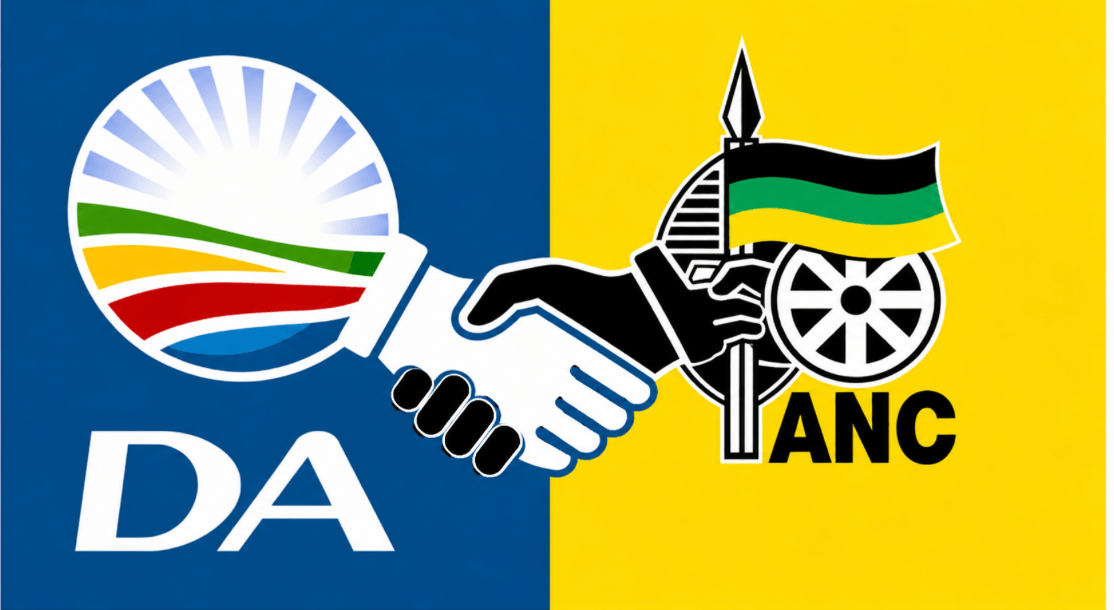
Well, isn’t it interesting that at the very moment Washington is telling the world that white South Africans are being wiped out, white and black South Africans are sitting down together to run the country? Nelson Mandela’s African National Congress has been forced to govern alongside the Democratic Alliance, the party many still call the “white” party. And in this month’s local elections, the DA beat the ANC in Johannesburg, Pretoria and Ekurhuleni. That is a strange way to treat a group you are supposedly trying to exterminate.
Where the story comes from
The “white genocide” idea is not new. In May 2025, when Trump confronted President Cyril Ramaphosa in the Oval Office with a video montage that included Economic Freedom Fighters (EEF) – a far-left communist and black nationalist political party – leader Julius Malema chanting “Kill the Boer.” The video has since been debunked as false.
The policy that followed is real, and it is big. Trump set the refugee ceiling for fiscal 2026 at 7,500, the lowest on record, and reserved the slots mainly for Afrikaners. In May he declared an “emergency” in South Africa and raised the cap to 17,500. Then on September 22 the State Department told Congress it would admit 17,500 refugees in fiscal 2027, “primarily” Afrikaners, at a cost of about $500 million. Other applicants from places like Afghanistan, Sudan and Myanmar have been shut out.
The White House describes this as a “lifeline” for Afrikaners who, it says, are being raped, maimed, killed and driven off their land. The State Department’s notice to Congress points to land seizures without compensation, hiring and education policies that disadvantage whites, and “hateful rhetoric.”
What the numbers actually say
Let’s be fair about one thing: South Africa is a violent country. It records tens of thousands of murders a year, and there have been some violent attacks on white farmers. Nobody should wave that away.
But genocide means the deliberate attempt to destroy a group, and the numbers don’t come close. Between April and December 2024 there were 19,696 murders in South Africa. Only 36 were connected to farms, and only seven of the victims were farmers. Most of the rest were farm workers, who are overwhelmingly black. In the first quarter of 2025, the police counted six farm murders, and five of the victims were black. Even the Transvaal Agricultural Union, a group sympathetic to Afrikaner farmers, puts farm murders at roughly 50 a year across all races. The people dying in South Africa’s crime wave are mostly young black men. Sound familiar?
The critics do have real grievances to point to. The 2025 Expropriation Act allows land to be taken without compensation in some cases, black economic empowerment rules shape hiring and contracts, and Malema still sings “Kill the Boer” at rallies. Those are fair things to argue about. But a disputed land law and an ugly protest song are not mass murder. That is a policy fight, not a genocide.
South Africa’s own ambassador to Washington makes the point best. Roelf Meyer, appointed this April, is an Afrikaner who served in the last apartheid government and helped negotiate its end. He told the BBC that the notion of a mass attack on Afrikaners does not exist, and that as an Afrikaner himself he has the standing to say so.
Meanwhile, at the ballot box
Here is what makes the genocide story so hard to swallow. In the May 2024 national election, the ANC lost its majority for the first time since 1994, falling to about 40% of the vote. It was forced to form a Government of National Unity with the DA, which won about 22%, plus the Inkatha Freedom Party and several smaller parties. The DA got cabinet seats. So did the Freedom Front Plus, the party most closely identified with Afrikaner interests. In other words, the government Trump accuses of genocide against Afrikaners has an Afrikaner party in it.
Then came this month’s local elections on November 4. Nationally, the ANC fell to 30.76% against 24.64% for the DA, its worst showing since the end of apartheid. The DA came first in Johannesburg, Tshwane (Pretoria), Ekurhuleni, Nelson Mandela Bay and Cape Town. ANC Secretary-General Fikile Mbalula called the result “catastrophic.” The new councils now have just 14 days to pick speakers and mayors, so coalition deals are being cut in a hurry.
Ironically, the DA rejects the “white party” label and calls itself multiracial, and its record backs that up more each year. The party says more than a million black South Africans voted for it. Its new leader, Geordin Hill-Lewis, elected in April, frames the arrangement as protecting stability against radical populists and has argued that the state belongs to citizens, not to the ANC or any single party. That is not the language of a persecuted minority. It is the language of people who expect to govern.
Which whites are we talking about?
But interestingly, “white South Africans” are not one group. The DA’s white voters and leaders have historically been mostly English speakers. The people Trump is letting in are Afrikaners, the Afrikaans-speaking descendants of Dutch, French and German settlers, sometimes called Boers.
Those two communities have a long and bitter history. They fought each other in the Anglo-Boer War, where the British put Boer women and children in concentration camps. Many Afrikaners still feel that English-speaking South Africans look down on them as the local equivalent of “rednecks.”
So the picture is more complicated than Washington admits. The white South Africans with real political power today are largely English-speaking DA members governing alongside the ANC. The Afrikaner nationalist vote is small; the Freedom Front Plus won under 3% nationally this month. And many Afrikaners reject the genocide story outright. Groups of them have pushed back publicly with a “Not in our name” campaign, and the ambassador defending South Africa in Washington is one of them.
A watershed, not a genocide
Put the two stories side by side and one of them doesn’t hold up. A country committing genocide against whites does not hand cabinet seats to a mostly white-led party, invite an Afrikaner party into government, send an Afrikaner to represent it in Washington, and then watch voters make that party the largest in its biggest cities.
South Africa has serious problems: crime, unemployment, corruption and real fights over land. But the story of 2024 and 2026 is not one race destroying another. It is black and white South Africans voting for, and governing with, each other. The coalition between the ANC and the DA is historic, a watershed for the country. Whether it can hold together and steady South Africa’s democracy remains to be seen.


Your article spurred me to check the State Department’s travel advisory rating for South Africa – Level 2 – Exercise increased caution. That’s rather innocuous.
If it is as bad as the White House says, would it not have a more aggressive adverse rating?
Other Level 2s – Belgium, Denmark, France, Germany, Italy, Netherlands, Spain, United Kingdom
Unrelated, all that happened this week:
LikeLiked by 1 person
The ANC is a communist organization just as reprehensible as the SA government it replaced. It was systematically trying to right wrongs using violent means to do so. Land reapportionment is a case in point. The impact to their economy reflects the destruction the ANC has wrought with its communistic policies.
LikeLike
I am not defending the ANC. But its corruption and mishandling the economy led to its losses at the polls forcing an alliance with the commerce dominated DA. Lets see how that works out.
LikeLike
While I can appreciate their “coalition” of politicians it seems to me that they have opposing means to reach different ends.
LikeLike
Based on the debunked stories about dog eating Haitians in Ohio, should we be surprised?
The history of South Africa is an amazing one, and my bet is that most folks don’t understand the political battles that erupted into the Boer Wars of the early 20th century (see – that liberal arts education comes into view…). “Breaker Morant” should be on the list read/see list for high school history classes.
Aside from your deep layered statistics and facts that support your essay today – the ambush tactics that this administration likes to deploy with the S Africans, Zelenskyy and others is shameful. Adults should be able tom challenge in private – but not this cast of characters.
LikeLike
The mere fact that the Boers and the English speakers could unite to form a government is the stuff of legend much like the reunification of the US following the “Civil “ war.
LikeLike
Incredible how long these struggles go. I had mentioned the pro-White-rule campaign of the John Birch Society, and their graphic pictures of whites being killed..
When I read about Afrikaner genocide today, I think of the Boston Globe story 9/13/26, “New Vermont refugees Touch a Nerve,”. about Afrikaners are being settled in Brattleboro..
Yes, appreciative Afrikaners say they are
so glad !!! to be away from the violence that is prevalent in Africa—hosting braai—the South African equivalent of a barbecue for their new neighbors…
They are grateful with a community life, safe, moving forward—just like immigrants fm Mexico, Guatemala, South America’s Columbia and Venezuela, who also have wanted a safe life but do not benefit fm the influence of Present President..
Here is a Goggle summary of the one point in the article:
…”Following federal administration changes that largely halted standard refugee admissions while making exceptions for white South African Afrikaners (under Trump-era designations), local resettlement agencies faced a difficult choice: participate in resettling Afrikaners or risk losing all federal funding and shutting down services for existing clients…”
LikeLike