The Eye of Texas: State Currency and the Fed
Stablecoins are gaining mainstream attention — and for good reason. Unlike Bitcoin, which derives its value purely from market sentiment, stablecoins are pegged to the U.S. dollar, giving them a veneer of stability. Critics, however, are wary. In a recent Wall Street Journal piece, Greg Ip warns that stablecoins represent a form of “private money” whose widespread adoption could pose systemic risks to the broader economy. .https://www.wsj.com/finance/currencies/stablecoins-are-private-money-thats-why-theyre-a-risk-to-the-economy-d3498171?mod=hp_lead_pos6
I think Ip is mistaken and the historical analogy is wrong. But that is not what this post is about.
The debate echoes an older one: the era before the Constitution when state-chartered banks freely issued their own banknotes. Article I, Section 10 largely put an end to that experiment. But a new Constitutional twist is emerging — the prospect of state-issued currency backed by gold and silver — and it raises serious questions about monetary policy and the future of the Federal Reserve.
The Fed’s Original Sin: Seigniorage
I respect the structure of the Federal Reserve. What I find harder to defend is how it has conducted monetary policy. Like all central banks, the Fed is susceptible to siren call of seigniorage — the profit the government captures when the face value of money exceeds its cost of production. A $100 bill costs a few cents to print, the rest is, in effect, free money for the issuer. When the currency is fiat — backed not by a commodity but by governmental trust — the temptation to overprint is persistent and the consequences are inflationary.
Milton Friedman’s Quantity Theory of Money offers a useful benchmark: to sustain growth without inflation, the money supply should expand at roughly the same rate as the economy. Central banks routinely overshoot. As economist Don Boudreaux has documented, in the 124 years before the Federal Reserve’s creation (1790–1913), the dollar lost only about 8 percent of its value. In the 114 years since (1913–2026), it has lost roughly 97 percent. That is not a record to be proud of.
Gold Standards and Their Discontents
The natural response to chronic monetary debasement is a call to return to the gold standard. I understand the appeal, but I am skeptical. Tying currency to a commodity that simultaneously serves as a store of value and a medium of exchange creates inherent tensions. Gold’s price is driven by market forces — jewelry demand, industrial use, geopolitical anxiety — that have nothing to do with what a sound monetary policy requires. In 2022, gold was trading at around $1,832 an ounce. It has since climbed to over $4,400, with a recent peak near $5,549. That kind of volatility does not inspire confidence as a monetary anchor.
My preference remains Friedman’s monetary rule: a steady, predictable expansion of the money supply tied to economic growth. But another alternative has recently surfaced, one that is worth examining seriously, that of state-issued currency backed by precious metals.
The Texas Proposal: Constitutional and Practical Questions
Before anyone objects on constitutional grounds — and they should — Article I, Section 10 does prohibit states from coining money or issuing bills of credit. However, it does permit states to make gold and silver legal tender for the payment of debts. The Supreme Court held in Briscoe v. Bank of Kentucky (1837) that state notes were constitutional so long as they were backed by gold.
A state could, in theory, issue “representative money” — notes entitling the bearer to receive their face value in gold or silver from the state treasury. These would not be U.S. currency, but a return to the old state bank notes but with a difference – they would be backed by gold (or silver).
This is essentially what a bill introduced in the Texas Legislature proposed: a state-issued transactional currency, administered through the Texas Bullion Depository and backed 100 percent by gold and silver. The currency would be usable for debt payments within the state, transferable between parties, and redeemable either in specie or at the prevailing spot price of gold in U.S. dollars. (My bet: it would almost always be redeemed in dollars for reasons given below)
Gresham’s Law and the Problem of “Good Money”
Here is where the proposal runs into a classic problem. Gresham’s Law holds that “bad money drives out good.” When two forms of currency circulate simultaneously, people spend the one they value less and hoard the one they value more.
Consider the arithmetic: if you had an ounce of gold in 2022, you could redeem it for $1,832 worth of goods. If you held onto it and used Federal Reserve notes for your purchases instead, that same ounce is now worth over $4,400. Rational actors will always spend the depreciating currency and save the appreciating one. Gold-backed Texas notes would function as a store of value, not a medium of exchange — precisely the opposite of what a working currency needs to do.
Proponents argue that this might produce a “reverse Gresham’s Law” — that Texas’s sound money would crowd out Federal Reserve notes. I fail to see how. If Texas currency holds its value better than dollars, Texans will hoard it and spend their Federal Reserve notes instead. The Bullion Depository would face escalating redemption demands from holders who purchased notes when gold was cheap and now want to cash in at higher prices. The state could quickly find its liabilities exceeding its reserves and go bankrupt.
A Question Worth Asking
The impulse behind the Texas proposal is understandable. Decades of monetary expansion have eroded the dollar’s purchasing power in ways that fall disproportionately on ordinary savers. The desire for an alternative grounded in tangible assets reflects a legitimate frustration with the status quo.
But the mechanics do not hold up under scrutiny. A commodity-backed currency does not eliminate monetary problems; it relocates them — from the printing press to the commodity market. And a state-level currency that no one actually spends is not a currency at all.
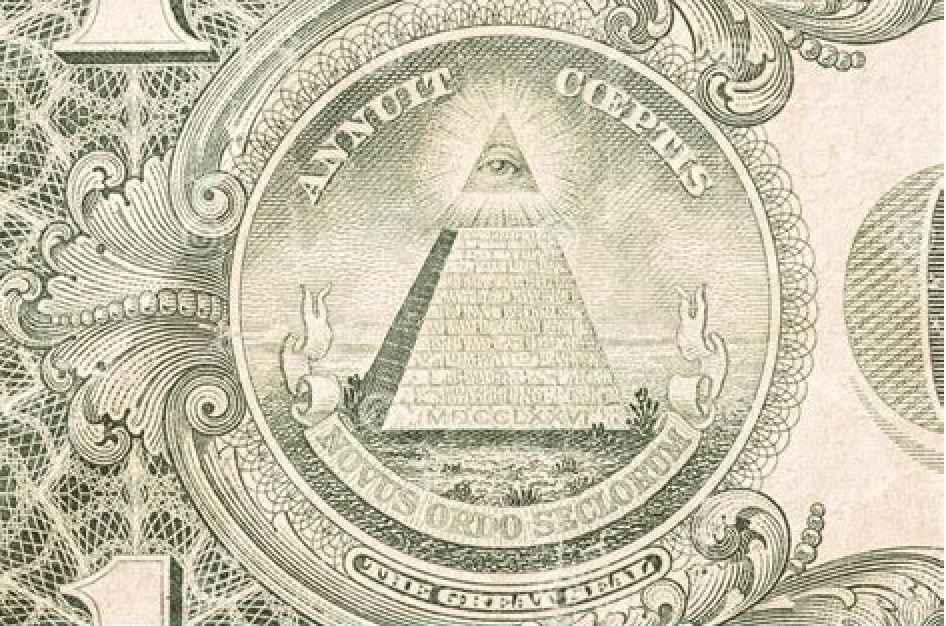
BTW, there is an eye on the back of the dollar bill. It is meant to represent the Eye of Providence, associated with divine guidance. It is a symbol that has been around for a long time tied to Freemasonry and the Great Seal of the Country. So would the Texas currency be called “The Eye of Texas?”
If I’ve missed something in this analysis, as always I’m genuinely open to correction.


Old business: Looked into Alberta, Premier Danielle Smith is as prominent a Trump-ette as anyone. Except for her hero, the ‘ late’ Kristi Noem..
“The Eyes of Texas” would be a great way to give publicity to a new money. Looking at just a WiKi site- there is controversy about the song. Imagine an EYE on the Texas money would draw attention. And promote a consumer vote..
Would using a secondary currency be like a credit card, where there is additional cost to maintain banking services?…or a reserve?..
Instead of hoarding or spending, what if tourists took the money home?..
…”The desire for an alternative grounded in tangible assets reflects a legitimate frustration with the status quo…” I think this reflects more than currency; Texans are unhappy with America..
A TV station in Texas asked what strange things newcomers see. One was the Texas flag , at the same level as the American flag. Second was knowing their school children had to say a Pledge of Allegiance to Texas..
A Texas currency, while legal, is just another indication of forming a new nation.
If Texas became its own country..
.. what do you think would be a fair exchange rate among the two nations?
LikeLike
The song is from minstrel shows and some think it racist. But that’s not the issue here. I just thought it was a fun usage. The main point is it doesn’t refute Gresham’s law and would bankrupt the bullion depository.
LikeLiked by 1 person
Was inspired to look into the song- learned something new today..
The essay started with stable/bit coin. …
and closer to home, newcomers have put on social media their plan to remove all money fm East TN and plant a new ‘currency’. And replace all economic theory, too..
I am appalled that this threat is tolerated here..
But your work, to explain exchange, is needed & assured.
LikeLike