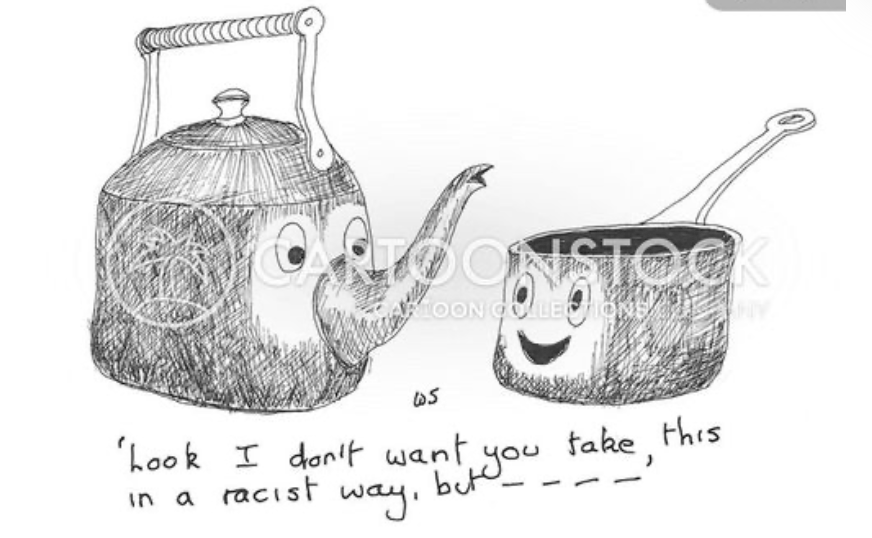
“Cotton-Picking” and Other Everyday Phrases With Racist Pasts
Whoever came up with “sticks and stones may break my bones, but words can never hurt me” was obviously a fool because – pardon my language – words can hurt like hell.
That point was driven home recently by a flap over the term “cotton-picking,” as in “Wait a cotton-picking minute” or “Are you out of your cotton-picking mind?” During an appearance on a conservative talk-radio show, Virginia Rep. Jen Kiggans agreed with the host when he said House Minority Leader Hakeem Jeffries, D-N.Y., should keep his “cotton-picking hands off of Virginia.” Jeffries had come to the state to support a gerrymandering effort that would have eliminated all but one of Virginia’s republican House seats.
Massachusetts Rep. Katherine Clark and California Rep. Pete Aguilar demanded that Kiggans apologize and resign, accusing her of endorsing “brazenly racist language to attack black leaders.” Kiggans refused to apologize. The host, she said, shouldn’t have used those words, but she had only been agreeing with his point.
The host may well have chosen that phrase precisely because Jeffries is black. But it’s entirely possible that Kiggans heard it the way many Americans do, as a folksy intensifier with no connection to slavery. And “cotton-picking” is hardly alone. Plenty of phrases we use without a second thought have racial or ethnic baggage. Another example is in an article on the fraud in Minnesota in the New York Post where the writer states that the state’s attorney general Keith Ellison may lose his race to a republican saying “Ellison is going down” immediately followed by “Fraud isn’t the only black mark on Democrats’ nearly two-decade-long domination of state politics, either.” Oops. Ellison is black. https://nypost.com/2026/10/13/opinion/tim-walzs-legacy-of-failure-may-doom-minnesota-democrats/
At breakfast the other day, I made a statement and my friend jokingly said “That’s white of you.” Wellthe use of white as a metaphor for purity and sinlessness in English dates to the Old English period. Consider:
þæt gedafenað toforan eallum oþrum þingum þæt ælces mannes heorte beo wið ealle leahtras hwit & clæne, swaswa ge gewilnigeað þæt ge to ciercean becumen mid hwitum reafum & mid clænum
(That it is fitting above all other things that the heart of each man be white and clean of all sins, so that it both strives for it and comes to the church with white and clean garments.)
By the later Middle Ages, skin color began to be used as a metaphor for purity and goodness. And now even if the speaker has no deliberate racist intent, such phrasings now are seldom taken out of a racist context.
Consider these others:
Phrases rooted in slavery and Jim Crow
- Cotton-picking. It dates to the cotton plantations of the South. Today it rarely carries a racial meaning, but in the United States its roots are tied directly to slavery.
- Sold down the river. Most of us use it to mean “betrayed.” The phrase comes from the slave trade, when enslaved people in the upper South were sold to plantations farther down the Mississippi, where conditions were notoriously brutal. In Harriet Beecher Stowe’s Uncle Tom’s Cabin, that is exactly Tom’s fate.
- Grandfathered in. After Reconstruction, several Southern states passed “grandfather clauses” that exempted men from literacy tests and poll taxes if they or their grandfathers had been eligible to vote before 1867. Since black men were not allowed to vote before then, the rule protected poor white voters while shutting black citizens out.
- Uppity. No surprise here. White Southerners used it to describe black people who supposedly didn’t “know their place.”
- Cakewalk. Enslaved people performed a dance that slyly mocked the formal ballroom dances of their enslavers. Slave owners watched it as entertainment and awarded a cake to the “best” performers.
- Peanut gallery. The term referred to the cheapest seats in a theater, often the segregated section where black patrons were forced to sit. I remember that in Atlanta, black moviegoers had to sit in the balcony.
- Eeny, meeny, miny, moe. The rhyme itself is old, but for generations the most common American version used a racial slur where we now say “tiger.”
- Spooky. The dictionary defines “spook” as a ghost, or as slang for a spy. But during World War II, white American soldiers began using “spooks” as a slur for black servicemen. The Tuskegee Airmen were even mocked as the “Spookwaffe.”
- Thug. The word comes from the Thuggees, a gang of robbers in colonial India. In recent years it has become a coded way to describe young black men.
- Mumbo jumbo. Meaning nonsense or gibberish, the phrase comes from a Mandinka word from West Africa. European colonizers used it mockingly for African religious practices they didn’t understand.
Phrases aimed at other groups
- Getting gypped. To be cheated or swindled. It comes from “gypsy,” a slur for the Romani people, who were stereotyped as swindlers.
- Long time no see. The phrase is widely thought to have started as a mockery of the broken English of Chinese immigrants, though some trace it to caricatures of Native American speech.
- Paddy wagon. “Paddy,” short for Patrick, was a stock name for an Irishman, and the term played on the stereotype that the Irish were always getting arrested.
- Hooligan. Another dig at the Irish. The word is believed to come from a rowdy fictional Irish family, the Hooligans, made famous in 1890s London music-hall songs.
Phrases about Native Americans
And now the words that make Native Americans see red:
- Powwow. A powwow is a significant cultural and spiritual gathering. Using the word for a quick office meeting trivializes it.
- Too many chiefs, not enough Indians. The phrase turns Native leadership into a punch line about disorganization.
- Circle the wagons. It conjures settlers defending themselves from “attacking Indians,” casting Native people as the aggressors on their own land.
- Hold down the fort. Often linked to frontier forts held against Native raids, though the phrase may simply be military in origin.
- On the warpath. It reinforces the stereotype of Native people as savage and violent.
- Low man on the totem pole. It gets totem poles wrong. The figures aren’t ranked from top to bottom, and the lowest carvings are often the most important.
- Indian giver. It grew out of settlers’ misunderstanding of Native gift-exchange customs and implies that Native people can’t be trusted.
- Off the reservation. Native Americans were once forbidden to leave their reservations without permission. Leaving could get them hunted down.
And one false alarm
- Call a spade a spade. This one gets lumped in with the others, but it is Greek in origin, came to English through Erasmus in the 1500s, and long predates the use of “spade” as a slur. Its history is innocent, even if some listeners may no longer hear it that way.
Slurs for everyone else
Nearly every immigrant group has collected its share of slurs. Italians were called dagos, wops and guineas. Remember the scene in the Godfather where the movie producer, Jack Woltz, refuses to cast Johnny Fontane in his firm. Woltz makes a string of derogatory remarks about Italians, which results in his waking up with the severed head of his favorite horse, Khartoum, in his bed. Johnny got the part but the scene highlighted the prejudice faced by Italian Americans during that era.
I won’t even list the ones for the Poles, Chinese or the Mexicans.
White Southerners got “hillbilly,” “redneck” and “cracker” though for most of my childhood the minor-league baseball team in my hometown proudly called itself the Atlanta Crackers. I kid you not. My other half is from upper east Tennessee where “ootens” was used as a substitute for “trailer trash.”
Then there are Jonathan Swift’s Yahoos. In Gulliver’s Travels, the Yahoos are filthy, brutish creatures in human form, and “yahoo” has been an insult for a crude, ignorant person ever since. (A happier legacy of that book: I named my German shorthaired pointer Lili, after Swift’s Lilliputians, because she was the runt of the litter.)
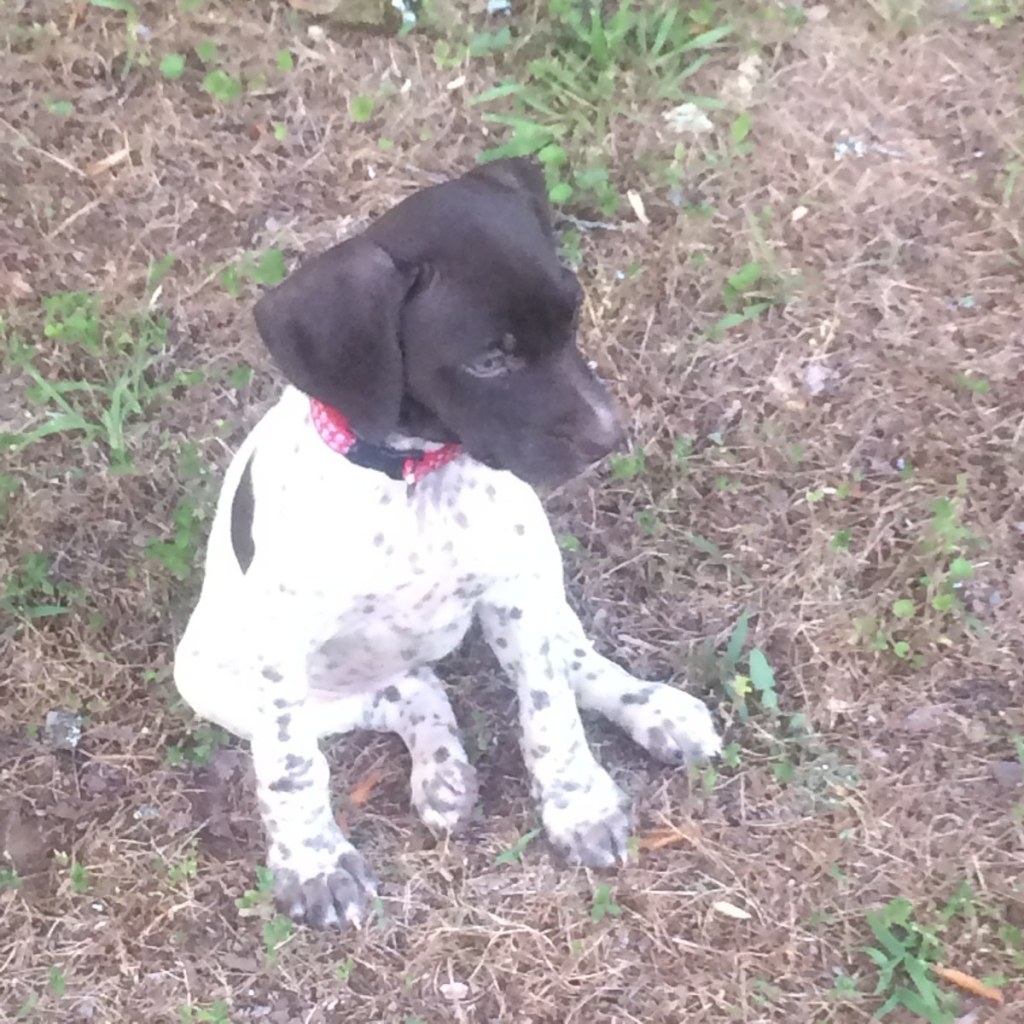
My Lili, the runt of the litter.
So what do we do with them?
Which brings me to the real question. If a phrase has racist roots, should it vanish from our vocabulary, even when most people who use it have no idea where it came from? Or does what a word means today matter more than what it meant a century ago?
I don’t think there’s a single answer. Some of these phrases, like “uppity” or “cotton-picking” still sting because the old meaning never really went away. Others have drifted so far from their origins that hardly anyone hears the history in them. But once you know where a phrase came from, it’s hard to un-know it, and that knowledge is worth having before the words leave your mouth.

