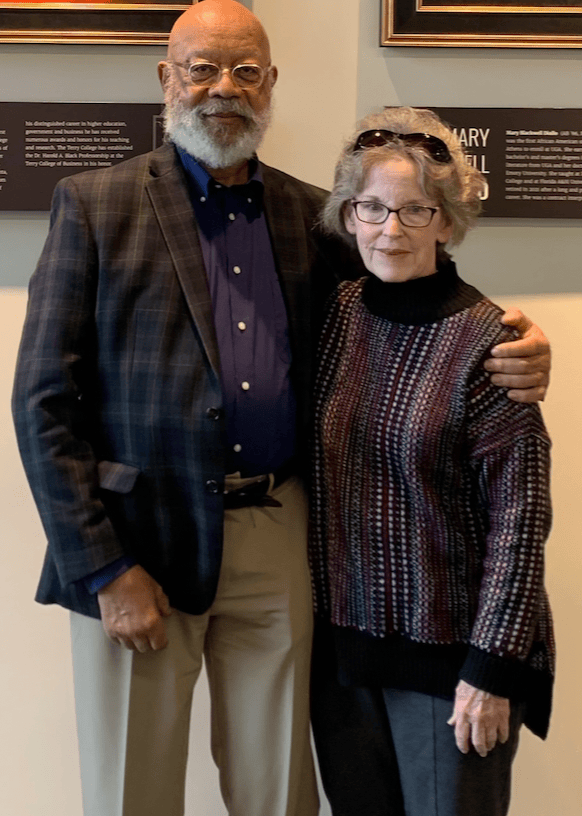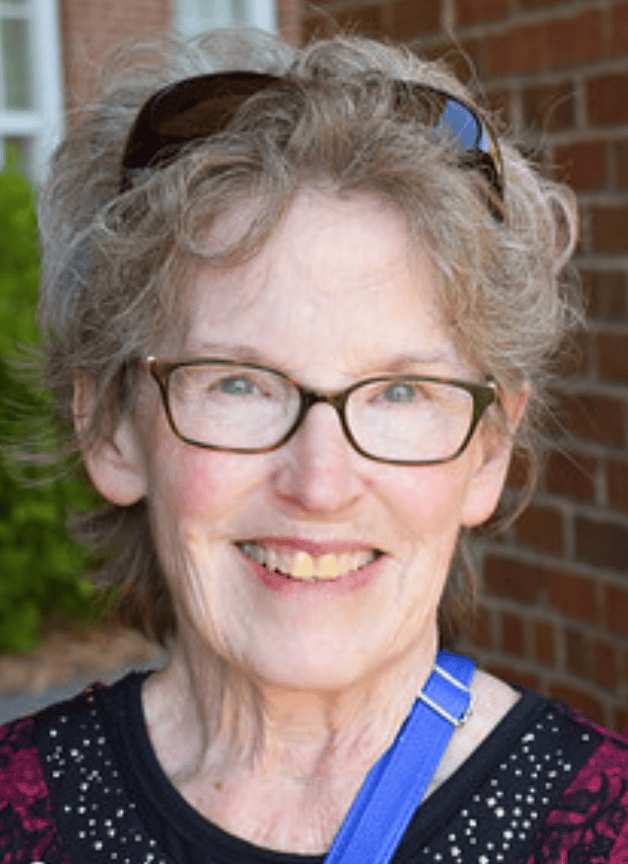
Connie Neal (July 9, 1948 – October 16, 2026)
My other half
My other half, Connie Neal, has died. She had dementia. We had a wonderful 31 years together, and in all that time we had exactly one rough patch and not a single argument. People find that hard to believe, so here is my secret: I don’t argue. I seldom raise my voice. I’ve always found arguments unproductive, and my policy is simple: if you feel strongly enough about something, you win. Connie figured that out early and, to her credit, never abused the power that she held over me. We both agreed that there was almost nothing worth damaging a loving relationship over. Certainly not where the thermostat is set.
The first signs of her dementia came about three years ago, when numbers started to confuse her. She would ask the same question over and over, write the answer on one of a growing stack of yellow pads, and then ask again. One by one, she stopped wanting to do the things we loved. No more riding on the back of the motorcycle. No more boating and fishing. No more camping in the fifth wheel toy hauler. We camped mainly where we had good friends to visit. While in Florida to spend time with one of her best friends, it turned out to be our last trip. At two o’clock in the morning after we had just arrived, she told me she could not stay in our camper and I had to take her home. She was seeing people in the kitchen, in the bedroom, and they were all strangers.
That continued at home. She would ask me “whose baby is that sitting next to you?” She would look out the windows of lounge area in our home at the lake and see an automobile accident instead of boat traffic. And one day she looked at me and said, “You are a nice looking young man. What do you do for a living?” I’ll admit that at my age, ordinarily being called a nice looking young man would be some of best news I’d had in years, but this time not so much.
Her daughter wanted to move her into assisted living. I said that since Connie lived with me, I would make that call. Eventually I did, because I became afraid to leave her alone in the house. She had forgotten how to operate every appliance: the coffee maker, the microwave, the washer and dryer had all become foreign to her. Her coffee was as likely to end up in the oven rather than the microwave. Then she started asking me where the bathroom was. She had lost her sense of direction.
So I consented to put her in assisted living and visited at least every third day and took her out to lunch or dinner once a week. At first, on Sundays when I was in town, I could bring her back home, fix one of her favorite meals, and take her back after breakfast the next morning. Our dog, Lili, had been depressed ever since Connie had to leave, and she was ecstatic every time Connie came through the door. When Connie left, Lili would retreat to her box and stay there except to eat, drink, or go outside, and she made it very clear she was not having much to do with me. If she weren’t in her box, she’d go up to the guest quarters I had built for my parents and lie beside the recliner where Connie used to spend her days watching TV or reading, leaving me to my own devices until mealtime. Lili and I both knew whose company we preferred, and we missed her deeply.
Connie soon had to move from assisted living into the Alzheimer’s facility next door. One of her great joys was her morning walk, which she could take on the path outside of assisted living. Now she had to walk the corridors inside memory care. She had made friends at assisted living, played games, and had a group to talk with. In the new unit, most of the residents were confined to wheelchairs, slumped over, and hard to understand when they spoke. Connie was not happy, and she grew more and more unhappy. So I started visiting every other day just to give her some relief from the stress she had started to exhibit.
Then I read an article in the Wall Street Journal that depressed the hell out of me. It was “Dementia Doesn’t Have to Be the End of Travel” by Kathleen Hughes, about families taking loved ones on trips “to chase joy before advancing disease makes trips impossible.” Cruises. Alaska, Antarctica, Australia, South Africa, Sicily, the Caribbean, Dubai, and Europe.
https://www.wsj.com/health/wellness/travel-dementia-family-trips-5c28e0bc
She did note that people with dementia can get confused or stressed in unfamiliar places, which makes the already difficult job of caregiving even tougher. I could have told her that. Never mind Antarctica. It got so I couldn’t even bring Connie home. She would get restless, disoriented and confused, and demand to be taken back to memory care.
We would sit outside the facility in rocking chairs, hold hands and talk. Then one evening her daughter called to say Connie had been taken to the hospital next door with pneumonia, UTI and fluid on her lungs. Further diagnosis revealed heart failure. I saw her after they got her into a room, she was alert and on oxygen. I left her with her daughter and went to Georgia for two weeks where we had four generations attending the Georgia Oklahoma game (me, my son, my grandson and my great-grandson), which I believe has to be some kind of record. Then the next week my son and I watched the Vanderbilt game from the President’s box. It was Homecoming, and the 60th anniversary of my graduation from Georgia. We didn’t have a reunion because it is probable that there are not enough of us left to reune.
When I got back to Knoxville, I was stunned by how quickly Connie had declined. She was now in hospice care, in a wheelchair, couldn’t stand without falling, and spent most of her time asleep on a sofa. I would pull up a chair, sit beside her, hold her hand and talk to her, even though she could no longer carry on a conversation. But she knew who I was. Sometimes she would just say, over and over, “Help me, Harold. Help me Harold.” I was visiting almost every other day, watching her grow weaker and weaker. Soon she was confined to her bed, without fluids and nourishment and not expected to live more than a few more days.
Connie was perfect for me. She moderated my intensity, so much so that when I retired from UT, the person who replaced me as finance department head thanked her for it. She taught me a great deal, coming from a totally different culture than mine. She was from Upper East Tennessee. Her father was one of the Bedford Boys and was in the first wave at Omaha Beach. When he went into the Army, he got his first pair of new shoes, and they pulled all his teeth in one sitting. Against her father’s wishes, Connie went to college at East Tennessee State University, but could only stay one year. She married her high school sweetheart, who had enlisted in the Air Force, and they were married almost twenty years before he left her for another woman. His loss. Lucky me!
We met when I walked into the UT credit union and her boss sent her to pull me out of line and help me personally. I had been appointed by Jimmy Carter to the first National Credit Union Board, so every credit union manager around knew me from the press releases or my speeches at meetings and conventions. Connie had seen me and heard me speak, too, and later confessed she’d been strongly attracted to me at first sight. So imagine her surprise when I was standing in line dressed head to toe in motorcycle leathers, because I had ridden my bike. She asked if she could help me. Then she asked: “Do you have a Harley?” “No, I have a Honda.” “Can I see it?” “Sure.” “Will you take me for a ride?” “Wear long pants and boots tomorrow. I have gloves and a helmet, and we’ll ride at lunch.” So we did.
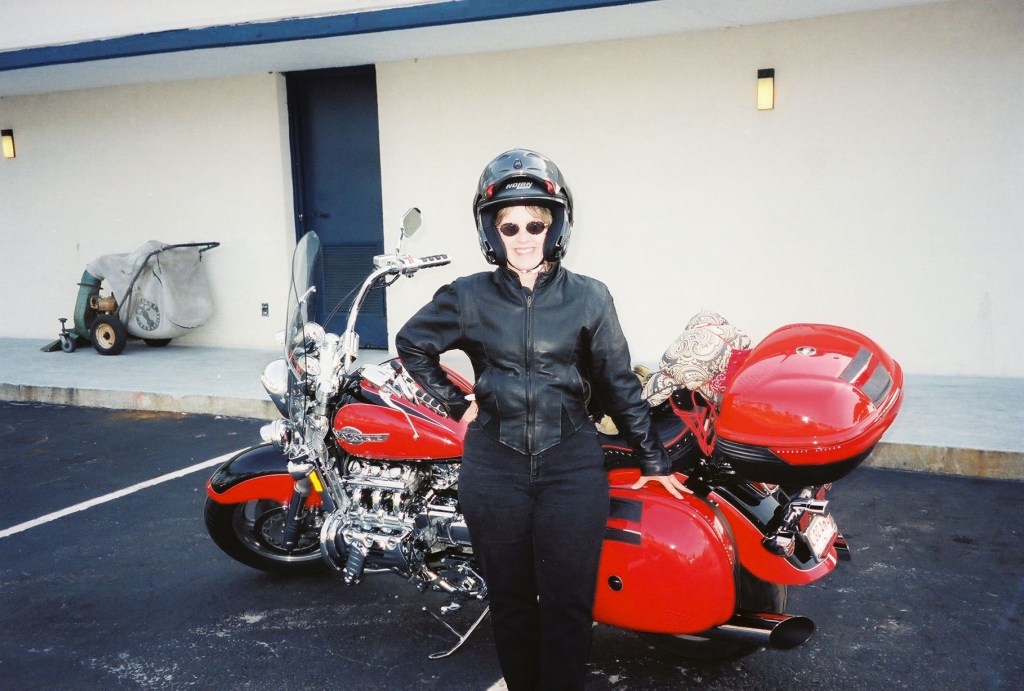
We started seeing each other almost immediately. Her divorce was being finalized, and she had a daughter in middle school who, like many children of divorced parents, didn’t seem to like me. But I had been through that with my own children, who never really accepted anyone I saw after my marriage ended. It took ten years or so before they accepted Connie and considered her family. She grew on people.
She educated me in how most of the real world thinks. She had wonderful instincts and insight into everyday things that had always gone right over my head. She gave me an appreciation for her roots and her culture – she was kin to the famous Carters of country music. And she settled into mine as easily as she settled onto the back of that Honda. She referred to herself as “just a southern girl” and like a good southern “girl,” when I would dress to go hunt she would say “You look cute in camo” and “Get a big one.”
When my father died, then my brother, and then my mother, a bit of my happiness died with each of them. With Connie, I was happy for all of our 31 years together, these last three notwithstanding. Now that she is gone, I don’t know if I will ever be happy again.
When Mom died, I would start to cry without warning. Now it is happening again. So rest in peace, my love. It is almost impossible to describe how much I miss you. Wherever you are, I hope the sky is blue, the mountains scenic and the weather is good for riding. Save me a spot. I’ll bring the gloves and the helmet.