Justices Give the President Power Over Independent Agencies

Justices Give the President Power Over Independent Agencies

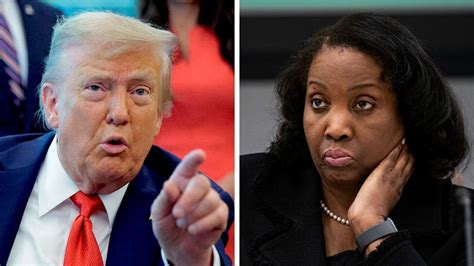
The Supreme Court has ruled on the limits of executive power over independent federal agencies. In Trump v. Slaughter, the Court considered the president’s firing of Rebecca Slaughter, a member of the Federal Trade Commission. Because FTC commissioners are nominated for fixed terms and confirmed by the Senate, Slaughter argued that the president lacked the authority to remove her before her term expired.

Several issues are at stake here. First, the FTC, like many of the eighty or so “independent” agencies, is required by law to be “bipartisan.” The FTC has five members, three of whom must belong to the president’s party. Under Biden three members were democrats and two were republicans, with the chairman a democrat. Trump’s election victory would normally have prompted that chairman to resign—regardless of how much time remained in the term—allowing the president to appoint a republican chairman. In effect, at the FTC, Trump preempted that tradition by firing a democrat to secure a republican majority sooner.

The second issue is more fundamental. These agencies sit technically within the executive branch, yet they make legislative-style policy decisions with independence from the president. The central question is whether the president should have authority over them. The Supreme Court answered yes, in a 6–3 vote, holding that the president may remove any member of these agencies without cause. Chief Justice Roberts wrote that the case was not a difficult one for him: “Nearly 250 years ago, the Framers decided to vest ‘[t]he executive Power’ in one person – a President of the United States of America. The choice was not made lightly.” Roberts added that executive officers “were to serve as envoys of the president, not his equals. … Because these officers were subject to the president’s superintendence, they had to be removable by him at will.”

Justice Sotomayor wrote the dissent, noting that “Congress and the president together have decided that some government functions should operate at a distance from partisan politics.” She echoed Woodrow Wilson’s vision of “progressive governance,” arguing that some functions of government should be overseen by experts in those fields, writing that “the wisdom of the centuries has taught that some decisions should depend not only on who is in office—much less on who is disfavored or owed a favor by those in office—but also on judgment, expertise, and the public good.” Yet this assumes that such “experts” operate independent of political agendas, rather than carrying their own.

Justice Sotomayor surely knows better, as do Justices Kagan and Jackson, who joined her dissent. As I’ve argued before, the officials who write regulations—in essence, make law—at these agencies do so without presidential approval, subject only to congressional oversight. So the more relevant question may be why these bodies aren’t simply made part of the legislative branch rather than the executive branch. Sotomayor is correct that this ruling substantially expands presidential power. As she put it, “the Court gives the President a power unknown even to the English Crown against which the Founders revolted.”

On that point, she is correct—and notably, Justice Gorsuch, who joined the majority, agreed with her. Gorsuch wrote that it was doubtful Congress would have given executive-branch agencies such expansive authority—especially quasi-legislative and quasi-judicial authority—if the president could control them without the other constitutional checks Congress had tried to impose. “From here,” he wrote, “the only sure path is to finish the journey we start today and restore legislative and judicial powers to where they belong: in Congress and the courts.”

Because this ruling applies to all independent agencies except the Federal Reserve, it presumably extends to the banking agencies as well, including the FDIC and the National Credit Union Administration. At the NCUA, Trump removed both democratic board members—including one he had nominated during his first term—leaving only the republican member in place. The NCUA had until 1978 been led by a single administrator who, like the Comptroller of the Currency, served at the pleasure of the president. When the law was changed, the NCUA board was created and I was appointed by President Carter to serve on that first board. Going forward, the president will still be bound by the statute’s bipartisan requirement, but will have to appoint one democrat and one republican to the NCUA board—either of whom can now be removed without cause. It will be interesting to see whether this ruling affects the caliber of future appointees, and whether the president now takes a more active role in these agencies’ rulemaking.

Lastly, I thought that like Chief Justice Roberts, that this was not a difficult case, that the precedent, Humphrey Executor was a decision likely to be overturned. I also believed that if Trump were not president that the vote would have been 9-0. Sotomayor, Kagan and Jackson were voting against giving Trump more power rather than ruling on the basis of the Constitution. I am certain that they would have voted otherwise if a democrat were president.

Next, I will post on Trump v. Cook, the special case of the Federal Reserve.

Can the President fire a Fed Governor?

Can the President Fire a Fed Governor?


Whew — that was close. 

In Trump v. Cook, the Supreme Court ruled 5–4 that President Trump cannot fire Fed Governor Lisa Cook. If one justice had ruled otherwise and the Court instead held that the president may remove a Fed governor for any reason at any time, financial markets would likely have reacted with real turmoil. There is little doubt Trump would have immediately fired Jay Powell, Lisa Cook, Michael Barr, and Philip Jefferson. Interest rates would have jumped, stocks would have sold off, and the dollar would have fallen sharply on world markets.

I recall an earlier episode when the Open Market Committee once voted against the chairman, markets tanked in response. That reaction would look mild next to what a single flipped vote in this case could have unleashed. A ruling for Trump would have ended the Fed’s independence. Any new Trump appointees might not even have secured Senate confirmation — and if they had, they would have been widely seen as presidential cronies. Then, when another president took office, that president would likely have fired all of Trump’s appointees and installed a new set of loyalists. And when the terms of the regional reserve bank presidents all expired in February 2031, a reconstituted board could have fired them as well. Then the president would have complete and total control of the nation’s central bank.

Trump has consistently pushed for a 1 percent interest rate even in the face of elevated inflation. A Trump-dominated Fed would have delivered that, and likely more. What would that have meant for rates and inflation? Every president wants lower rates and easier money, especially heading into an election year.

So that one vote likely spared us a period of economic chaos and inflation approaching levels we associate with some of our South American neighbors.

Again, whew!

The Case for “Cause”

Trump maintained that Cook was being fired “for cause,” citing an allegation of mortgage fraud. The Court initially held that Cook could not be removed without a chance to respond to that allegation and allowed her to remain at the Fed while the matter is litigated. Presumably, if the allegation were proven, she could then be removed. As I noted earlier, Trump wanted to fire Cook “be-cause” — not “for cause” — but because he wanted control of the Fed.

As in the companion Slaughter case, the Court split along similar lines, with the president prevailing there by a wider margin. In Slaughter, the three liberal justices voted against expanding presidential removal power, joined by Chief Justice Roberts and Justice Kavanaugh. Under the Slaughter ruling, the president can now fire any presidential appointee of any independent agency for any reason — except at the Fed, where cause must exist and, presumably, be proven. Trump has said he will continue seeking Cook’s removal.

Why the Fed Is Different

The Chief Justice warned that without such constraints, “any perceived or alleged misstep — past or present — could provide a ready pretext for a Governor’s removal,” a risk that would weigh on a governor as he or she decided what to say and how to vote. But the same logic could just as easily have applied in Slaughter. So what makes the Fed different?

The Chief Justice pointed to the Fed’s unique role in conducting monetary policy, invoking the tradition of the First and Second Banks of the United States, which Congress chartered partly to regulate the currency. Justice Thomas countered that those early banks “possessed no sovereign power,” whereas today’s Fed wields substantial executive authority over the regulation of financial institutions. On this point, Roberts and Kavanaugh seem inconsistent with their own reasoning in Slaughter. My own read is that much like the three liberal justices in Slaughter, Roberts and Kavanaugh were voting against handing this much power to Trump specifically — and not ruling strictly on constitutional grounds.

Justice Gorsuch had the more principled position. He voted consistent with the law as written and if Congress were unhappy with the result, it is Congress’s job to change the law. Gorsuch noted that Congress might never have delegated so much authority to agencies like these “had it known that the President would come to control them.” The 1935 Humphrey’s Executor precedent, he argued, made independent agencies more attractive vehicles for delegated power precisely because presidents could not easily reach them — a dynamic that produced a steady accumulation of power in an alphabet soup of administrative agencies that write and enforce law. Gorsuch called on Congress to reclaim its legislative authority and on the Court to revive its long-dormant non-delegation doctrine, which holds that Congress cannot hand off its core legislative powers to another branch, or to a private entity, without an “intelligible principle” guiding that delegation.

A Cleaner Fix

Gorsuch is right and the underlying dilemma has a fairly clean solution — one I’ve been proposing for fifty years: split the Fed into two distinct bodies. The first would handle monetary policy, staffed by governors with genuine expertise in monetary economics. At the moment, Christopher Waller is the only sitting Fed governor who fits that description. The second body would handle the Fed’s regulatory functions and could be staffed by the remaining current governors. Monetary governors would be removed only for cause, as today. Regulatory governors could be removed for any reason, consistent with the standard now applied to other “independent” agencies under Slaughter. That would preserve Fed independence in monetary affairs and allow markets to rest easily.

The Supreme Court’s Birthright Citizenship Decision

The Supreme Court’s Birthright Citizenship Decision

The Supreme Court ruled against President Trump in the birthright citizenship case. The president had issued an executive order directing federal agencies not to recognize citizenship for children born in the United States unless at least one parent was an American citizen. He was sued immediately and lost at every level, including the Supreme Court.

I had predicted the president would lose and likely lose unanimously. Instead the decision was 6-3. Chief Justice Roberts wrote for the majority, joined by Justices Barrett, Kavanaugh, Sotomayor, Kagan, and Jackson. Justices Thomas, Alito, and Gorsuch dissented.

The Majority Opinion

Roberts wrote the majority opinion saying ““The Fourteenth Amendment achieved its aim. The Citizenship Clause mirrored the common law’s criteria for citizenship,” Roberts wrote. “The Clause starts, like the common law, with territory—a child must be ‘born in the United States,’ not elsewhere (even to

American parents). And the Clause ends, again like the common law, with sovereign power—a child must be ‘subject to the jurisdiction’ of the United States, unlike (say) the families of foreign ministers. A child born on American soil and subject to American law was made an American citizen. “The Framers of the Fourteenth Amendment extended that promise to ‘every free-bornperson in this land.’ We keep that promise today.”

The Dissents

I had speculated that Justice Thomas might side with the majority in that an earlier ruling in 2022 indicated that he supported the 14th Amendment. I was wrong. Thomas wrote for the minority saying Thomas wrote that the majority “has repurposed the Fourteenth Amendment. The Court today takes the extraordinary step of holding facially unconstitutional the president’s Order excluding from citizenship the children of foreign temporary visitors and illegal aliens. In doing so, the court adds to the sad history of the Fourteenth Amendment, which was designed and understood to secure equal rights for the freed blacks but has instead been repurposed for political projects that the Reconstruction Congress did not support.” “Today, the Court does so again by recognizing a constitutional right to citizenship for the children of all foreign birth tourists and illegal aliens. I am not sure that today’s opinion will stand the test of time.”

Clarence Thomas is one of the few of my living heroes still living. But he’s wrong here, on two counts. First, the decision has already withstood the test of time in the sense that matters most: it follows directly both from the text and the history of the ratification of the amendment. Second, this Court did not repurpose the Fourteenth Amendment at all. As I wrote in an earlier post, if Congress had wanted to exclude the children of noncitizens, it would have said so when it drafted the amendment. The ratification debates make that clear.

What the Ratification Debates Actually Show

Here is what I posted back on April 1, 2026: Senator Edgar Cowan of Pennsylvania asked whether Californians were expected to sit quietly while overrun by immigration from the “Mongol race,” and whether they would be driven from their homes by Chinese immigrants. It’s not a stretch to say that sounds like something Stephen Miller might say today.

The Senate’s answer came from Senator John Conness of California, who told Cowan not to trouble himself over the Chinese in California or on the Pacific coast and said the Senate was entirely willing to accept that children born there to Chinese parents would be citizens, entitled to equal protection under the law just like anyone else.

So Justice Thomas is wrong.

Gorsuch: The Real Surprise

The real surprise is Justice Gorsuch, who sided with Thomas and Alito, a striking reversal from his own questioning at oral argument. Reason magazine reported that the government’s lawyer, Solicitor General John Sauer, had argued that birthright citizenship should turn on whether a newborn’s parents were “domiciled” in the United States, meaning lawful presence with intent to remain permanently. Gorsuch pushed back hard on that framing, noting that the term never appears anywhere in the congressional debates over the amendment. He stressed that the clause focuses on the child, not the parents, and called the absence of any mention of domicile “striking”, according to Reason’s account.

Gorsuch also pointed out a second problem with the government’s position: immigration law is far more restrictive today than it was in 1868, when someone could establish domicile with no immigration law standing in the way at all. If the Court is going to apply an 1868 understanding of domicile, as the Solicitor General himself insisted it should, then a person’s immigration status shouldn’t matter under that same test. In other words, the historical meaning of domicile the administration was leaning on actually refuted its own argument.

And yet, after laying out that devastating critique of the government’s case, Gorsuch voted with the dissent, siding with Thomas and Alito. Justice Barrett, interestingly, walked through the same reasoning, reached the same conclusion that the president’s argument was fatally flawed, and voted the other way, joining the majority to uphold birthright citizenship.

Go figure.

(A personal note: I am having cataract surgery tomorrow and likely will not post. Forthcoming are posts on the Court’s decisions on whether the president can fire officials appointed to fixed terms who are confirmed by the Senate.)

World Cup

World Cup

I suspect that both progressives and Donald Trump have reason to resent the World Cup — though for very different reasons.

For progressives, the tournament has inadvertently produced an extended advertisement for American life. To be sure, the visitors arriving to watch their teams play are largely affluent by their countries’ standards— international travel requires both money and time. But the news has been filled with accounts of guests marveling at things ordinary Americans take entirely for granted: Buc-ee’s, Costco, Chick-fil-A, bottomless chips and salsa, free refills, the quality of the housing stock, and, perhaps above all, air conditioning. But even I was blown away the first time I walked into a Buc-ee’s. Who wouldn’t be?

One British visitor reportedly quipped that asking for a free refill back home would be like “asking for a second mortgage.” He must have been in the south because once I asked for a refill in a northern restaurant and was looked at as if I were speaking in tongues.

All of this enthusiasm for American abundance must sit uneasily with those who spend their days cataloguing the country’s failures. The familiar complaints about “affordability” and the perils of Trumpism ring a little hollow when voiced by people riding around in Teslas, chatting on iPhones, and sipping lattes — while visitors from around the world wish they had it so bad. We take abundance for granted because abundance is what most Americans have always known. Not true for most of the planet.

Trump, meanwhile, has his own reasons for discomfort. His sustained campaign against America’s allies — attacking NATO, imposing tariffs, threatening to annex Greenland, and alienating Canada — has taken a measurable toll on tourism and, by extension, on economic growth. Tourism accounts for roughly three percent of U.S. GDP, and tourism had been declining as a response to Trump’s actions. Canadians, in particular, have responded to Trump’s provocations by boycotting American goods and canceling vacations stateside. The World Cup has temporarily reversed that trend, injecting money into the economy and, more importantly, giving millions of visitors a chance to experience this wonderful country firsthand. Many stereotypes, one imagines, did not survive the encounter. In many ways Trump embodies the caricature of the “ugly American” — yet the Americans themselves have shown the world a warmer, more generous side.

The Scottish invasion of Boston has received the most attention. Videos of Scottish fans singing in pubs, marching through city streets, and trading banter with locals have racked up millions of views online, earning Boston the affectionate nickname “New Scotland.” But the phenomenon has played out in every host city. Who knew that ranch dressing would be a revelation? 

Another visitor was taken by Indiana:

“Indiana is exactly how I dreamed America would be — small towns, wide open spaces, cornfields, barns, cute houses, diners, water towers, friendly people, great food, American flags everywhere, and so much more!”

Indiana? I haven’t seen reaction of visitors to Atlanta where 250,000 descended on the city and turned downtown into a festival. But it should be noted that some host stadiums dramatically increased their concession prices. Not so at Atlanta’s Mercedes-Benz stadium where the prices were shockingly low. 

What are the prices for food and drinks at Mercedes-Benz Stadium?

The prices for food and drinks at the stadium include:

  • Fountain Coke products – $2
  • Hot dogs – $2
  • Fries – $3
  • Draft beer – $5
  • Bottled water – $3
  • Popcorn – $2
  • Pizza slice – $3
  • Cheeseburger – $5
  • Pretzel – $3
  • Nachos w/ cheese – $3
  • Fountain Coke products in a souvenir cup – $4
  • Chicken tender basket w/ french fries – $6

 My son, a retired Waffle House executive, would be delighted by this one.

All of this wonderment at a different culture brought to mind the Babylon Bee’s spoof of two Californians adjusting to life in Texas: https://babylonbee.com/video/californians-adjust-to-new-life-in-texas

I doubt if the progressives will stop bad mouthing America. But maybe people will start to realize that most of what they say is an exaggerated lie. And also maybe, just maybe the president might reconsider all the damage he has done to the country and to the world with his threats and tariffs and start walking them back.

Fat chance. 

But thank you, World Cup.

Don’t Seat Them!

Don’t Seat Them!

The election of two avowedly radical candidates to the U.S. House of Representatives raises a question that is both constitutional and moral: should Congress seat members who have openly expressed contempt for the country they are sworn to serve?

The Oath of Office

Every member of Congress must take the following oath before assuming office:

“I do solemnly swear (or affirm) that I will support and defend the Constitution of the United States against all enemies, foreign and domestic; that I will bear true faith and allegiance to the same; that I take this obligation freely, without any mental reservation or purpose of evasion; and that I will well and faithfully discharge the duties of the office on which I am about to enter: So help me God.”

The question is whether newly elected representatives Darializa Avila Chevalier and Claire Valdez can take that oath in good faith. Chevalier has described the United States as the “ultimate embodiment” of Western imperialism and colonialism and was a founding member of a college organization that called for the “total eradication of Western civilization.” Valdez has called for abolishing Immigration and Customs Enforcement, granting citizenship and voting rights to all undocumented immigrants, and has argued that the United States has “no right to enforce its borders” because it is a nation “founded on genocide and mass displacement.”

If either takes the oath, they would be making a promise their own public statements suggest they do not intend to keep. If they refuse, a different set of questions is raised entirely. In either case, should Congress refuse to seat them?

Carville’s Warning

Democratic strategist James Carville thinks that they should not be allowed in the democrat caucus. He said “Two of ‘em I don’t think are even Democrats. This Chevalier lady, I don’t – they should not seat her in the caucus. Her views are totally against anything that any Democrats have. We believe in pluralism, she doesn’t believe in interracial dating. I don’t think there’s a place in the party. I’m not, by the way, I’m not sure she wants to be a Democrat. Go do something else! Form your own party!” 

“She is not a Democrat, okay?” Carville said. “That is pretty clear, and frankly, I think a lot of Democrats feel like I do. I don’t have any power, just an old washed-up consultant, but I wouldn’t seat her! This is not who we are! And we should just say, look, you’re duly elected, have your seat in Congress, but you would not be getting any committee assignments when the Democrats got the majority.”

That is a reasonable starting point. But does it go far enough? Not only would I deny them a seat in the democrat caucus, I would deny them a seat in the Congress.

A Constitutional Remedy

Article I, Section 5 of the Constitution grants each chamber of Congress the authority to judge the qualifications of its own members:

“Each House shall be the judge of the elections, returns and qualifications of its own members, and a majority of each shall constitute a quorum to do business; but a smaller number may adjourn from day to day, and may be authorized to compel the attendance of absent members, in such manner, and under such penalties as each House may provide.”

This provision has been used before. The House famously refused to seat Adam Clayton Powell Jr. following an ethics investigation. After the Civil War, members who had supported the Confederacy were denied their seats on grounds of disloyalty. The precedent exists. The question is whether the Congress has the political will to do the right thing.

Representatives who have called for the destruction of Western civilization and argue that the United States has no legitimate right to its own borders cannot in good conscience swear to defend the Constitution of the nation they openly despise.

The Working-Class Myth

Good old Bernie Sanders, our resident senior socialists is still clueless. He hailed the elections as a triumph of working people over establishment politics. He said “working people” across New York delivered a powerful message: the era of status quo politics is over.” Sanders said in a post about “lessons” from Tuesday’s election that “when working people stand together, organize, and fight back, they can defeat establishment politicians and enormous amounts of money and political influence.” 

Garbage. The actual results tell a different story. Both Chevalier and Valdez won by significant margins in higher-income, college-educated districts and in heavily Muslim precincts—but lost by roughly ten points in working-class and minority neighborhoods. Hispanic voters in particular rejected both candidates.

This is not the uprising of the proletariat that Marx envisioned and Sanders celebrates. It is, as New York Attorney General Letitia James observed, a reflection of the political preferences of gentrified, spoiled college educated newcomers who have displaced the very working-class residents the socialists claim to champion.

Excuse me, but do you know your ankles are swollen?

Excuse me, but do you know your ankles are swollen?

STAT reported that Eli Lilly and the FDA had granted special access to the experimental drug retatrutide through the agency’s “compassionate use” program, which allows patients with serious or immediately life-threatening conditions to receive unapproved treatments. The drug has not yet received FDA approval.

The patient – who I call Patient X) was described as a 79-year-old man with refractory obesity, obstructive sleep apnea, and pulmonary hypertension. Now who does that sound like? Well the democrats were quick to demand whether the mystery patient was the president. In a letter to HHS Secretary Robert F. Kennedy Jr., Sen. Maggie Hassan (D-N.H.) wrote that she was “deeply concerned” by reports suggesting someone “may be bending the rules of a federal program, and exerting improper political pressure, in order to provide a well-connected individual with free access to an exclusive prescription drug.” Of course the White House denied any connection. Communications director Steven Cheung dismissed the STAT reporter as a “big idiot” on X.

Rep. Ted Lieu (D-Calif.) went further, suggesting that Patient X might be the president suffering from a “terminal illness,” citing video of the president appearing to doze off during Cabinet and Oval Office meetings. Cheung responded by calling Lieu a “dumbass” in a separate X post.

Speculation on the president’s health isn’t new. Trump has been photographed with bruising on his hands, which he has attributed to frequent handshaking and daily aspirin use. He has also appeared in public with swollen ankles and was diagnosed last year with chronic venous insufficiency — a condition common in people over 70. (Is that why my ankles are swollen?) The president’s most recent physical recorded his weight at 238 pounds, a 14-pound increase from April 2025 and at the threshold of clinical obesity. The White House, predictably, described him as being in excellent health.

Which brings us back to retatrutide. It would not be the first time Trump received medication under the FDA’s “compassionate use” program. During COVID, he was given a monoclonal antibody cocktail through the same pathway. The difference here is that retatrutide isn’t for a life-threatening illness. It is an experimental anti-obesity drug. Developed by Eli Lilly, it acts as a triple hormone receptor agonist targeting GLP-1, GIP, and glucagon receptors. Clinical trials have reported average weight loss of 15–24% over 48–72 weeks. Common side effects include nausea and diarrhea.

So if all of a sudden the president starts throwing up and running to the bathroom we can rule out pregnancy. And if he starts losing weight, then maybe, just maybe, he is patient X.

Save the SAVE Act?

Save the SAVE Act?

The president is holding the housing bill hostage until Congress passes the SAVE Act. The housing bill is rare having strong bipartisan support—sponsored by Tim Scott and Elizabeth Warren—and is effectively veto-proof, having passed the House 358–32 and the Senate 85–5. It’s a sprawling bill that consolidates over 50 pieces of legislation from members of both parties. Its massive support reflects the pressure on both parties to do something—anything—about housing affordability. The bill’s stated intent is to increase housing supply and lower costs. 

I’ve analyzed the bill before and won’t repeat that here. I’ve called it a “mess.” Its supposedly intent is to increase housing supply. That is doubtful because almost all impediments to increasing supply are at the local, not federal level. Among its well know provisions is Section 901, titled “Homes Are for People, Not Corporations,” bans large institutional investors—those owning 350 or more single-family homes—from purchasing additional properties, contending that such activity drives up prices,. This ignores the rental market entirely. In 2024, the build-to-rent market produced 39,000 single-family rental properties. What happens to the families who prefer to rent rather than buy when that market dries up? It’s remarkable that republicans support such a provision—but they do, including the president.

Some provisions would even allow a future (most likely democratic) administration to stop evictions and impose rent controls. Despite its stated goal of lowering housing costs, several provisions would do the opposite. To qualify for a grant to build multi-unit apartments accessible by a single staircase or elevator, developers must pay union wages—a mandate that will raise costs just as the two-staircase requirements did in the past. The Wall Street Journal summed it up: “The program is a make-work project for unions,” citing a New York City Housing Authority project that spent $1,973 per apartment installing LED bulbs under union wage rules. Rep. Chip Roy (R-TX), on his way out of Congress, called the bill “full of big government garbage & spending”—including a $200 million affordable housing pilot program. He was likely among the handful who voted against it.

The bill does include some useful reforms such as streamlining environmental reviews, modernizing manufactured housing rules, and reducing regulatory barriers to construction. It’s classic logrolling—some deregulation to win republican votes, some expansion of government to win democratic ones. Whether the good outweighs the bad is an empirical question.

For some reason the president apparently believes he can force passage of the SAVE Act by refusing to sign the housing bill. He posted on Truth Social: “Today’s Housing News Conference and Signing is hereby cancelled until such time as we pass the desperately needed SAVE AMERICA ACT, which I consider to be a National Emergency.” He followed up: “The Elizabeth ‘Pocahontas’ Warren centric housing bill, which is of minor importance compared to lower interest rates, and even FISA, pales in comparison to passing THE SAVE AMERICA ACT. That is what Americans, both Dumocrats, Republicans, and everyone else, care about.”

The SAVE Act passed the House but lacks the 60 votes needed to clear the Senate—one reason the president wants to eliminate the filibuster. He posted: “Get the bad Republicans to approve it or, better yet, Terminate the Filibuster and approve it, AND EVERYTHING ELSE REPUBLICANS HAVE EVER DREAMED OF. The Dumocrats will do it in hour one, 100%. Republicans will feel very stupid if they don’t do it first. I’ll be watching with tears in my eyes!!!”

No chance. Maybe at one time the president might have cajoled the Senate republicans to pass the SAVE act by nuking the filibuster. But not now. He can threaten no legislator with being primaried, because the primaries are past. He engenders no more fear now being a lame duck president with fading power. I doubt if he could even muster 47 republicans to support him, much less fifty plus the vice president. So it is a real headscratcher to hold the housing act hostage. He won’t save the SAVE act regardless.

Of course, getting rid of the filibuster is shortsighted—and the president knows it. Senate Majority Leader John Thune knows it too. Killing the filibuster would open the door to all manner of mischief the next time democrats hold power. Nevada’s Catherine Cortez Masto, D-NV, urged Trump to consider all of the hard work of lawmakers from both sides of the aisle who put their party allegiances aside for the “common good of all Americans to help fund affordable housing.” She asked him to “Think beyond yourself’ and sign the bipartisan housing bill.

But thinking beyond himself has never been Trump’s strong suit.

The rise of socialism: Are you a DINO?

The rise of socialism: Are you a DINO?

A closer look at the socialist surge in American politics

The Headlines vs. Reality

To read today’s headlines, one might conclude that socialists are on the verge of seizing American politics. “With Win in Washington, Socialists Have Momentum in Urban America,” blared The New York Times.  The right wing Daily Signal had the headline “A Socialist Wave Continues Crashing Through America’s Big, Blue Cities.” But does the evidence support such a dramatic claim?

In reality, there are only three avowed socialists currently serving as mayors of major cities: Zohran Mamdani in New York, Katie Wilson in Seattle, and mayor-elect Janeese Lewis George in Washington, D.C. Importantly, socialist candidates are winning only in races where establishment democrats are already on the ballot — not where they’re challenging Republicans. In the three House races in New York City backed by Mamdani, every winning candidate took a seat already held by a democrat. The losing incumbents, despite boasting 100 percent liberal voting records, were deemed insufficiently progressive. Opposing Israel’s conduct in Gaza appears to be a litmus test for the far left.

The political math is straightforward. These socialist victories do not alter the balance of power in Washington, nor do they change a single congressional vote. The newcomers will caucus with Democrats and, by most measures, vote identically to the incumbents they replaced. Ironically, even Donald Trump celebrated the defeat of incumbent Dan Goldman — because of Goodman’s role in impeaching Trump. Both men are Jewish and broadly pro-civil-liberties. Both Goldman is pro-Israel, Trump posted “Weak and pathetic Congressman Dan Goldman just lost, BIG! I guess people didn’t like him illegally targeting President TRUMP.  “In any event, this jerk is finally GONE!” 

The establishment democrats were none too pleased showing a schism within party ranks. New York Attorney General, Letitia James, no friend of Donald Trump was furious at the ouster of the establishment democrats – especially that of Chevalier defeating incumbent Rep. Adriano Espaillat the leader of the Congressional Hispanic Caucus. James said of Mandami “Some of the candidates that he has supported are individuals who do not understand the politics of New York City, the cultural differences from district to district, who have not been part of the history and the struggle of some of these districts, and are relatively new to the body politic.”  “Black and Hispanic voters don’t like the trick the DSA is trying to pull in Harlem — using the forces of gentrification to try to supplant our agenda and subvert our priorities.”

One Democratic political operative told the New York Post. “Abolishing the police and releasing every prisoner, even rapists and murderers, isn’t progressive. It’s nuts. It isn’t people with a doorman who have the most to lose; we know it’s us, people of color, who are going to suffer most from the DSA’s reckless agenda.” According to demographic data compiled by The New York Times, in New York City, those affluent, college-educated young people voting for the socialists are more likely to be transplants from elsewhere in the United States than the general population. No wonder the establishment democrats are furious. 

https://www.foxnews.com/politics/letitia-james-fumes-mamdani-backed-socialists-sweep-new-york-primaries

One democrat strategist declares that the socialists are parasites that will set the party back decades. She says “They cannot win on their own by creating their own party, so they are going to latch onto the democratic party and feed off of it, with the overall goal of taking it over and killing it.” “You don’t see them trying to win purple or red seats. You see them trying to pick off democrats in safe blue seats.”

https://www.msn.com/en-us/news/politics/democratic-strategist-calls-socialist-candidates-parasites-who-could-set-the-party-back-decades/ar-AA26npBs

What Young Americans Think Socialism Means

Polling consistently shows that younger Americans view socialism more favorably than capitalism — but dig deeper and the picture grows murky. When asked directly, many say they prefer “socialism.” Yet when asked whether the government should own their homes and personal assets, the answer is an emphatic no. Most cannot offer a coherent definition of socialism. What they actually this is that socialism is capitalism with an expanded safety net: government-run healthcare, subsidized housing, and cheaper energy — not central planning or the nationalization of the means of production.

Survey data from Elson and King (2023) illustrates vividly. When asked broadly which direction the economy should go, 57 percent of Millennials chose “more free market” versus 28 percent who chose “more state-directed.” Gen Z leaned similarly: 40 percent toward freer markets, 28 percent toward more government. Yet when the same respondents were asked about specific sectors, support for private enterprise collapsed. Majorities or pluralities favored “more government” over “more private enterprise” in education (45% vs. 27%), healthcare (53% vs. 23%), energy (39% vs. 27%), and even housing (38% vs. 33%). Only in technology did private enterprise retain a strong lead. Note the irony: they want more government control over areas that already have more government control. They apparently do not realize that the high prices they are experiencing are the result of government interference in the marketplace.

This contradiction suggests not a coherent ideological commitment to socialism, but rather frustration with the high costs of certain goods and services. The sentiment is understandable but not the proposed remedy.

The Role of Education 

What passes for education in our schools is a large part of the problem. In virtually all school systems K-12 capitalism is not taught as one providing economic freedom but one of oppression. The teachers’ associations are headed by socialists and their agenda reflects it. Most of the teachers are also woefully uneducated in what they teach. Most would fail a basic quiz in their subject matters. So people overcome their woeful education through experience and aging. People grow more conservative as they age. Jobs, marriage and responsibilities tend to make people more conservative. Also most people instinctually favor capitalism. Have you ever wondered why with the leftist press, K-12 teachers and professors why there we are all not socialists or at least leftists? It is because what they are preaching is against human nature and that human nature the basis of capitalism.

The Limits of the Socialist Surge

A handful of socialist officeholders in a handful of left-leaning cities is not a national wave. Most democrats remain traditional liberals — skeptical of Medicare for All, opposed to open borders, and unwilling to defund the police. When socialist candidates venture beyond their strongholds, the results show a meager following. Even in Philadelphia and San Francisco, far-left candidates lost to more centrist democrats. The same is true most everywhere. Even Chicago’s mayor Bandon Johnson does not call himself a socialist even though many in his city council and administration are avowed socialists. So proclaiming that the socialists are taking over America is simply a fabrication of the FAKE NEWS media.

What of the Future?

The narrative of a socialist takeover of America is, in short, a media confection — a story built for clicks and alarm, not for accuracy. The balance of power in Washington is unchanged. The votes in Congress are unchanged. And the majority of democrats, when given a genuine choice, continue to prefer a system built on private ownership, individual initiative, and economic freedom — even if they might wish that system came with a stronger safety net. But a cautionary word: don’t get complacent.

Maybe we should call these socialist democrats DINOs – democrats in name only.

Trump saves lives! Jared and Ivanka are doing what?

Trump saves lives! Jared and Ivanka are doing what?

Trump saves lives! Trump saves lives!

Remember when the president said that for every boat blown up in the eastern Caribbean, 25,000 lives were saved? Well there have been at least 61 strikes on alleged drug boats since Trump’s shoot to kill order. That means that Trump (and the navy) have saved 1,525,000 lives! The CDC reports that on average around 70,000 people die from drug overdoses each year. So the president has saved on average 70,000 people a year for the next 21.7 years! Additionally, most of the drug running in the eastern Caribbean has been in cocaine and not fentanyl which comes across the Mexican border. Synthetic opioids, primarily fentanyl, accounts for approximately69% of all overdose deaths or 48,000 per year. This means that “only” 22,000 deaths were caused by cocaine. And since the narco boats are transporting cocaine, that means that the president has saved 22,000 a year for the next 60 years! Way to go Donald!

So the president slightly misspoke only he doesn’t realize it. Trump’s shoot to kill order started in September 2025. What was ironic is that drug deaths had already dropped significantly for the two years prior. The CDC reported that the drug overdose death rate decreased an astounding 26.2% from 2023 to 2024. The so-called experts offer only speculation as to the reasons why. However, the two year trend in the decline in deaths is predicted to continue – until it doesn’t.

But going back to the cocaine-related deaths, 22,000 total deaths are less than what the president says is saved by blowing up one narco-boat much less 61. Given that small number, economics tells us that the supply of drugs on the street must have not be adversely affected by the navy’s actions and that street prices should be about the same. On the other hand, if the navy’s interdiction caused a restriction in the supply, then street prices should have increased dramatically. Trump’s head of the Drug Enforcement Agency says that cocaine prices are increasing 30% – 45% per kilo in Puerto Rico, Dominican Republic, Guatemala, Honduras and Central America. However, the Coast Guard commander in the region disagrees saying that there has not been “any noticeable difference” in the flow of cocaine in the region. Trump’s guy at DEA can’t be lying – could he?

As noted before, the drugs being run out of the eastern Caribbean typically do not go to US markets. Rather other Latin American countries, Asian and Europe are the markets. So there should be little impact on US market prices. A study of Chicago markets by a local television station, found that fentanyl use and overdoses have dropped. But cocaine usage is increasing. “Here in Chicago, as fentanyl use and overdoses plunge, a full-fledged cocaine comeback is well underway, with suburbancounties and northwest Indiana especially reporting cocaine and crack arrests, seizures and hospitalizations increasing.”  Again The reason there is minimal impact on U.S. cocaine imports is because analysts say the cargo on these vessels isn’t headed to U.S. ports and transshipped to Chicago. Drugs on these boats are destined for everywhere else in the world, mostly Europe.

However, as recently as January 29th, the president said “With our action in the Gulf of America, that sounds so nice when I hear the Gulf of America, drugs entering our country by sea are down 97%. So when you see the boats being hit, those boats kill on average 25,000 people a boat.” Oops. Serious misspeak here. Trump obviously meant the eastern Caribbean and not the Gulf of Mexico, er America. Also, the 61 nacro boats carried a miniscule amount of drugs while the Coast Guard is the unit that seizes most of the drugs confiscated in the eastern Caribbean. 

The New York Times says that blowing up those boats has not “slowed cocaine traffic to the US.” https://www.nytimes.com/2026/05/29/world/americas/us-boat-strikes-cocaine-trump-south-america.html

Well, come now, it had to slow even if just a wee bit don’t you think? Regardless, pesky supply and demand would say that street prices should have increased but according to University of North Carolina drug researcher Nabaruun Dasgupta, “street prices for cocaine remain between $60 [and] $100 per gram in many U.S. cities, about where they were before the boat strikes began.”

So the president keeps repeating a fantasy seconded by his Defense secretary, Pete Hegseth who says “The boat strikes are a “highly effective” way to “stop lethal drugs.” But of course, Hegseth has little integrity and knows better than to contradict the president, else he will be back on Fox News. Whenever Hegseth speaks I am reminded of Etta James singing a Delbert McClinton song “Lie no better.” 

“Makin’ me out your clown. Lookin’ for excuses that you know can’t be found. If you can’t lie no better. If you can’t lie no better. If you can’t lie no better than that you might as well tell the truth.”

Now Jared and Ivanka are doing what?

The Washington Examiner, normally a reliable Trump mouthpiece, has actually published an anti-Trump article! It is entitled “As Trump bomb drug cartels, Jared and Ivanka are happy to lauder hundreds of millions of dollars for them.” 

https://www.msn.com/en-us/news/world/as-trump-bombs-drug-cartels-jared-and-ivanka-are-happy-to-launder-hundreds-of-millions-of-dollars-for-them/ar-AA25YInn

What! The author, Tom Rogan says that the resort planned by Kushner’s Affinity Partners to develop Albania’s Sazan Island at a cost of $1.5 billion will ease money laundering for Albanian organized crime. Kushner received “strategic investor status” to develop the island which is the same status used by the drug cartels to establish front companies in Albania. The author states “Ask any objective expert on Albania, and they will tell you there is no question that a sizable portion of that $1.5 billion, and any future profits from the project, will end up with organized crime. The rot starts at the very top. As the Washington Examiner has previously reported, Albanian Prime Minister Edi Rama has directly facilitated Sinaloa Cartel money launderer Luftar Hysa (the Trump administration has now sanctioned Hysa). And one key mechanism via which Sinaloa and Albania-based organized crime groups launder their billions of dollars in annual proceeds is via, you guessed it, luxury resorts.”

Rogan ends by saying: “The president should not-so-kindly tell his daughter and son-in-law to abandon their indirect effort to assist the world’s worst criminals in laundering hundreds of millions of dollars.”

I am sure that the president is in no way involved with money laundering money from the very cartels he has targeted  – right?

Georgia Drops Its Proposed Racial Gerrymander – for now

Georgia Drops Its Proposed Racial Gerrymander – for now

In Georgia on June 17, republican leaders in the state legislature abruptly decided to shelve a proposal that would have redrawn two of the state’s four congressional districts represented by black members of Congress. The proposal also included changes to state legislative districts that would have reduced the number of majority-black State House districts from 54 to 37 and majority-black State Senate districts from 17 to 9.

Currently, democrats hold 80 seats in the state House, 75 are held by black legislators, while republicans hold 99 seats. In the state Senate, democrats hold 22 seats,12 by black legislators, compared to 33 for the republicans.

Not surprisingly, the proposal sparked a strong backlash from the black elected officials and civil rights activists. Hundreds of demonstrators gathered at the state capitol, chanting, “Black voters matter!” and “You can gerrymander a map, but not a movement!” Amid the growing controversy, state House Speaker Jon Burns announced that legislators would not consider redistricting during the current session.

The decision was driven more by political calculation than by a sudden change of heart. Republicans fear that pursuing the redistricting plan would energize democratic voters—particularly black voters—and increase their turnout in this year’s elections. But they may be energized none the less with former Atlanta mayor Keisha Lance Bottoms being the democrat nominee for governor. Her opponent is businessman Rick Jackson who spent $50 million of his own money in his race against the state’s lieutenant governor, Burt Jones. But the primary concern of the state’s republicans and national republicans too is to defeat the incumbent democrat senator Jon Ossoff by republican Congressman Mike Collins. 

The Ossoff-Collins contest will have the nation’s attention and has already become highly contentious. Ossoff quickly launched attacks on Collins saying of Collins “His rich daddy, a former congressman and career politician himself, handed Mike the keys to a company with dozens of employees, making multimillionaire Mike richer while real truckers did the actual work. Maybe that’s why Trump likes him so much.” Ossoff himself tweeted calling Collins a bigot, an antisemite and a crook.

Collins shot back in an ad, “Ossoff voted with Biden 98% of the time. The deciding vote for Biden’s inflation disaster. Higher taxes on gas and groceries. Crazy far-left bills to let men compete in girl sports. No wonder California crazies gave him three times as much money as the entire state of Georgia.” Note however that Collins did not call Ossoff the “S” word.

Also Newt Gingrich chimed in

Collins also calls Ossoff, the beneficiary of family wealth, a “trust-fund socialist” who has never held a real job.

Ossoff admits there are some advantages he received from his upbringing:

“I openly acknowledge that the opportunity I’ve had is a function of my parents’ hard work … the opportunity to get a great education without debt, the opportunity to do what I love and pursue my passion, which is confronting and exposing injustice and the abuse of power.”

But one must question Ossoff’s accusations of antisemitism. Whereas his fellow Georgia senator Raphael Warnock has said of Maine’s Graham Platner “These allegations are deeply concerning. And I think the people of Maine deserve answers. And this kind of abuse is something to be taken very, very seriously.” Ossoff is Jewish and has been noticeably quiet on the antisemitism in his own party. A republican official said “Graham Platner is rotten to the core and Jon Ossoff must immediately disavow him. Anything less is an endorsement of Platner and his disgusting comments.” I am certain this will be brought up over and over again during the campaign.

Financially, Ossoff enters the race with a substantial advantage. He has raised more than $31 million, much of it from out-of-state donors, compared with approximately $3.5 million raised by Collins. But the GOP-aligned Senate Leadership Fund is planning to spend $44 million investment in support of Collins in what will likely be the most expensive Senate race of 2026.

All indications suggest that Georgia voters are headed for a lively and hard-fought political season both in the governor’s race and especially in the Senate—alongside the state’s traditional fall passions of football and deer hunting.